Private universities have sounded the alarm over what they describe as a financial crisis, demanding immediate settlement of Sh58.8 billion in tuition fees owed by the government.
According to the universities, the delayed payments, spanning the 2016/2017 to 2023/2024 academic years, have left several institutions struggling to meet operational costs and maintain educational quality.
Appearing before the National Assembly Committee on Education, the Kenya Association of Private Universities (Kapu) warned that non-payment is severely affecting the sector that has historically complemented public universities in producing skilled graduates and driving research, innovation and economic growth.
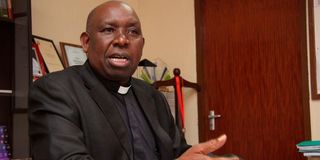
“The delayed disbursement of funds has forced most private universities to eat into their reserves to finance the education of government-placed students. This has financially crippled our institutions. We are collectively owed Sh58.8 billion. This is not just a financial issue—it threatens the sustainability of private higher education in Kenya,” said Prof. Stephen Mbugua Ngari, the Kapu chairperson.
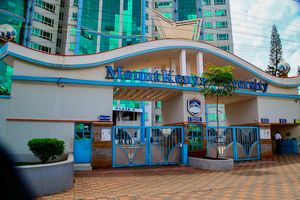
The association said Mount Kenya University is owed Sh12.9 billion, Catholic University of East Africa (Sh4.3 billion), KCA University (Sh6.67 billion) and Kabarak University Sh6.8 billion.
“Investments in higher education are not for profit but for the public good. The revenue we generate is reinvested into improving quality, research and student services. Private universities have complemented government efforts since before independence, producing skilled graduates who serve the country in both public and private sectors,” said Prof Ngari.
Education Cabinet Secretary Julius Ogamba speaks in Mombasa on November 12, 2025 during the Kenya Primary School Heads Association Annual Delegates Conference.
Photo credit: Kevin Odit | Nation
Yesterday, education officials remained silent on the matter even after promising to get back with feedback. Although Education Cabinet Secretary Julius Ogamba had earlier assured the Nation that Higher Education Principal Secretary Beatrice Inyangala would respond to our queries, she did not.
Multiple calls and text messages to her known phone number went unanswered, and by the time of going to press, the ministry had not provided any response.
Data from the Universities Fund shows that funding has been shifting away from private universities. In 2019/2020, private universities received Sh2.5 billion and funded 29,729 students. This amount rose slightly to Sh3.375 billion in 2021/2022, with 61,541 students funded.
However, beginning in 2022/2023, support started to decline—private university funding dropped to Sh3.175 billion, then sharply fell to Sh1.775 billion in 2023/2024, and further down to only Sh575 million in 2024/2025. The number of funded students has also fallen from a peak of 89,664 in 2022/2023 to 59,514 in 2024/2025.
Kapu highlighted that government policy changes in 2016, which mandated the placement of all qualifying students through Kenya Universities and Colleges Central Placement Service, have made universities dependent on timely disbursement of government funds.
The association called on Parliament to require that government funds be released concurrently with student placement to prevent future cash flow problems that disrupt service delivery.
The association also criticised the taxation of tuition fees, saying it undermines efforts to provide affordable, quality education.
“If a university records a surplus, we are willing to pay taxes. But taxing the very fees that support quality education delivery undermines the system,” Kapu said.
The association further appealed for increased allocation of resources towards research and innovation, which they termed essential to national development.