The pending bills owed by public universities to statutory bodies and creditors have risen to an all-time high of Sh85 billion despite government measures to bring them down, including a change of funding model.
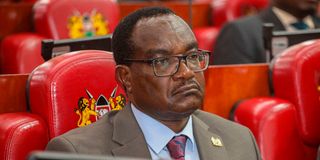
The revelation was made by the Cabinet Secretary for Education Julius Ogamba when he appeared before the Education Committee of the National Assembly on Wednesday.
The cumulative debt owed by public universities stood at Sh60 billion in 2022 when the Kenya Kwanza administration assumed office. The figure has grown by Sh10 billion in one year.
Mr Ogamba told the MPs that to remedy the situation, the Ministry of Education has initiated talks with the National Treasury on suspension of historic debts and possible partial waivers.
The financial strain has caused delays to staff salaries, operational disruptions that impact the quality of education and research and substantial budget cuts.
“Public universities have accumulated huge pending bills totaling nearly Sh85 billion, where 50 percent is owed to the Kenya Revenue Authority (KRA),” Mr Ogamba said, during the session chaired by Kabondo Kasipul MP Eve Obara.
The session was also attended by the Cabinet Secretary for the National Treasury and Economic Planning John Mbadi.
“Public universities have presented all their pending bills along with supporting documents to the National Treasury Committee on Pending Bills and this matter is currently under consideration,” said Mr Ogamba.
Equally, the government owes private universities pending bills which as per the latest official figure stand at Sh65.5 billion. The bill has accrued since 2016 when the government introduced a policy shift allowing the Kenya Universities and Colleges Central Placement Service (KUCCPS) to place students in both public and private universities to help ease an admission crisis in public universities.
Mr Mbadi in his submissions to the committee highlighted that the system had created more problems than solutions, saying the country has been “living a lie” by sending students to private universities then failing to disburse funds to the institutions.
Under the differentiated unit cost model initiated in 2016, the government committed to fund 80 percent of tuition costs, with households expected to cover the remaining 20 percent. However, the government contribution to the DUC has been declining over the past six years resulting in a cumulative shortfall of Sh168 billion in the 2023/2024 financial year.
“It is high time that we become moral as a nation, and ask ourselves; do we have to leave our responsibility to government when we can afford,” he said, maintaining that the student-centred model for funding higher education is the way to go.
He divulged that his office had received demands for payment from a number of private universities including Uzima University, Mount Kenya University and Methodist University.
“In fact, Methodist University have their property being auctioned by the Cooperative Bank of Kenya for a loan of Sh2.8 billion, yet the government owes them over Sh4.7 billion,” he said.
Mr Mbadi reiterated that the government is cognizant of the financial challenges affecting public universities, which informed the establishment of the Presidential Working Party on Education Reforms that proposed several recommendations to address these challenges.
Mr Mbadi said Ministry of Education in collaboration with public universities is expected to develop a comprehensive reform strategy that will ensure financial sustainability within the institutions that would touch on staff right-sizing, rationalising of satellite campuses and restructuring public universities to reduce unnecessary administrative costs.