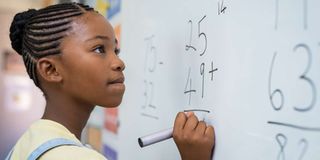
Six in 10 children in low- to middle-income countries are unable to read a simple sentence or solve basic mathematics problems, alarmingly, two-thirds of these are currently in school.
The findings are contained in a new report by the People's Action for Learning (PAL) Network that measured learning outcomes among 89,870 children aged five to 16 years across 12 countries.
The results raise major concerns about the quality of education in many low- and middle-income countries, revealing that school attendance alone is not guaranteeing real learning.
The report shows that Kenya leads its East African peers in achieving minimum proficiency levels (MPL) in mathematics and reading, despite ongoing challenges such as teacher shortages and limited learning materials.
MPL are international benchmarks defining what a child should know by the end of lower primary. They include basic reading comprehension and foundational numeracy skills such as working with whole numbers up to 100 and solving simple problems.
However, even among the children who reach Grade 9, not all can read with comprehension and do basic math, meaning that a huge chunk of them still do not meet these basic standards.
According to the report, 43 per cent of 10-year-olds in Kenya meet the MPL benchmark, compared to 33 per cent in Tanzania and 4 per cent in Uganda.
Kenya’s relatively strong performance indicates progress in foundational learning, although the country still trails behind higher-performing nations such as Mexico, Nicaragua and Pakistan.
“There is need to relook at the instructional materials in our schools to ensure they support numeracy in our classrooms,” said Martin Kungania, a director at the Ministry of Education, during the release of the International Common Assessment of Numeracy (ICAN) and Reading (ICAR) report.
The survey carried in the first week of January and the second week of August for Kenya assessed 6,669 children and 4,459 households
Countries that participated in the assessment are Kenya, Tanzania, Uganda, Senegal, Mali, Mozambique, Botswana, Bangladesh, Pakistan, Nepal, Mexico and Nicaragua. In most of these countries, nearly nine out of 10 children are enrolled in school, with the majority attending public institutions.
Kenya stands out for having one of the lowest numbers of out-of-school children. This suggests that government efforts to achieve 100 per cent transition from primary to secondary school are bearing fruit.
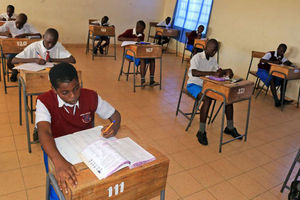
Among Kenyan children aged 10 to 14, more than 80 per cent are enrolled in government schools, while 16 per cent attend private schools, leaving less than 2 per cent out of school.
Among the countries, Mexico had the highest public school enrolment at 90 per cent, followed by Tanzania at 87 per cent and Mozambique at 85 per cent.
“These findings confirm what we've long suspected but now can demonstrate with comparable data across the Global South,” said Armando Ali, CEO of the PAL Network.
Six in 10 children in low- to middle-income countries are unable to read a simple sentence.
Photo credit: SHUTTERSTOCK
Some countries, like Mexico and Nicaragua, show steeper improvements as children grow older, while others, such as Mali and Mozambique—where only 10.9 per cent and 18.1 per cent of children, respectively, reach minimum proficiency—lag significantly behind.
The study also sheds light on the conditions shaping children’s learning, establishing that access to children’s books is low in most countries, digital devices are uncommon except in a few contexts, and parental education levels vary widely.
A new study in Kenya found that 3 out of 10 children in grade 6 couldn't read texts intended for grade 3, revealing a deep literacy gap.
Textbook availability is inconsistent, and many children face a language mismatch between their home language and the language used in classrooms and assessments. For instance, Uganda has stagnated in achieving desirable education outcomes, which is linked to the government policy that learners below Grade 3 are taught in local languages only.
A similar script plays out in Senegal, with these inequalities explaining why so many children struggle to reach minimum proficiency levels.
The gender parity in learning outcomes, showing no significant differences between girls and boys, represents a rare positive finding, suggesting that interventions have successfully addressed historical gender gaps in basic education access and achievement.
Some 150 civil society organisations, policymakers, partners, donors, researchers, teachers, parents and education networks have gathered in Nairobi to discuss the findings at a two-day event dubbed Evidence for Action Forum.