More than 100,000 Grade 10 learners locked their hopes on just 20 Cluster 1 (formerly national schools), chasing barely 10,000 available slots in a high-stakes admission scramble that once again exposed the magnetic pull of Kenya’s elite institutions.
Basic Education Principal Secretary Prof Julius Bitok said the surge in applications was heavily concentrated in the 20 former national schools, which continue to dominate public preference because of their history, academic record and perceived superior facilities.
Principal Secretary for Basic Education Prof Julius Bitok.
Photo credit: Francis Nderitu | Nation Media Group
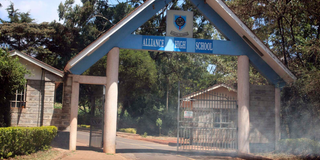
The most sought-after schools were Alliance High School, Alliance Girls High School, Mang'u High School, Lenana School, Pangani Girls High School, Maryhill Girls High School, Moi Girls High School Eldoret, Maranda High School, Maseno School, Precious Blood Riruta, Kenya High School, Kapsabet Boys High School, Bishop Gatimu Ngandu Girls High School, Friends School Kamusinga, Moi Forces Academy, Murang’a High School, Nairobi School, Asumbi Girls, Kisumu Boys, and Starere Boys Centre.
A group of parents outside Starehe Boys Centre and School on January 2, 2025 where they had gone to seek clarity on the admission of their children for Grade 10.
Photo credit: Bonface Bogita | Nation Media Group
“What we have seen is that more than 100,000 learners selected the 20 former national schools as their preferred choices. Yet the total capacity of those schools is slightly above 10,000. That means the majority of those who chose them could not all be accommodated,” Prof Bitok said, giving a sneak preview to data not yet available on the most sought-after schools in the Senior School.
He attributed the rush to long-standing perceptions about the schools’ academic performance and infrastructure.
He attributed the rush to deeply entrenched perceptions about the schools’ academic performance, infrastructure and long-standing legacy in the country’s education system.
“Parents and learners naturally gravitate towards schools that have consistently produced top performers and maintain excellent facilities. Even with more schools being upgraded and Category C1 institutions established across counties, the perception of ‘elite’ schools remains a powerful influence on choice. These schools have built a strong brand over many decades. Parents associate them with academic excellence, discipline, strong alumni networks and better facilities. So naturally, when learners are selecting schools, they gravitate towards those names,” said Prof Bitok.
However, he maintained that the country has adequate space to absorb all learners transitioning to senior school under the Competency-Based Curriculum (CBC).
“As a Ministry, we created about 1.5 million spaces for approximately 1.1 million learners moving to Grade 10. That means we have close to 400,000 surplus spaces. So the issue is not lack of capacity. The issue is the concentration of demand in a few institutions,” he said.
Prof Bitok noted that while the 20 national schools were oversubscribed, many other schools across the country still have available slots.
The main entrance to Maranda High School in Siaya County.
Photo credit: File | Nation Media Group
“If you look at the overall numbers, we have enough room for 100 per cent transition. What we cannot guarantee is placement in a specific school of choice when thousands are competing for the same limited spaces,” he said.
He added that learners who did not secure their preferred national schools were automatically placed in alternative institutions to ensure no student was left out.
“We had to rationalise the placements. Those who did not get their first choice were given other options based on availability. The policy of 100 per cent transition remains intact, and every learner has been placed,” he said.
The PS further said the government has strengthened Category C1 schools in every county to reduce overreliance on the traditional national schools.
“We have deliberately designated at least two C1 schools per county, fully equipped to offer all three senior school pathways. The idea is to distribute opportunities more equitably and ensure quality education is not confined to just 20 schools,” he said.
The scramble, he observed, highlights a deeper challenge beyond infrastructure.
“This transition has shown us that access is no longer the biggest hurdle. The next phase is building public confidence in all our schools. Every institution that meets our standards is capable of delivering quality education,” Prof Bitok said.
Further, Prof Julius Bitok noted that despite the intense competition for national schools, the overall system has enough capacity to ensure 100 per cent transition of learners to senior school, noting that 51 per cent of learners were placed in STEM pathways, 39 per cent in social sciences, and 10 per cent in sports and arts streams.
“STEM continues to attract the majority, but social sciences and arts remain vital for a well-rounded education. What we are saying is that there must be STEM in every school, that’s why we have about 600,000 placed in stem and we are encouraging learners to go in that direction,” said Prof Bitok.