A wave of unrest has swept through dozens of schools across the country, leaving a trail of destruction, closures, injuries and, in some cases, deaths.
The incidents have alarmed education stakeholders, who are grappling with how to contain the growing trend.
The fresh wave of unrest comes barely a week after a dormitory fire at Utumishi Girls Academy in Gilgil, Nakuru County, on May 28, claimed the lives of 16 students and injured 79 others.
The dormitory at Utumishi Girls Senior school that caught fire, killing scores of students while others are nursing serious injuries.
Photo credit: Boniface Mwangi | Nation
The tragedy sparked nationwide calls for stricter enforcement of school safety standards and stronger fire-preparedness measures. Education officials have repeatedly cited overcrowding, faulty electrical wiring and inadequate firefighting equipment as key risk factors.
School unrest has also been linked to examination anxiety and complaints of high-handedness by teachers and administrators.
Speaking to the Nation yesterday, Education Principal Secretary Julius Bitok said the Ministry of Education had ordered nationwide inspections following a rise in school fires that has raised concern among parents and other stakeholders.
State Department for Basic Education Principal Secretary, Julius Bitok, when he appeared before the National Assembly Public Accounts Committee chaired by Butere Mp Tindi Mwale at the Bunge Tower Nairobi on Wednesday, April 22, 2026.
Photo credit: Dennis Onsongo | Nation
He said quality assurance officers had been directed to inspect schools within the next two weeks, while administrators had been instructed to strengthen student engagement and address grievances before they escalate.
“We have ordered inspections in schools across the country to establish what is happening on the ground and address emerging concerns before they escalate. We have also instructed schools to strengthen engagement with learners and deployed additional quality assurance officers to support them,” Prof Bitok said.
The PS attributed some incidents to examination anxiety, poor communication between students and school administrations, and unresolved complaints over meals, water and other facilities. He said the ministry had increased the number of quality assurance officers from 600 to 1,000 to strengthen monitoring and support.
“Some of these incidents are linked to examination anxiety, while others stem from frustrations over issues such as meals, water, facilities or lack of communication with administrators. The solution is to listen to learners, engage them and address concerns early,” he said.
A section of the Blessed Sister Irene Nyaatha Dormitory at St Paul’s Githakwa Secondary School in Nyeri that was torched on the night of May 26, 2026. Police are currently holding four girls accused of starting the fire.
Photo credit: Mercy Mwende | Nation Media Group
Prof Bitok said schools had been encouraged to strengthen guidance and counselling programmes and create platforms for learners to air their grievances.
He also cautioned that extensive publicity surrounding school fires could trigger copycat incidents.
“When such incidents receive widespread attention, there is always a risk that others may seek to imitate them. We appeal for responsible communication and reporting as we work with stakeholders to keep schools safe,” he said.
The PS assured parents that most schools remained stable and that the government was taking measures to prevent further incidents.
“Parents should not panic. The safety of learners remains our top priority, and the vast majority of schools are operating normally,” he said.
However, National Parents Association chairman Silas Obuhatsa disagreed with the description of the fires as isolated incidents.
A section of the Blessed Sister Irene Nyaatha Dormitory at St Paul’s Githakwa Secondary School in Nyeri that was torched on the night of May 26, 2026. Police are currently holding four girls accused of starting the fire.
Photo credit: Mercy Mwende | Nation Media Group
“Schools are burning across the country and children are being put at risk. How can anyone call that an isolated incident? This is a disaster that requires urgent action,” he said.
He urged the Ministry of Education to ensure that school safety policies are fully implemented and monitored, noting that many of the measures outlined in school safety guidelines remain largely on paper.
“The government must follow up and make sure those policies have been implemented by schools as required. If the safety regulations had been fully implemented, we would not be seeing some of these incidents,” he said.
Mr Obuhatsa also called for parents to be given a more active role in matters affecting their children’s welfare and discipline, saying many schools have gradually locked parents out of critical discussions.
“Parents have not been fully involved in matters concerning schools and their children. Yet they are key stakeholders. When parents are excluded, many issues go unnoticed until they become serious problems,” he said.
School fires: How to keep our children safe
At least three more schools in Nakuru County have been closed indefinitely following fire incidents and safety concerns, adding to the growing list of institutions that have suspended learning after the tragedy at Utumishi Girls Senior School.
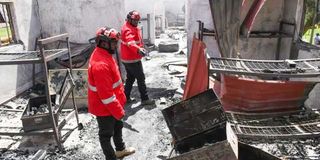
St Joseph Seminary in Molo Sub-county was closed on May 31 after a fire destroyed two dormitories while students were attending an entertainment session in the school hall on Saturday night.
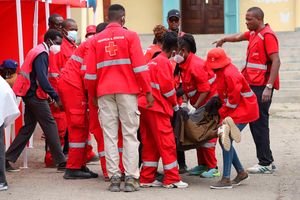
Red Cross volunteers inspect a dormitory destroyed by fire at St Joseph’s Seminary School in Molo, Nakuru County.
Photo credit: Boniface Mwangi| Nation Media Group
Although no injuries or deaths were reported, the destruction forced the administration to suspend learning indefinitely to allow investigations and assessment of the damage. A total of 55 students were affected, losing bedding, school uniforms, books and other personal belongings.
Naivasha Girls in Naivasha Sub-county was also closed on Tuesday evening after the administration sent students home as a precaution following a fire scare.
Learning was similarly disrupted at Moi Forces Academy in Lanet, Bahati Sub-county, after the administration temporarily closed the institution over safety concerns.
In Bomet County, Saseta Girls Secondary School was closed indefinitely after management received reports that students were planning a strike.
To avert possible destruction of property, the administration, in consultation with the Ministry of Education, closed the school and sent learners home on Tuesday.
Bomet Governor Hillary Barchok urged parents not to leave the responsibility of instilling discipline in their children solely to teachers.
At the Coast, at least 18 boarding secondary schools have been affected by unrest since April, disrupting learning and raising concerns over student safety.
Sources within the Ministry of Education said Taita Taveta and Kilifi counties have been the worst affected, while Lamu and Mombasa have not recorded any student protests.
Affected schools include Dr Aggrey High School, Mwasere Girls Secondary School and Kenyatta High School, all in Taita Taveta County.
In Lamu, County Director of Education Charles Nyakundi said the county had not recorded any cases of school unrest or closures in nearly three years. The county has three boarding schools.
In Mombasa, the county government has launched a countywide fire safety inspection targeting learning institutions.
In Murang’a County, the crisis began with a fire that destroyed a dormitory at Gacharage High School in Kandara Constituency on May 28.
A section of the Blessed Sister Irene Nyaatha Dormitory at St Paul’s Githakwa Secondary School in Nyeri that was torched on the night of May 26, 2026. Police are currently holding four girls accused of starting the fire.
Photo credit: Mercy Mwende | Nation Media Group
Governor Irungu Kang’ata said all students were accounted for but expressed concern over the wave of unrest affecting schools in the county.
A report by the Murang’a County Security and Intelligence Committee at the end of May described the situation in secondary schools as fluid.
Schools that had been temporarily closed by May 31 include Weithaga, Kiaguthu, Kirogo Boys, Kahuhia and Nginda Girls high schools. Kiangunyi Girls High School was closed on June 2 following unrest linked to scheduled end-of-term examinations.
In Embu County, learning has been disrupted in 15 secondary schools following student unrest.
Some of the affected institutions are Kangaru School, Kangaru Girls High School, Sacred Heart Kyeni Girls High School and Kimangaru Mixed Secondary School.
Embu West Sub-county Police Commander Vincent Kitili said the unrest began when Form Four students protested against sitting internal examinations.
“The Form Four students started the chaos, saying they were not ready to sit the examinations. Other students later joined them, leading to a mass walkout,” he said.
In Kisii County, at least 10 schools have been affected since the beginning of the year. The latest incident occurred on Monday when a dormitory at Sameta Boys High School in Bobasi Constituency was destroyed by fire.
The incident prompted Sameta Deputy County Commissioner Angela Wanyama to warn students against involvement in arson.
“If investigations reveal that the fire was deliberate, those responsible will face the full force of the law,” she said after the blaze was contained.
At the beginning of the year, a fire destroyed dormitories at Nyakeiri Boys High School in Kitutu Chache North Constituency, causing losses similar to those suffered at Magena Boys High School.
Other fires of varying magnitude were reported at St John’s Nyamagwa Boys High School and St Mary’s Nyamagwa Primary School.
In Siaya County, Barding Boys Secondary School was closed indefinitely after school administrators detected and thwarted a planned strike.
Police recovered suspected petrol believed to have been intended for the unrest after it was found hidden within the school compound.
In Makueni County, five schools have been closed indefinitely following a wave of student unrest.
Red Cross volunteers comb one of the dormitories on June 3, 2026, which was destroyed by a fire at St Joseph’s Seminary School in Molo, Nakuru County on Saturday.
Photo credit: Boniface Mwangi| Nation Media Group
Students at Kavuthu, Kyamuthei, Nguumo and Kalama secondary schools torched dormitories, while Kaumoni Boys High School suffered extensive damage after students set fire to the administration block and classrooms.
Some parents have opposed a decision by the school to levy each student Sh20,000 to help restore the damaged facilities.
Makueni County Commissioner Khalid Abdullahi has convened a stakeholders’ meeting next week to address the unrest.
Speaking during Madaraka Day celebrations, Mr Abdullahi attributed the incidents to examination fears and indiscipline among students.
“We want collaboration among all relevant stakeholders, including education officials and security agencies, to address the emerging cases of unrest in our schools,” he said at Ngwiwa Comprehensive School.
Mr Obuhatsa called for greater parental involvement in school management and decision-making, saying many safety challenges facing learners could be addressed through stronger parental engagement.
“Parents are stakeholders in education, yet they have been pushed to the sidelines. That has to change. Parents must be involved in discussions on school rules, discipline and safety. These are our children and we cannot be spectators,” he said.
Reporting by Mercy Simiyu, Winnie Atieno, Kalume Kazungu, Pius Maundu, George Munene, Mwangi Muiruri, Vitalis Kimutai, Mercy Koskei and Wycliffe Nyaberi