A string of school fires, student strikes and deadly unrest has exposed a deepening crisis in Kenya's education system, raising fresh concerns over safety, overcrowding and the widening disconnect between learners and administrators.
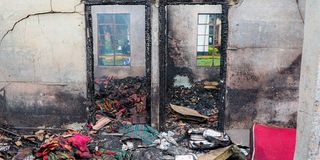
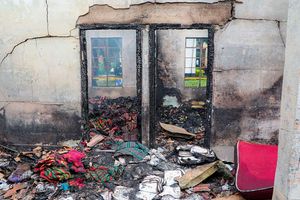
The crisis has been thrust into the national spotlight following the death of 16 learners in a dormitory fire at Utumishi Academy in Nakuru County and recent arson incidents at various schools, which have intensified fears over conditions in learning institutions and sparked renewed scrutiny of the country's boarding school system.
What initially appeared to be isolated cases of indiscipline has rapidly evolved into a nationwide concern, disrupting learning, destroying property and, in the most tragic cases, claiming lives. Education stakeholders now warn that unless urgent reforms are undertaken, more schools could descend into chaos.
A burnt dormitory at Utumishi Girls Senior School in Gilgil, Nakuru County on May 28, 2026.
Photo credit: Boniface Mwangi | Nation Media Group
According to stakeholders, the unrest is being fuelled by a combination of factors, including overcrowding, poor communication between students and administrators.
Social media influence, peer pressure, generational conflicts, inadequate counselling services, weak parental involvement, inequality within schools and the government's failure to address long-standing structural challenges in the education sector are other factors.
Students have also cited poor-quality food, water shortages, harsh living conditions and congested dormitories as some of the grievances fuelling frustration in schools.
National Parents Association (NPA) chairman Silas Obuhatsa says many of the problems stem from a breakdown in communication between school administrators and learners.
“Poor communication channels are one of the biggest problems. Learners are treated as children who are only supposed to listen and obey, but nobody wants to listen to them. That is usually where the problem begins,” he said.
Mr Obuhatsa also blamed overcrowding in schools, saying the government's push for 100 per cent transition has stretched facilities beyond their limits.
“Some schools look like forests. You cannot differentiate between a dormitory, clinic or canteen because everything is congested together. We are courting disasters,” he said.
He further raised concerns about growing inequalities within schools, claiming that some learners from disadvantaged backgrounds face discrimination while students from wealthy families enjoy preferential treatment.
“We have rich versus poor in schools. Some teachers associate more with children from wealthy families...” he said.
Educationist Jonathan Wesaya believes the unrest is a symptom of deeper structural problems that have been ignored for decades.
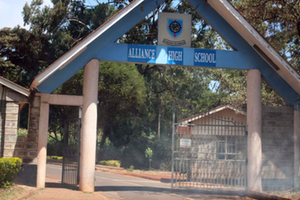
Alliance School fire: The store that was set ablaze by students
“What is happening is not entirely new. The only difference is that schools we never imagined could strike are now joining the list,” he said.
Mr Wesaya noted that Kenya has experienced repeated waves of school unrest dating back to the 1970s, but lessons from past crises have largely gone unimplemented. He singled out congestion as one of the most pressing concerns facing schools today.
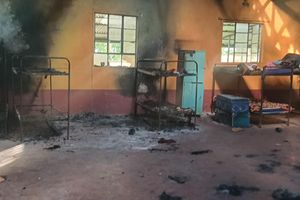
“Some dormitories are so congested that students are sleeping on triple-decker beds,” he said.
The education expert also pointed to a widening disconnect between today's learners and previous generations.
“We have a generational conflict. The punishment methods and motivational approaches used by some school managers no longer resonate with learners today,” he added.
Peer influence and social media
School heads, however, say peer influence and social media are accelerating the spread of unrest across institutions.
Kenya Secondary Schools Heads Association (KESSHA) national chairman Willie Kuria said strikes have increasingly become contagious, with students drawing inspiration from incidents in other schools.
“When Alliance High School goes on strike, Mang’u High School feels they should also go home. Boys ask themselves why girls are at home while they remain in school,” said Mr Kuria.
He noted that students are heavily influenced by events happening in society, including protests and social unrest.
“Public rebellion has become common in Kenya and learners are simply reflecting what they see in society,” he said.
The national chairman of Kenya Secondary Schools Heads Association Willie Kuria speaks during the Muranga County Conference in Mombasa on April 15, 2026.
Photo credit: Kevin Odit | Nation Media Group
Mr Kuria, who is also the chief principal of Murang’a High School, said social media has amplified the problem by enabling students to coordinate unrest quickly.
“These days many learners have access to laptops and digital platforms. They communicate very easily and influence one another,” he said.
School principals interviewed confirmed that social media platforms are increasingly being used to mobilise students.
Another emerging concern, according to KESSHA, is the growing culture of entertainment in schools.
Mr Kuria revealed that some students now organise large entertainment festivals where they contribute money to invite musicians and dancers.
“This thing started in schools in Nairobi before spreading. Students contribute about Sh600 each to invite artistes. They can raise a lot of money for entertainment,” he said
According to him, such activities have spread rapidly, with learners across the country demanding similar events.
“When schools refuse to host such festivals, some students become rebellious,” he added.
The Kenya Union of Post Primary Education Teachers (Kuppet) has equally blamed congestion and poor planning, particularly following the transition to senior school under the Competency-Based Curriculum (CBC).
Kuppet national chairman Omboko Milemba said schools are struggling to cope with rising student numbers amid inadequate infrastructure.
Heavy security outside Naivasha Law Courts as nine Utumishi Girls fire suspects are arraigned
“The intake process was done without limits. Schools are now under immense pressure because learners exceed the available infrastructure,” he said.
“As a country, we need to strengthen day schools because boarding schools are becoming overwhelmed,” he said.
Kuppet Deputy Secretary General Mosese Nthurima, said the recent incidents of unrest in schools should not be viewed in isolation, as they reflect the growing tensions being witnessed across the country.
"What students are doing is a reflection of society. When you look at what is happening on the streets, people are burning tyres, looting buildings and engaging in violence. The tension in the country is finding its way into our schools," he said.
Reduce risk of further incidents
He urged the Ministry of Education to reconsider its decision not to close schools early, saying the situation in learning institutions appears to be deteriorating.
"I believe schools need to be closed for the midterm break so that we can absorb the tension building within the student population. It has happened before, and I do not think we should wait for more casualties among our children," he said.
According to him, sending learners home temporarily would help ease pressure and reduce the risk of further incidents. He also argued that school principals are ill-equipped to deal with criminal behaviour and growing insecurity in schools.
Amid growing anxiety, the Ministry of Education insists the situation remains under control despite the spike in arson incidents. Basic Education Principal Secretary Julius Bitok said only a small fraction of schools have experienced unrest.
“At the moment only about 80 schools out of nearly 9,500 nationwide have experienced unrest. More than 99 per cent of schools are operating normally,” he said.
A section of the Blessed Sister Irene Nyaatha Dormitory at St Paul’s Githakwa Secondary School in Nyeri that was torched on the night of May 26, 2026.
Photo credit: Mercy Mwende | Nation Media Group
Prof Bitok said quality assurance officers have been directed to inspect schools within the next two weeks, while school administrators have been instructed to strengthen student engagement and address grievances before they escalate.
“We have ordered inspections in schools across the country within the next two weeks to establish what is happening on the ground and address emerging concerns before they escalate. We have also instructed schools to strengthen engagement with learners and deployed additional quality assurance officers to support them. Most schools remain stable, and we are doing everything possible to contain the situation and ensure learning continues uninterrupted,” Prof Bitok said.
The PS linked some of the incidents to examination anxiety, poor communication between students and school administrations, and unresolved concerns over issues such as meals, water and other facilities.
“Some of these incidents are linked to examination anxiety, especially at a time when learners are under pressure. In other cases, students may be expressing frustrations over issues such as meals, water, facilities or a lack of communication with school administrators. The solution is to listen to learners, engage them and address their concerns early enough before they turn into bigger problems,” said the PS, adding that the ministry has increased the number of quality assurance officers to enhance monitoring and support in schools.
“We have increased the number of quality assurance officers from 600 to 1,000, and we intend to raise this number further to 2,000 within the next year to strengthen inspection and oversight in our schools. We are rebranding the quality assurance department into the Inspectorate of Schools. These inspectors will oversee curriculum delivery, school facilities, guidance and counselling programmes, student leadership structures and other key aspects of education,” he said.
The PS acknowledged that today's learners face unique pressures from social media, society and home environments, calling on school administrators to adopt more open engagement with students.
He also noted that the second term has historically been a delicate period for schools, with cases of unrest recurring over the years, but expressed confidence that enhanced monitoring, student engagement and collaboration among stakeholders would help prevent further incidents.
The PS reassured parents that learners in boarding schools are safe, describing the fires as isolated incidents and insisting that most schools remain stable as the government moves to contain the situation.
“Parents should not panic. The safety of learners remains our top priority, and the vast majority of schools are operating normally. These incidents are isolated, and we have put in place measures to strengthen monitoring and prevent further occurrences. We want to assure parents that their children are safe,” he said, adding that it was important to check how the incidents are communicated to avoid “copycat behaviour.