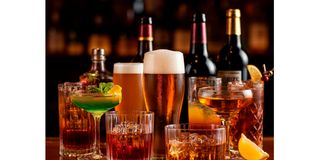
A bottle of your favourite whisky, vodka, wine or beer may look perfectly genuine and still contain a counterfeit or adulterated product.
Counterfeiters are becoming increasingly sophisticated, including by reusing genuine bottles, copying labels and attempting to replicate tax and quality marks. This calls for several checks to avoid consuming counterfeit drinks.
Anti-Counterfeit Authority executive director Robi King'a told Parliament in May that illicit and counterfeit alcohol accounted for approximately 59 per cent of the market by volume and 21 per cent by value.
The risk of counterfeits extends from losing money to posing health risks when illicit alcohol contains unsafe substances. Dr King'a said counterfeiters were using falsified labels and refilling genuine bottles with unsafe products.
What should you check on the bottle and packaging?
The first line of defence is to inspect the bottle before opening it. One could start with the packaging, cap and seal. A genuine product should have consistent and professionally produced packaging.
Poor-quality printing, spelling mistakes, mismatched colours, peeling labels or unusual fonts should concern customers. The cap and tamper-evident seal should also be intact.
The bottle itself can provide clues, especially when compared with one bought previously from a trusted retailer. Elements such as shape, glass quality, embossed markings and the positioning of labels may offer some clues.
However, counterfeiters are increasingly reusing genuine bottles, meaning a familiar-looking container alone is not proof that the contents are genuine. This makes other checks such as Kenya Revenue Authority (KRA) excise stamps critical.
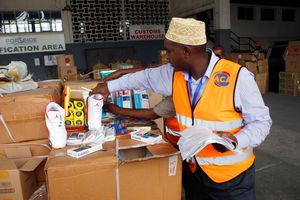
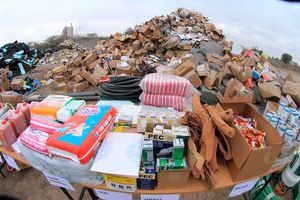
According to Anti-Counterfeit Authority, illicit and counterfeit alcohol account for approximately 59 percent of the market by volume.
Photo credit: Pool
How can you verify whether the drink has the right tax and quality marks?
Alcoholic drinks are among the products required to carry excise stamps, which contain security features and encrypted codes linked to KRA's track-and-trace system. The taxman introduced an app called Soma Label, which consumers can use to verify the authenticity of excise stamps.
An authentic stamp scanned against the KRA system reveals product information from the track-and-trace database. Therefore, a failed or suspicious verification should raise questions.
The Kenya Bureau of Standards (Kebs) mark provides another key check. Locally manufactured products subject to Kebs certification carry the standardisation mark, while imported ones bear the import standardisation mark. Kebs system allows consumers to query its online database for verification.
What information on the label should you look out for?
The information printed on the label of drinks can also help consumers. A properly labelled alcoholic drink provides details such as the product name, ingredients, manufacturer or importer, and the country of origin.
Kenyan law also requires alcoholic drinks to carry prescribed health warnings. Therefore, missing, poorly printed or altered information should raise questions about the authenticity of the product.
Can the price or contents indicate that a drink is fake?
The price can also be a warning sign. A genuine imported or premium drink normally sells within a recognisable price range. An unusually large discount calls for additional checks.
The contents themselves can offer further clues. Unusual colour, cloudiness, separation or an unfamiliar smell may indicate that the product has been interfered with.
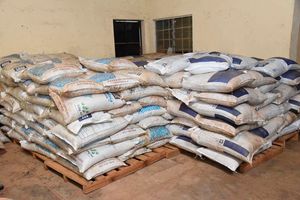
Alcohol counterfeiters are becoming increasingly sophisticated, including by reusing genuine bottles.
Photo credit: Shutterstock
Where should you buy alcoholic drinks to reduce the risk of counterfeits?
Consumers should buy from licensed retailers, supermarkets, bars and distributors to reduce the risk of encountering products that have entered the market outside legitimate distribution channels.
The Alcoholic Beverages Association of Kenya (ABAK) encourages consumers to make verification part of every purchase and to buy alcoholic beverages only from licensed and reputable outlets.
A 2025 report by Euromonitor International, commissioned by ABAK, found that 60 per cent of alcohol sold in Kenya was illicit. The report also found that consumption of unregulated alcohol had risen by 27 per cent since 2022.