Every year, thousands of Kenyans are committed to civil jail across the country, not for criminal offences but for failing to meet court-ordered obligations in situations that legal experts say could often have been avoided.
Unpaid debts, ignored court orders or unresolved civil cases can easily turn into time behind bars, especially for those who are unaware of the laws governing civil proceedings.
For Ms Amina Akbar Mohamed, luck struck when an order by the Kadhi’s Court committing her to Shimo la Tewa Prison for two months for contempt was overruled by the High Court. The order had been issued after she repeatedly ignored a decree requiring her to submit estate accounts in a dispute with her co-wife.
Prisoners line up to vote at the Kamiti Maximum Prison.
The application had been filed by her co-wife, Ms Hamida Bano, a co-administrator of the estate, who accused the police of failing to execute the warrant despite several opportunities and court orders since 2023.
In a ruling dated April 6, 2023, Kadhi Juma Ali directed the co-administrators of the estate to produce statements of account. Despite being served with the decree, Ms Amina failed to comply, prompting Ms Bano to file an application seeking her committal to civil jail.
When Ms Amina did not respond, the court granted Ms Bano’s application and ordered Ms Amina to serve two months in civil jail. However, Ms Amina later sought to have the orders staying committal to civil jail set aside.
“There shall be a stay of execution of the orders issued on April 6, 2023, and all subsequent orders, including the warrants of arrest and committal to civil jail dated September 20, 2024, as confirmed by the ruling delivered by the Kadhi’s Court in the matter of the estate of the late Mohamed Haji Ali on October 23, 2025, and all consequential orders arising therefrom, pending the hearing of the application inter partes,” the High Court said on November 28.
According to the State of the Judiciary and the Administration of Justice Report for the 2024/25 financial year, civil litigation in Kenya expanded sharply. The report states that civil case filings increased by 58 percent as total case filings rose by 20 per cent to 621,425 cases.
This growth occurred alongside an eight per cent decline in criminal cases, signalling a structural shift in court workloads toward civil disputes. The Judiciary attributes this surge largely to the rapid expansion of Small Claims Courts, which lowered procedural barriers and made it easier for individuals and businesses to file debt- and contract-related claims.
Civil justice remains concentrated in the lower courts, particularly Magistrates’ Courts and the Small Claims Court, which together form the primary point of contact between ordinary Kenyans and the justice system.
At least 40 Small Claims Courts are operational nationwide, significantly expanding access to civil remedies while also driving up the number of debt and commercial enforcement cases entering the system.
Legal experts caution that understanding what civil jail is, how it operates and how to avoid it could spare individuals the shock, embarrassment and disruption of spending Christmas away from their families.
Mombasa-based advocate Willis Oluga explains that, in practice, it is triggered in two main situations: where a person disobeys a court order or fails to pay money decreed by a court.
Its purpose, the advocate argues, is coercive rather than punitive, designed to compel compliance with court orders, not to punish. Under Kenyan law, the Civil Procedure Act (Cap 21) treats civil jail as an enforcement mechanism for court decrees, particularly for non-payment of money or deliberate disobedience of orders.
Section 38 of the Act empowers courts to order detention where a debtor is acting in bad faith, concealing property or attempting to evade the court’s jurisdiction. Mr Oluga emphasises that committal to civil jail is not automatic.
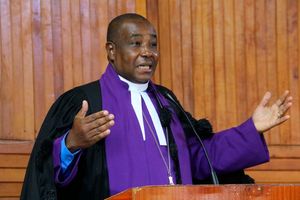
Lawyer Willis Oluga
Photo credit: File
“Before one is sentenced to civil jail, they must be given a chance to explain—what the law calls ‘show cause’—why they should not be committed,” he says.
He explains that only when the court finds the explanation unsatisfactory and the non-compliance wilful does detention follow. The maximum term of civil jail is six months, though courts may impose a shorter period depending on the circumstances, including mitigating factors.
Crucially, Mr Oluga points out that civil offenders are not processed through the police or the Office of the Director of Public Prosecutions (ODPP).
“There must first be a civil case, an order or decree, and an allegation of disobedience. It is from that process that committal proceedings arise,” he explains.
Advocate Joseph Munyithia places civil jail within the broader context of debt recovery. Where one civilian sues another for money and obtains judgment, he explains, the final court order is known as a decree.
“The decree commands payment of a certain amount to the successful party. If the loser does not pay, the winner can apply for the loser to be jailed for up to six months,” he says.
However, Mr Munyithia stresses that imprisonment does not extinguish the debt.
“If the debtor pays even after a few days in jail, they are released. If the six-month term lapses without payment, the creditor may return to court to seek fresh committal proceedings until the debt is settled,” he says.
In essence, civil jail does not wipe out a debt. Even after release, the debt remains payable unless settled or otherwise discharged by law.
Both advocates highlight a little-known but critical safeguard in the law known as subsistence allowance.
Mr Oluga explains that in instances where one is committed to civil jail for failing to pay an amount adjudged by the court, the person who sought the committal is required to pay a monthly subsistence allowance for the upkeep of the prisoner during their jail term.
This is provided for under Order 22 Rule 33 of the Civil Procedure Rules and Section 41 of the Civil Procedure Act, which requires the decree-holder to pay for the upkeep of the judgment debtor while in civil jail.
In simple terms, if someone you owe money causes you to be locked up in prison, they must pay your monthly allowance for the period you spend in civil jail. The law provides that if the creditor fails to pay this allowance, the debtor must be released. These payments are treated as costs of the suit, underscoring that detention should not amount to inhumane punishment.
“The aim is obedience to court orders, not vengeance,” Mr Oluga says.
However, he warns anyone thinking civil jail is made tolerable by the subsistence allowance. “It is important to note that civil jail is served in the same prisons as criminal jail. There are no separate prisons for civil offenders,” he says.