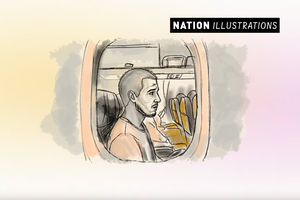
When a video surfaced on social media showing a man tearing up a Sh100 Kenyan banknote, the internet erupted with a torrent of sharply divided opinions.
Some users swiftly condemned the TikToker, warning that his actions could attract serious legal consequences. Others, however, dismissed the uproar, insisting that no law had been broken.
Barely a week after the clip went viral, detectives from the Banking Fraud Investigations Unit (BFIU) came knocking. Macmillan Motari Nyakwaya, the 23-year-old at the centre of the controversy, suddenly found himself a visitor of the state.
In a statement, the Directorate of Criminal Investigation confirmed that Mr Nyakwaya had been arrested over the alleged destruction of legal tender.
The Directorate of Criminal Investigations (DCI) Headquarters along Kiambu Road.
Photo credit: File | Nation Media Group
“Banking Fraud Investigations Unit (BFIU) detectives have arrested Maximilian Motara, who was wanted for allegedly mutilating banknotes and flaunting the acts on TikTok,” the statement read in part.
Legal experts say Kenyan law treats the defacement or destruction of currency as a criminal offence.
According to legal officer James Mwamu, Section 367A of the Penal Code criminalises the defacement or mutilation of Kenyan currency notes, while Sections 368 and 369 address offences related to coins, including melting, breaking up, or using them for purposes other than as legal tender.
“The law is clear that mutilating or defacing currency is an offence,” Mr Mwamu said.
Under Section 369 of the Penal Code, melting down, breaking up, or defacing coins is classified as a misdemeanour punishable by a fine of up to Sh8,000, imprisonment for up to six months, or both.
In cases involving diminished coins passed as legal tender, the offence may attract a harsher penalty of up to seven years in prison, as it could amount to fraud.
Mr Mwamu explained that although posting such acts on social media is not in itself a separate offence, it may serve as powerful evidence of deliberate intent.
“Publication on social media helps demonstrate intent to commit the offence. It shows the person knowingly carried out the act,” he said.
He added that courts may also weigh the wider implications of such content when determining punishment.
“When such acts are shared publicly, they may encourage imitation, undermine confidence in legal tender, and bring the law into disrepute. These factors could influence sentencing,” Mr Mwamu noted.
He further warned that individuals who share or repost the video could also face legal consequences.
“A person who reposts such content may be considered to be aiding or abetting the offence. Under Sections 20 to 23 of the Penal Code, anyone who facilitates or encourages the commission of a crime can be held criminally liable,” he explained.
Mr Mwamu also emphasised that the offence does not depend on the value or number of notes destroyed.
“Even destroying a single note is sufficient to constitute the offence. However, the quantity involved may influence the severity of sentencing, as it may indicate a higher degree of intent,” he said.
Mr Nyakwaya was on Wednesday, March 11, 2026, presented before Senior Resident Magistrate Noelyne Reuben Akee at the Kisumu Law Courts following his arrest.
However, the suspect was not formally charged after the prosecution, led by Newton Mitoko, applied to have him detained for a further 14 days to allow investigators to complete their inquiries.
The court granted the request for temporary detention, meaning Mr Nyakwaya will remain held at Kisumu Central Police Station until March 25, 2026, when the court is expected to rule on the prosecution’