'God has no gender’: Clergy, leaders and rights advocates on Kenya’s gender equality test in 2026
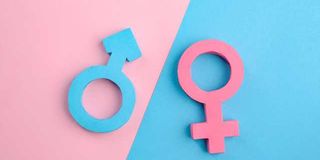
Gender equality symbol.

What you need to know:
- Gender permeates everything: our homes and marketplaces, schools and theatres, washrooms and workplaces, and even how we are recognised - as women, men, intersex persons, from minority or majority communities.
- Yet this all-encompassing reality is often treated as peripheral, a neglect reflected clearly in how both national and county governments plan, prioritise, and budget for it.
The year 2026 has arrived. As many Kenyans turn fresh pages in their journals - setting new goals, revisiting old dreams, and drafting renewed resolutions - one issue that quietly shapes every aspect of our lives continues to receive little deliberate attention.
Gender permeates everything: our homes and marketplaces, schools and theatres, washrooms and workplaces, and even how we are recognised - as women, men, intersex persons, from minority or majority communities. Yet this all-encompassing reality is often treated as peripheral, a neglect reflected clearly in how both national and county governments plan, prioritise, and budget for it.
So, what will be different in 2026? Will Kenya finally take gender equality seriously - not as rhetoric, but as policy, practice, and lived reality?


To find out, we spoke to a cross-section of stakeholders, including elected and public leaders, clergy, human rights defender, and women’s rights advocate, and asked them one simple but profound question: what is your 2026 gender equality wish? Here is what they had to say.
Mary Komen, Human Rights defender, Sengwer community
I was part of a delegation of minority and marginalised communities that visited State House on December 18, 2025, to commemorate International Minority Rights Day. I was encouraged that among the 10 commitments President William Ruto made to us, several reflected long-standing demands from the Sengwer community.
These included the enactment of Article 100 of the Constitution and amendments to electoral laws to ensure inclusive nominations in Parliament and county assemblies; the fast-tracking of community land titles; the implementation of court rulings on historical injustices, including the Ogiek case; and the upholding of free, prior, and informed consent on community land. Importantly, the commitments also spoke to targeted protection for women, youth, persons with disabilities, elders, and children—covering disability-inclusive infrastructure and the prevention of gender-based violence.
In 2026, my wish is simple: that these pledges move beyond words and are fully realised in practice.
Maureen Namunyak, senior assistant chief, Ilngosuani, Kajiado County
My wish as a leader is to see an end to female genital mutilation and child marriages. If these harmful practices were to stop completely, I would be the happiest person alive.
Every day, I continue to educate my community about the importance of safeguarding the future of a girl. I often use my own life as an example of the benefits - the sweet fruits - of empowering girls and women, and of protecting them from practices that derail their potential and that of their communities. When you harm a girl or a woman, you are harming the growth and future of the entire community.
There is hope. We have already seen a decline in cases, and with sustained effort and commitment, I believe we can record zero new cases.
Dr Purity Ngina, Chief Executive Officer, National Gender and Equality Commission
As a Commission, we are closely following two constitutional amendment bills currently before Parliament: the Constitution of Kenya (Amendment) Bill (No. 2 of 2025) in the Senate, sponsored by Majority Leader Senator Aaron Cheruiyot, and the Constitution of Kenya (Amendment) Bill, 2025 in the National Assembly, sponsored by legislators Gladys Boss, Beatrice Elachi, and Jane Kagiri. Both seek to establish a clear and sustainable mechanism for realising the constitutional principle that no more than two-thirds of any elective or appointive body shall be of the same gender.
Political representation is fundamental to democracy. It ensures inclusive decision-making and accountability to all citizens.
On a personal level, I am deeply disturbed by the rising cases of gender-based violence being reported across the country. I am therefore keenly awaiting the President’s pronouncements following the submission of the report by the Technical Working Group on Gender-Based Violence, including femicide, a process I was privileged to be part of. I am confident that the report’s recommendations will catalyse the necessary policy, legal, and systemic reforms to address gender-based violence and protect the rights and dignity of women and girls.
Kirinyaga Governor, Anne Waiguru
My 2026 wish is that Kenya, and indeed Africa, move beyond rhetoric to real, measurable gender equality. I envision a country where women are not only present at the table, but are shaping decisions, driving development, and holding positions of power across every sector.
Gender equality is not merely a women’s issue; it is a national development imperative. When women thrive, families prosper, communities grow stronger, and nations advance.
Empowering women ensures that half of our population’s talent, creativity, and leadership is fully harnessed to meet the challenges of our time.
This responsibility belongs to all of us. Government and policymakers must not only enact laws, but also faithfully implement those that already exist. Leaders at every level must lead by example and ensure compliance with constitutional and statutory protections. Institutions and employers must dismantle barriers and create inclusive spaces for women to rise. Communities and families must nurture girls with the confidence and support to dream without limits.
As we step into 2026, my enduring wish - as a daughter of Kenya - is that gender equality ceases to be aspirational and becomes our lived reality.
Jean-Paul Murunga, programme officer, End Sexual Violence Programme, Equality Now
In 2026, as the world rallies around themes promoting gender equality and the prevention of violence, discrimination, and exploitation of women and girls - through platforms such as Women Deliver’s Change Calls Us Here, and the African Union and United Nations’ renewed focus on closing gender gaps - my wish is that both state and non-state actors move decisively from commitments to measurable progress.
Despite global and regional frameworks such as the Sustainable Development Goals, the Maputo Protocol, and the African Union convention on ending violence against women and girls, stark inequalities persist. More than 230 million women and girls worldwide have undergone female genital mutilation. Gender-based violence remains widespread, child marriage continues across Africa, and women still face significant gaps in economic participation and leadership.
In Kenya, the two-thirds gender rule remains unrealised. My hope for 2026 is accelerated action that meaningfully improves the lives of women and girls, including those with disabilities, in Kenya, across Africa, and globally.
Bishop Hudson Ndeda, chairperson, Church and Clergy Association of Kenya
When you look at women today, many of them are performing exceptionally well—sometimes even better than men—in roles traditionally denied to them. That is why they must be considered for leadership everywhere, including in the church.
Today, we are ordaining women leaders in the church, something that would have been unthinkable a few years ago. There was a time when some people could not imagine women serving in such roles. But progress is being made, and it must continue.
Women should be given equal opportunities in governance, in the church, in society, and in leadership at every level. We are all human beings, and God has no gender. When God speaks of humanity, He speaks to and about all of us.