"I had to learn to stop crying at night": Confessions of Ivy, the magistrate handling Kenya's most disturbing SGBV cases
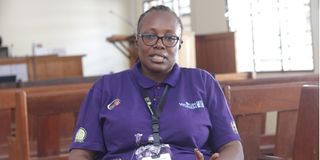
Kilifi Principal Magistrate Ivy Wasike, speaks during an interview at the Kilifi Law Courts on November 13, 2024.

What you need to know:
- In Kilifi's bustling law courts, Principal Magistrate Ivy Wasike and lawyer Alice Kinyua are fighting a hidden battle of their own as they handle over 1,400 SGBV cases.
- "The trauma can be real," says Wasike, who has served for 12 years handling cases where 90 per cent of the victims are minors, including a heart-wrenching incident of a young girl who suffered a ruptured uterus and contracted an STI.
- While the court has secured 82 convictions this year and is working with partners to combat the SGBV crisis, these legal warriors continue to carry the emotional weight of every case long after the gavel falls.
The Kilifi Law Courts, nestled in the heart of Kilifi town, buzzes with activity on this sunny mid-morning. Courtrooms overflow with people – suspects taking pleas for various charges, others waiting for their cases to be mentioned. In several chambers, witnesses step forward to testify in ongoing cases, their voices adding to the solemn atmosphere of justice in motion.
In one of these bustling courtrooms, Principal Magistrate Ivy Wasike's keen eye moves methodically through her day's course list. Her attention to detail is evident as she presides over some of the most challenging cases in Kenya's judicial system – sexual and gender-based violence (SGBV) cases.
"The trauma can be real," Ivy says during a sit-down interview with Nation.Africa after the morning session. As an anti-SGBV champion who has served as a judicial officer for 12 years, she has become an unwitting witness to humanity's darkest moments. Today, she handles a staggering 1,400 pending SGBV cases in Kilifi County – a number that has grown alarmingly from 1,000 cases just last year.
The cases that cross her bench tell stories of unimaginable cruelty: defilement, gang defilement, attempted defilement, and incest.
One case particularly shattered her professional composure – a young girl who had been defiled, suffering a ruptured uterus and contracting a sexually transmitted infection.
"I went home that day and whenever I saw a small child, I wondered why such a person could undergo such pain. As a magistrate, some of these cases take a toll on my mental health," Ivy says, her voice softening as she recalls the incident.
"Handling such cases is not for the faint-hearted but calls for a lot of compassion and adherence to strict work ethics," she explains.
To cope with the emotional burden, she undergoes regular debriefing sessions through counselling.
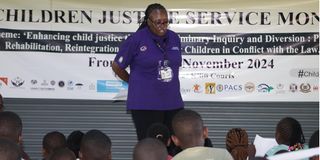
Ivy addressing children during a sexual and gender-based violence awareness forum at St Thomas ACK Church in Kilifi town on November 13, 2024. She is a leading anti-SGBV champion.
The Kilifi Law Courts have found a valuable partner in Friends for Justice, an organisation that fosters and protects the rights of SGBV survivors through legal representation, rescue efforts, and victim restoration.
Alice Kinyua, a lawyer and the founder of the organisation, shares her own struggles with these challenging cases.
"As a lawyer who handles SGBV cases, I must admit that most of them disturb me mentally and bring a lot of frustrations. It is worse for me especially when the accused is acquitted," Kinyua tells Nation.Africa.
The emotional toll is so significant that Ms Kinyua has made counseling a regular part of her routine.
"Due to the nature of the SGBV cases that we handle, I have to undergo a minimum of four counselling sessions per year," she says.
In her chambers, Ivy reveals both progress and persistent challenges.
"This year, the court has made 82 convictions and witnessed 84 withdrawals," she says. "Ninety per cent of the SGBV cases touch on minors with only 10 per cent touching on adults."
She attributes the high number of defilement cases to cultural settings, noting that most perpetrators are immediate family members.
"Investigation gaps, withdrawal by witnesses and witness interference are some of the main challenges impending justice for the survivors," she explains.
Yet, hope emerges through concerted efforts. "The court users committee is doing a lot of community engagement to create awareness about sexual and gender-based violence. We are also engaging children to sensitise them on GBV so that they can know what it entails," the magistrate says.
She notes significant improvements in prosecution methods.
Physical violence
"In the past, there used to be a lot of gaps in evidence collection and prosecution. We now have marked improvement in victim-centred prosecutions. The court is now ordering for pyscho-social support for the victims. Access to justice is now more victim-centred," she adds.
The magnitude of the problem in Kilifi County reflects a broader national crisis. According to the 2022 Kenya Demographic and Health Survey (KDHS), 20 per cent of women aged 15-49 have experienced physical violence since age 15, while 12 per cent have faced sexual violence. More disturbingly, 30 per cent of ever-married women or those with intimate partners have experienced physical, sexual, or psychological violence from their most recent partner.
The KDHS report further reveals that eight per cent of women aged 15-49 had experienced physical violence in the last 12 months, and seven per cent had experienced sexual violence in the same period.
Hope blooms through initiatives like the Wajibika na Unawiri project, which unites stakeholders to combat violence against women and girls in Kilifi County.
Pauline Muigai from the Centre for Rights, Education and Awareness explains their approach: "We are enhancing the capacity of GBV survivors and service providers in shelters to provide safe, confidential, and survivor-centred services that focus on healing and empowerment."
"We are also training community champions on using the social accountability action model, equipping them with tools to mobilise and sensitise their communities about GBV prevention and response, as well as promoting positive cultural and behavioural changes," Pauline says.
The project, funded by Italy and supported by UN Women, is part of this year's UNiTE campaign and commemorates the 30th anniversary of the Beijing Declaration and Platform for Action. Through community champions and court user committee meetings, they're working to ensure survivors receive justice while maintaining their dignity and rights.
As another day winds down at the Kilifi Law Courts, the halls gradually empty of their morning bustle. Yet the work continues for these dedicated legal practitioners – each carrying not just the weight of their cases, but also the hope of justice for countless survivors who depend on their resilience and commitment.


