16 Days of Activism: How campaign evolved to confront femicide and digital violence
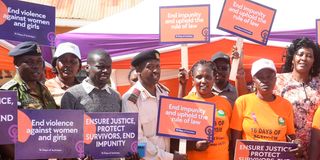
Turbo Sub-County Commissioner Joseph Sawe (centre), Turbo Sub-County Police Commander Patrick Wekesa (left), and other participants during the launch of 16 Days of Activism Against Gender-Based Violence at Huruma Primary School in Eldoret, Uasin Gishu, on November 25, 2026.

What you need to know:
- As the world marks 16 Days of Activism, Kenyan activists demand urgent government action to end femicide, protect survivors and prosecute perpetrators.
- Rising femicide cases and technology-facilitated abuse expose gaps in Kenya's response to violence against women and girls, despite years of advocacy.
Every year, from November 25 to December 10, the world comes together to mark the 16 Days of Activism Against Gender-Based Violence, a global campaign that seeks to raise awareness, challenge harmful practices and demand concrete action to end violence against women and girls.
Launched in 1991 by activists attending the first Women's Global Leadership Institute, the campaign was established to draw attention to gender-based violence (GBV) and affirm that violence against women is a violation of human rights that requires urgent and sustained intervention.
The campaign begins on November 25, the International Day for the Elimination of Violence Against Women, and concludes on December 10, Human Rights Day. The dates deliberately link the protection of women and girls to the broader struggle for the recognition and protection of fundamental human rights.

Over the past three decades, the initiative has grown into a global advocacy platform, bringing together governments, civil society organisations, human rights defenders and communities to demand stronger protections, better support for survivors and accountability for perpetrators.
Beyond creating awareness, it provides an opportunity to examine progress made in tackling GBV, exposing shortcomings in existing interventions and pushing governments and institutions to honour their commitments. Its focus has been advocating stronger laws and policies, alongside improving access to essential services, including emergency hotlines, shelters, safe spaces, healthcare, psychosocial support and legal assistance.
The campaign also challenges harmful practices, discrimination, stigma and victim-blaming, which continue to discourage survivors from reporting abuse or seeking help. Key players use the period to educate communities, engage men and boys in prevention efforts and promote initiatives that strengthen the social and economic empowerment of women and girls.
More than 6,000 organisations in nearly 190 countries participate in the annual campaign, using it to push for stronger prevention measures, access to justice and safer environments for women and girls.
While the campaign initially focused on drawing attention to violence against women and girls, its scope has expanded over the years to address both longstanding and emerging forms of abuse, including domestic violence, sexual assault, harassment, exploitation, violence against women in conflict situations, reproductive violence and harmful practices such as female genital mutilation and child marriage.
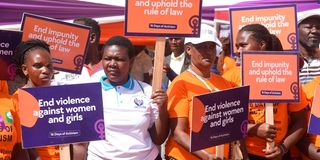
Participants during the launch of 16 Days of Activism Against Gender-Based Violence at Huruma Primary School in Eldoret, Uasin Gishu, on November 25, 2026.
Increasingly, activists are also directing attention towards femicide and technology-facilitated gender-based violence (TFGBV), which includes cyberstalking, online harassment, digital threats, hacking and the non-consensual distribution of intimate images. The growing use of digital platforms has created new avenues through which women and girls can be targeted, prompting calls for stronger safeguards and greater accountability from technology companies.
In Kenya, this year's campaign comes against the backdrop of the growing concern over the killings of women and girls, with activists and human rights organisations intensifying calls for decisive government action. Through awareness walks, vigils and public campaigns, rights groups demand investigations into the killings, prosecution of suspects and an end to impunity.
They have also drawn attention to online abuse, trolling, stalking and emerging forms of artificial intelligence-enabled violence, arguing that technology companies must do more to ensure their platforms do not become tools for intimidation and abuse.
Njeri Migwi, the Executive Director of Usikimiye that works to eradicate GBV, including femicide, told the Nation that they had documented more than 60 cases of femicide since January. She expressed concern that recommendations made by a government task force and subsequently submitted to the President remain unimplemented.
Njeri said the government must urgently act on the recommendations, warning that women continue to live in fear as cases of killings persist. “We are calling on the government to act swiftly and implement the report. Women are no longer safe, and things cannot continue this way where women live in perpetual fear. We have to say no to femicide. Men are our brothers, fathers, and sons, and they need to stand up for us. We call upon men to join us in the anti-femicide movement.”
She urged men to take an active role in challenging GBV, calling on them to be ambassadors in the fight against femicide and other GBV forms.
Similarly, Rachel Mwikali, the Coordinator of End Femicide, has called on the government to declare femicide a national crisis. She argues that such a declaration would help mobilise resources and provide a framework for a coordinated response to the killings.
Rachel has also called for stronger law enforcement, expedited investigations and decisive action against perpetrators, warning that the scale of the problem demands urgent national intervention. Despite increased public awareness and policy interventions, survivors continue to encounter significant obstacles when seeking help.
Fear of retaliation, stigma, financial dependence, inadequate support services and limited access to justice are some of the factors preventing many women from reporting abuse or escaping violent situations. More than 30 years since its inception, the 16 Days of Activism remains an important platform for challenging GBV and demanding institutional accountability.
Benefits
The campaign has contributed to shaping public conversations, influencing policy debates and strengthening advocacy for survivor support systems. However, the persistence of violence against women and girls demonstrates that awareness alone is insufficient to address the problem.
Human rights and gender activists maintain that governments, institutions and communities must move beyond public declarations and translate their commitments into practical interventions that prevent abuse, protect survivors and ensure perpetrators face justice. UN Women Executive Director Sima Bahous has called for renewed efforts to ensure legal protections translate into meaningful safety for women and girls.
Under this year's campaign theme, “UNiTE to End Violence Against Women and Girls: Ensure justice, protect survivors, end impunity,” Sima has urged leaders to strengthen justice systems and ensure perpetrators are held accountable. She noted that despite increased recognition of violence against women and girls, stronger protective laws and more perpetrators being imprisoned, these gains must be reflected in the everyday experiences of women and girls.
“I urge leaders to meet past advocacy with justice by turning laws into safety, promises into protection, and words into action,” she said.
Also read: Action, accountability needed to end GBV
Sima also highlighted persistent challenges facing survivors, including low rates of reporting to police, institutional bias, limited access to legal aid and funding constraints affecting women's rights organisations. She called for justice systems and support services that are accessible, effective and responsive to the needs of survivors.
As Kenya joins the rest of the world in marking the 16 Days of Activism, the National Gender and Equality Commission has raised concern over the growing prevalence of TFGBV and femicide. Chairperson Rehema Jaldesa said findings from the recently released Kenya Mini Demographic and Health Survey 2025/26 indicate that 26 per cent of women aged between 15 and 49 have experienced TFGBV.
Online controlling behaviour, hacking and online harassment were among the most commonly reported forms of abuse. “These findings show that digital spaces are increasingly becoming sites of abuse and reinforce the need for stronger digital safety measures, accessible reporting mechanisms and effective legal needs. Femicide is also a growing concern,” Rehema said.
Also read: Curb the GBV scourge
She called for stronger legal frameworks, an end to impunity and swift action to ensure perpetrators are held accountable. She emphasised the need for accessible, survivor-centred services that respond to different experiences of marginalised groups, including women and girls with disabilities and male and intersex survivors.
The concerns highlight the need for GBV interventions to keep pace with changing forms of abuse, particularly as digital technology becomes increasingly embedded in everyday life. Ultimately, the 16 Days of Activism is a reminder that the responsibility to end GBV does not begin and end with an annual campaign.
While the period provides an important opportunity to mobilise communities, amplify survivors' voices and demand accountability, protecting rights, safety and dignity of women and girls requires sustained commitment throughout the year. For Kenya, the challenge remains turning years of advocacy, policy commitments and public promises into tangible action that makes women and girls safer, both online and offline.