A nation in crisis: Why Kenya should declare femicide and pedicide a national emergency
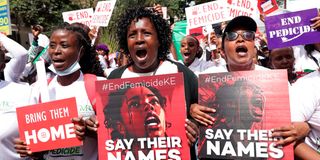
Kenyans protest against rising femicide and pedicide (child killings) along Kenyatta Avenue in Nairobi on June 1, 2026.

What you need to know:
- Rising femicide and child disappearances demand urgent government action, accountability and stronger protection systems.
- Activists are urging Kenya to recognise femicide as a distinct crime and prioritise survivor-centred support services.
“Are we doing enough to protect women and children in Kenya?” This question has weighed heavily on many Kenyans lately. Every day, community and social media reports highlight another tragic case of a missing child, sexual abuse, or femicide, raising urgent concerns about the safety and protection of women and children.
On March 27, 2024, thousands of women marched in Nairobi, protesting against increased femicide in Kenya under the #TotalShutDownKE campaign. In addition, they have been using social media platforms to promote greater participation, raise awareness, and mobilise efforts against gender-based violence (GBV). These efforts led to increased attention, advocacy, and amplification of survivors’ voices. Yet, femicide and other forms of GBV targeting both children and women continue to persist.
Amnesty reports that in 2026, at least eight cases of femicide were reported weekly and 23 children disappeared daily. By 2025, data reported by the National Police Service and the National Crime Research Centre indicated that 129 women were killed between January and March 2025. In 2024, 529 women were killed. The rising number of femicide and children disappearing raises critical questions about the safety of women and children. The inaction, silence, and denial by relevant stakeholders also raise concerns about the beneficiaries of these atrocities, yet the nation is in an evident crisis.


What is not named is ignored. The fact is: Femicide is not homicide. Women are killed intentionally because they are girls. The lack of recognition of femicide as a legal issue in Kenya limits the ability to accurately monitor, document, and respond to femicide. These legal gaps promote a culture of impunity where perpetrators are not held fully accountable. To address this, it is time the government recognised femicide as a distinct crime and established a national support surveillance, tracking, and reporting system. Language matters, recognising femicide in law not only strengthens accountability but is a disruptive action that signals a national commitment to protecting women and girls and ensuring that survivors and affected families receive justice.
Femicide and missing children are a national emergency; Kenyan women and children cannot wait for help when they are dying! It has been three months since the Gender Based Violence task force, led by Justice Nancy Baraza, submitted a report with recommendations to address the rising cases of GBV, including femicide. However, despite the urgency of the crisis, not much has been done to address femicide. President William Ruto and women in leadership must declare femicide a national emergency, commit to addressing femicide by putting up concrete actions, and allocate budgets to address the crisis.
Kenyans demand justice; the Directorate of Criminal Investigations should investigate all reported cases of femicide, rape, and missing children. Accountability should be strengthened across justice systems, ensuring police, prosecutors, and the Judiciary are held accountable for how GBV and femicide cases are handled.
As Kenya develops the 2026–27 national and county budgets, there is an urgent need to establish and adequately finance a GBV fund that prioritises survivor-centred support. Such a fund should support safe shelters, psychosocial services, legal aid, emergency healthcare, economic empowerment programs, child protection systems, and community-based prevention initiatives.
For learning exchange, Kenya should borrow lessons from South Africa, which has taken concrete steps to recognise and respond to femicide through a national policy framework and budget allocation. South Africa has established a GBV fund and National Strategic Plans on Gender-Based Violence and Femicide, strengthened data collection systems, and elevated femicide as a national crisis.
While challenges remain, these efforts demonstrate government leadership, the importance of political commitment, and sustained investment in prevention and survivor support. Kenya can adopt similar approaches by strengthening accountability systems, improving data collection, investing in survivor-centred services, and formally recognising femicide as a distinct form of gender-based violence that requires urgent national attention.
In addition, there is a need for sustained public awareness campaigns using diverse media platforms, including radio, television, social media, art, community forums, digital platforms, and other offline spaces. Public education plays a critical role in challenging harmful gender norms, encouraging reporting, promoting prevention, and ensuring communities understand the realities and consequences of gender-based violence and femicide.
Femicide is not just a criminal issue; it is a public health and human rights issue deeply entrenched in our systems. Behind the statistics is a mother, a sister, a child, and a community left traumatised, forced to confront the reality that women are not safe in Kenya. If we care about the future of Kenya, we need to treat femicide as an urgent crisis that needs a collective multi-stakeholder response from the government: the private sector, donors, schools, and everyone.
The writer is the Executive Director of Community Voices Network.


