16 Days of Activism: Two men, one mission to stop rape cases from being settled out of court

Birya Menza from and Mohamed Turane, gender activists from Kilifi and Wajir counties respectively.

Two men, more than 700km apart, are pushing for the same thing: that cases of sexual violence go to the police and the courts, not to elders or informal settlements.
In Kilifi, Birya Menza is mobilising men and boys against sexual and gender-based violence (SGBV). In Wajir, Mohamed Turane is doing the same, with a focus on female genital mutilation (FGM), defilement and other forms of sexual abuse.
Kilifi: Birya Menza


For the past five years, Menza has worked to get men and boys to confront GBV, challenge harmful cultural practices and build healthier relationships between men and women. His campaign has earned him both admirers and critics.
He says the initiative was inspired by his belief that boys are increasingly being left out of empowerment programmes. He believed this was fuelling resentment towards girls, who were receiving greater attention and support.
Through the Kilifi Boy Child Empowerment Initiative, Menza has taken his message to communities across the county. Thousands of men and boys, including boda boda riders and village elders, have joined discussions on gender equality, positive masculinity and the prevention of violence against women and girls. The initiative seeks to change attitudes by encouraging men and boys to abandon harmful practices and help create safer communities.
Menza believes men have a critical role to play in ending GBV, particularly because they make up the majority of perpetrators.
“I believe men can play an integral role in fighting and eliminating GBV in society. The majority of perpetrators are men, and it is important to enlighten them that they can always resolve their differences with women amicably without harming one another,” he tells Nation.
The programme also teaches boys and young men about the consequences of actions that expose girls to abuse, including defilement, sexual exploitation and teenage pregnancies.
Menza says the initiative has trained more than 3,000 male champions across Kilifi County. The group includes young men and elders, with about 100 participants targeted in each of the county's 35 wards. To reach more people, he uses chiefs' barazas, school visits and church gatherings to discuss the causes, effects and prevention of GBV.
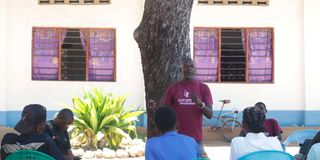
Birya Menza, a boy child advocate in Kilifi speaking during the interview at Bubujika Calvary Church grounds in Kilifi County in this picture taken on November 24, 2024.
The initiative is also challenging the use of informal community tribunals, commonly known as kangaroo courts, to resolve SGBV cases. Menza argues that these arrangements undermine access to justice by taking serious criminal cases away from the established legal system.
In some communities, pressure from relatives and local leaders has led families to settle informally instead of reporting sexual violence to the police and pursuing prosecution in court. He says this denies survivors justice and can allow perpetrators to escape accountability.
The initiative has also expanded to address alcohol and drug abuse, which remain major challenges at the Coast. A Kenyatta University study in Kilifi and Mombasa counties found a link between substance abuse and sexual and gender-based violence, although economic and social factors also play a role.
The study found that women who use drugs experience high levels of sexual, physical and psychological violence from intimate partners, drug dealers, clients in the sex trade and law enforcement authorities. It also established that 75 per cent of women who used drugs engaged in sex work to pay for their substance use or meet basic needs. They often worked in unsafe environments, where they faced a higher risk of sexual violence.
The findings point to the complex relationship between substance abuse, economic vulnerability and GBV, and the need for interventions that address the underlying causes.
Kilifi remains among the counties grappling with SGBV. According to the 2022 Kenya Demographic and Health Survey (KDHS), 20 per cent of women aged 15 to 49 had experienced physical violence at some point since turning 15. Eight per cent of women in the same age bracket had experienced physical violence in the 12 months before the study.
On sexual violence, 12 per cent of women aged 15 to 49 reported having experienced it at some point in their lives, while seven per cent had experienced it in the preceding 12 months. The report also shows violence within intimate relationships: 30 per cent of women who had ever been married or had an intimate partner experienced physical, sexual or psychological violence from their most recent husband or partner.
In response, the Kilifi County Government enacted the Sexual and Gender-Based Violence Act in 2023. The law provides a framework for a coordinated county response by setting out clear responsibilities across different sectors and strengthening prevention, survivor protection and accountability. It is also meant to move the county away from fragmented interventions towards a more structured approach, backed by institutional coordination and dedicated resources.
For Menza, however, legislation alone cannot end the problem. He believes lasting change will require a shift in attitudes, particularly among men, who must recognise that protecting women and girls is a collective responsibility. Through community engagement and the training of male champions, he hopes to build a generation of men and boys who reject violence, respect women's rights and advocate for peaceful coexistence.
Wajir: Mohamed Turane
In Wajir, Turane has become a prominent voice against harmful cultural practices that continue to expose women and girls to violence in the county. Cases of defilement, rape and sodomy have been reported in communities, schools and even homes, raising concern over the safety of women and children.
“Cases of defilement, rape and sodomy have been on the rise in Wajir. They are happening at the community level, schools and in our homes,” says Turane, who works as the Programmes and Governance Officer at Arid Land Development Focus.
Concerned by the situation, he decided to act through community sensitisation and advocacy. He organises grassroots dialogues to teach residents about GBV, its consequences and the importance of reporting cases to the relevant authorities.
“Through the community dialogues, we are enlightening locals on what GBV entails. The awareness also involves teaching residents about reporting pathways in cases of GBV, including defilement and rape,” he says.
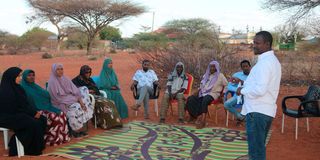
Mohamed Turane in Hodhan village, Wajir East, on September 12, 2025. Turane has been leading efforts to fight FGM and child marriage in the county.
Turane is also pushing for a behaviour change, particularly among men, by challenging attitudes and beliefs that fuel discrimination and violence against women.
One of his main targets is the Maslaha system, an informal traditional dispute resolution mechanism used by sections of the Somali community to settle disputes, including those involving rape, defilement and domestic violence. Gender rights advocates have criticised it, arguing that it undermines access to justice for survivors by allowing serious criminal offences to be handled outside the formal judicial system.
Turane maintains that sexual offences should never be settled through traditional arrangements.
“I have always believed that elders should not handle defilement and rape through the Maslaha system. They are criminal offences, and those responsible should be taken to court," he says.
He argues that the system has contributed to the collapse of sexual violence cases by creating room for interference with witnesses, discouraging survivors from pursuing justice and weakening prosecution.
Turane also believes men must play a central role in the campaign against GBV, because engaging them is critical to challenging harmful social norms. This is why his advocacy targets men and community elders, whom he seeks to persuade to abandon practices that compromise survivors' rights.
“That is why our campaign targets elders and men. We normally sit them down and make them understand that there is no shortcut when it comes to defilement, rape and FGM cases. Survivors must get justice, and perpetrators must face the law,” he says.
His advocacy has helped build opposition to the Maslaha system in Wajir. In February, elders and religious leaders in the county publicly rejected its use in handling SGBV cases. They resolved that all such cases must be reported to the authorities, investigated and prosecuted through the formal justice system. The leaders also committed to working together to address sexual violence and end informal settlements of such cases.
“We have collectively agreed to confront GBV and the use of the Maslaha system in these cases. We must find a lasting solution so that survivors can access justice. Perpetrators must face the law and be held accountable for their actions,” said Wajir County Director of Peacebuilding Abdi.
Retired chief Abdi Shakur, who spoke on behalf of the elders, also backed the decision to abandon traditional settlements in favour of formal legal processes.
“From now, such matters involving sexual violence should be left to the police and the courts. The cases should be investigated and prosecuted,” he said.
The leaders' declaration comes as the country moves to strengthen laws on sexual offences. The National Council on the Administration of Justice (NCAJ) has endorsed the Sexual Offences (Amendment) Bill, 2026, which seeks to outlaw the use of informal dispute resolution mechanisms in sexual violence cases.
The proposed law seeks to outlaw out-of-court settlements and declare traditional dispute resolution arrangements, informal agreements and private settlements involving sexual offences null and void. If enacted, it would require such offences to be handled through the formal justice system, strengthening accountability and protecting survivors from arrangements that could deny them justice.
Kangaroo courts and the Maslaha system have been criticised for allowing serious sexual offences to be settled through negotiated agreements rather than legal accountability.
For Turane and other advocates, the push to reform the law is a chance to reinforce the message that sexual violence is a criminal offence and must be treated as such.
Follow our WhatsApp channel for breaking news updates and more stories like this.


