Beads, baskets and mats: How widows in Turkana are weaving hope into their lives
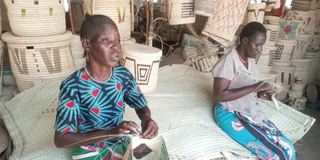
Widows in Turkana weave baskets and mats to support their families. They say limited market access threatens their businesses.

What you need to know:
- Widows in Turkana are making baskets, mats, beadwork and soap to support their families but say limited market access threatens their businesses.
- Women’s groups in Lodwar are helping widows rebuild their lives, defend property rights and meet household needs through collective enterprise.
In Turkana, where economic hardship and limited employment opportunities leave many households struggling to make ends meet, widows are turning traditional skills into a source of income, dignity and hope.
Through beadwork, basket weaving, mat-making and soap production, they are supporting their families while calling for better access to markets to make their enterprises sustainable. For many women, losing a husband means more than the pain of bereavement. It can also mean losing the household’s main breadwinner and being left with the responsibility of raising children, paying school fees and putting food on the table.
For Pauline Napeyok, the chairperson of Turkana Widows Advancement Programme in Lodwar, joining hands with other women offered a way to confront these challenges. “The group has 28 members, most of them widows who came together. Rather than face their hardships alone, they organised themselves into a group and began using their skills to generate income,” she told the Nation in an interview in Lodwar.


“The widows make baskets, mats, bags and beadwork products, drawing on traditional knowledge passed down through generations. They also manufacture soap.”
Pauline said the work keeps members occupied while providing an opportunity to contribute towards household expenses. “For women raising children with limited financial support, every sale can help meet daily needs and keep children in school.”
She said the widows’ efforts extend beyond economic empowerment to supporting those who have lost their property and other rights in battles with in-laws.
Also read: ‘We have waited for years’: Widows demand compensation for losing husbands to political violence
Pastor Adir Lokadio said she lost everything after her husband died. But after joining Emajale Women’s Group in Kanamakemer, Lodwar, things began to change. “Through the group's support, I found comfort among other women who were undergoing a similar situation. I learnt about my rights and with the group’s assistance, I recovered the matrimonial property I had lost,” she said during a workshop organised by Partnerships 4 Empowerment & Networking in Kenya (PEN Kenya), with the support of the United Nations Development Programme in Lodwar.
Alung'rat Women’s Group brings together 38 groups, which engage in different economic activities. While some make handicrafts and soap, others run shops and groceries. Their common goal is to improve household welfare and help members meet their children’s needs, including school fees and at least a meal a day.
Beatrice Lomuria, who represents women under Alung'rat, says the umbrella group has always given them a platform to speak out when their rights are violated. Despite their determination and the range of products they make, marketing their products remains a big challenge.
Esther Alimlim, a member of Alung'rat Women Group, said, “Our biggest challenge is the market for our products. Without reliable markets, we risk investing time and resources in products that may not generate good returns.”
For Pauline, the challenge highlights a gap between producing goods and building viable businesses. She added that although they have the skills to manufacture products, they need stronger linkages to customers.
She appealed to the Turkana government and other development partners to support the widows by connecting women's groups to buyers and organising exhibitions. “For Turkana widows, such support means more than expanding sales and will strengthen our ability to provide for our families, protect our dignity and build greater financial independence,” she said.