Blamed for genes: How a sickle cell diagnosis drove a young mother out of marriage
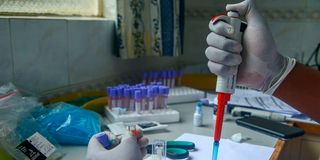
Every year, roughly 14,000 people in Kenya are born with sickle cell disease—a hereditary blood disorder that reshapes soft, flexible red blood cells into rigid, crescent-like forms.

What you need to know:
- Kenya records about 6,000 new sickle cell cases annually, with Kisumu among the worst affected regions. Yet misconceptions about how the disease is inherited persist, often fuelling gender-based violence.
- A young mother's story—leaving her home and losing her job after her child’s diagnosis—reveals a wider crisis.
Mercy* steadies her one-year-old son as he stirs on a mat where he was having his afternoon nap. She moves through familiar motions; water for a bath, clothes to wash—the endless rhythm of a mother's day.
But there is a fracture running through these ordinary moments. For the past seven months, she has done this alone in her brother's three-roomed house in Kisumu County, far away from the home she shared with her husband of over eight years.
Mercy does not speak about that home easily. And when she does, tears well up in her eyes. “I left my matrimonial home earlier this year following continuous emotional abuse by my husband,” she says, her eyes betraying her pain.


The abuse did not begin because of infidelity, money or the ordinary conflicts that afflict fracture marriages. It began with a diagnosis.
In October 2024, Mercy’s newborn son was diagnosed with sickle cell disease, an inherited blood disorder caused by a mutation in the gene that produces abnormal sickle-shaped red blood cells. These cells block blood flow and cause severe health complications.
The diagnosis should have brought the couple together. However, it tore them apart. “My husband said he has never heard of the disease in his lineage, and, therefore, I am responsible for our baby's condition,” Mercy recalls. “He also refused to pay the medical bills and opted to visit a herbalist in search of a cure.”
The misunderstanding on how inherited diseases work has cost Mercy her marriage, livelihood, and nearly everything that she had built. Eight years ago, in 2017, when Mercy moved in with her spouse, they were hopeful of a good future together. A few months into the marriage, she conceived their first child. However, after birth, the child suffered ill health from the outset.
Hospital visits became routine.
In 2019, a paediatrician advised the couple to get the child tested. The test results revealed that he had sickle cell disease. Their firstborn died of the illness. “None of us thought about getting screened for the blood disorder,” Mercy says. "Neither of us had also come across the disease in our families before.”
That couple would never know if their child might have lived had they understood the disease sooner. What they knew was loss, and they moved on. Six years later, Mercy conceived again.
This time, in October 2024, after delivering the baby at Kisumu County Referral Hospital, she followed a health worker’s advice and had her newborn screened. Three months later, the hospital called her to pick the results. “I was scared of breaking the news to my husband. I requested the health worker inform him on the phone,” she says, adding that her husband did not answer his phone.
That evening, as they prepared for bed, Mercy finally told her husband about the results. She remembers him blaming her. Mercy says that he was emphatic that no one in his family had ever suffered from sickle cell disease. He says that I am the one who brought the disease, she says.
What followed was months of escalating cruelty. Mercy says he called her names. She says that he even threatened her when she asked for help to buy their son’s medication. When she asked him to go for screening to understand how their son had inherited the disease, he refused.
Instead, he blamed her daily for bringing what he called a "killer disease" to the family. He swore he would never have another child with her.
Mercy had a choice: stay and endure, or leave and try to survive alone. By May 2025, the emotional abuse had become unbearable. She walked out.
Approximately 6,000 infants are born with sickle cell disease every year in Kenya. According to Ministry of Health statistics, 80 per cent of them die before their fifth birthday. Kisumu, one of the country's high-burden areas for the disease, records 3,000 children born with the blood disorder annually. These are not rare cases. Yet the violence that follows a diagnosis is rarely discussed.
Common
Ms Lily Webala, the founder of Zuwi Afya, a community-based youth-led health organisation, says sickle cell cases are common. “Cases of women exposed to gender-based violence after giving birth to children with genetically inherited diseases, especially sickle cell, remain common,” she says.
Her organisation supports sickle cell disease warriors across the country who face physical or emotional violence from partners who blame them for their children’s illness. In some cases, the violence comes not just from husbands but from in-laws who put pressure on the men to remarry and bear “healthy children”.
“We have encountered one case of a man who was pushed out of his home by his wife who believes he is the cause of the illness,” Ms Webala notes.
But women bear the heaviest burden of the blame. And many, like Mercy, find themselves leaving their marriages. Others stay but they become the sole caregivers. They carry the emotional and financial burden alone. Some women end up enduring violence in silence, with the hope that things will change.
Ms Webala says that when women finally understand the biology behind the disease—that sickle cell is inherited from both parents, not one—the blame dissolves. However, that requires access to information.
Last month, the organisation launched a campaign to create awareness about sickle cell disease. People were educated on how the disease is inherited and how it is managed. The campaign includes free screening services for couples and children, as well as counselling for parents who are carriers and those whose children have been diagnosed.
“Our major message, as we mark the 16 Days of Activism against gender-based violence is to make the masses understand that the disease is not a fault of one of the parents, but it is inherited from both,” Ms Webala says.
For Mercy, that understanding came too late to save her marriage. After she left, she lost her teaching job at a private school. She was told that she had become unreliable. Before the separation, Mercy was frequently absent from work because she needed to take her son to hospital.
“Before I was sacked, I was not able to report to work regularly because I had to take care of my ailing son,” she says. “I am his sole caregiver. As time went by, my employer relieved me of my duties, saying that I should go and take care of my child.”
The hospital visits have consumed her savings. The Social Health Authority covers some of her son's medication, but many drugs are rarely available in public health facilities. “A number of drugs are rarely available in the public facilities, forcing me to pay out of my pockets,” Mercy says.
Seven months into her separation, Mercy now depends on her family and friends for support to take care of her son.
*Name changed to protect her identity.


