Beacon of Hope: New specialised centre transforms sickle cell care
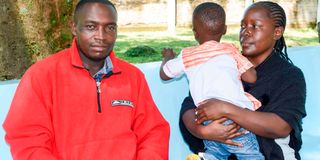
Amos Okoth and Evelyne Atieno sharing their family’s experience with sickle cell disease.

What you need to know:
- For decades, sickle cell disease has been a silent crisis in Kisumu, with many patients struggling to access proper treatment. But now, Victoria Annex Hospital is changing the narrative, offering comprehensive care that is giving patients a new lease of life.
Bertha Oketch sits on a bench in the waiting area of Victoria Annex Hospital, her son leaning sleepily against her. The facility, which is under the management of Jaramogi Oginga Odinga Teaching and Referral Hospital, is located in Milimani, Kisumu County.
The hospital hums with the usual midweek bustle — mothers with infants, older patients clutching prescription slips, and health workers moving between consultation rooms.
Bertha has brought her son, who has sickle cell disease for routine check-up at the county's new specialised sickle cell disease clinic.
The air at the facility is thick with the quiet resilience of families who know this routine too well. By 10am, the benches are filled with parents and their children, both young ones and teenagers.
As a doctor calls the next name, a toddler’s wail pierces the room—another pain crisis beginning. Outside, the sun beats down on Milimani, indifferent to the quiet war waged here every Wednesday.
When Bertha’s son’s name is called, she adjusts her leso and heads to the consultation room.
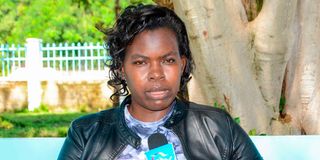
Bertha Oketch during the interview. She is a caregiver to her son, who is battling sickle cell disease.
For the first time in years, Bertha isn't filled with dread about the long wait, expensive treatment, or inadequate care that her son might receive.
"We arrived early, the services were swift—from registration to medication. The Social Health Authority covered everything. It is a huge relief!" Bertha explains.
Her relief is palpable, and it's shared by dozens of other families who no longer have to navigate the complex referral system at Jaramogi Oginga Hospital, where sickle cell patients often waited for hours in overcrowded corridors.
Victoria Annex Hospital has become a beacon of hope for thousands of families battling sickle cell disease (SCD) — a genetic disorder that affects an estimated 20 to 30 newborns out of 100 in Kisumu County alone. The facility is revolutionising care, offering swift, and comprehensive treatment that was previously out of reach for many.

Victoria Annex Hospital that was recently transformed into a specialised sickle cell centre.
Bertha narrates how her son’s lifelong medical journey began. When she gave birth, everything seemed normal until he turned 18 months old. What followed was a painful, confusing battle to uncover why her once-healthy baby was constantly falling ill.
"His blood haemoglobin level dropped to 3.5, which is dangerously low. He needed immediate blood transfusion and medication for his health to start improving," she recalls. "My whole life, I never thought I would raise a child with sickle cell. It took several visits to many hospitals for doctors to finally confirm that he had the disease."
The diagnosis changed everything. Her son now takes four different medications daily to stabilise pain. Bertha must remain constantly alert for crisis calls from school, and last year, they spent two months hospitalised together.
"At times the child is helpless during the periodic episodes of extreme pain. If a caregiver does not get a proper support system, it can start taking a toll on them mentally," she admits.
At the corner of the hospital, 19-year-old Walter Ochieng is patiently waiting for his turn to see the doctor. He represents the older generation of sickle cell warriors. After nearly two decades of living with the disease, he has developed an almost supernatural awareness of his body's warning signs.
"Whenever I start feeling pain around the wrist and on the knees, these are tell-tale signs that a crisis is coming. I have accepted my situation," he explains.
Walter's acceptance comes with sacrifices. He can't play football, his favourite sport, and must carefully manage his energy levels. "Most of the time I keep myself busy listening to music and enjoying the company of friends. This helps take my mind off the reality of the illness."
However, he appreciates the efficient care being provided at the new facility: “I must appreciate how quick the nurses were at serving and understanding the diversity in handling SCD patients.
"Getting Blood Group O for transfusion, which is normally an uphill task, was easy. I also got my normal medication — hydroxyurea and folic acid - for free."
Managing disease
Similarly, Amos Okoth and his young family are at the facility seeking medical attention. Both his wife, Evelyn Atieno, and his two-year-old son are carriers of SDC. Evelyn, 28, says she was diagnosed with the disease when she was four months old. She has been managing it with drugs, maintaining a proper diet and avoiding triggers that could lead to a pain crisis such as stress and doing hard manual chores.
The Victoria Annex Hospital's sickle cell centre isn't just improving care—it's rewriting survival odds for patients in Kisumu County, which has one of the highest concentrations of SCD in Kenya.
When Veronica Bitta's daughter was diagnosed with the disease 16 years ago, doctors told her to prepare for the worst. However, she decided to fight on.
Today, Bitta's teenage daughter is thriving, and her mother has transformed personal pain into a powerful force for change. Her organisation, Tumaini Sickle Cell Organisation, has become a lifeline for hundreds of families navigating the same treacherous journey she once walked alone.
"A lot of work is going on across the nation to improve health delivery infrastructure to support sickle cell patients so that we can change the narrative and ensure those born with SCD live beyond five years, and live for many years," Bitta explains at her office, where she is surrounded by medical charts and hope-filled testimonials from families whose lives her work has touched.
"I see parents shift blame between themselves, and sometimes this breaks the family apart," Bitta observes, her voice heavy with the weight of countless counselling sessions. "I call upon caregivers to combine efforts, both mother and father, and support their children to provide a loving and supportive environment so they can live fully.
"The science of sickle cell is that both parents must be carriers for a child to be born with the disease," Bitta explains. "Understanding this can help stop the blame game that destroys many families."
Bitta has emerged as a leading advocate for mandatory genotype testing before marriage in Kenya—a policy shift that could dramatically reduce the burden of sickle cell disease in the country. Her proposal is rooted in both personal experience and scientific evidence, aiming to empower couples with knowledge to make informed reproductive choices.
"Since sickle cell is genetically inherited, it is important for all people of premarital age to know their genotype to enable them to make informed reproductive choices," she says.
Currently, most Kenyans discover their genetic status only after having an affected child, a tragic timing that could be prevented with simple, affordable testing. Bitta envisions a country where couples understand their genetic compatibility before starting families, potentially reducing the 14,000 annual births of children with sickle cell disease in Kenya.
Her organisation conducts community outreaches and education campaigns, but she believes only government policy can create the widespread change needed to address what experts call "Africa's genetic crisis." Numbers paint a sobering picture of Kenya's sickle cell landscape. According to the World Health Organization, the disease affects nearly 100 million people worldwide and is responsible for over 50 per cent of deaths among those with the most severe forms.
Each year, over 300,000 children are born with the disease globally, with over 70 per cent of these births occurring in Sub-Saharan Africa. Kenya alone sees 14,000 new cases annually, contributing significantly to both child and adult mortality.
Dr Joy Muyonga, acting director of Paediatrics at Jaramogi Oginga Hospital, provides stark local statistics, "Since 2021, two to three per cent of newborns in Kisumu are born with SDC. In 2018, we recorded our highest rate at 3.2 per cent. Those born with carrier traits range from 15 to 18 per cent."
The disease follows Kenya's malaria patterns, with the highest burden in Lake-region, Western, and Coastal areas. However, migration and intermarriage have spread sickle cell into urban and commercialised areas, making it a national health challenge.
Dr Muyonga cites a critical reality that drove the urgency behind facilities like Victoria Annex Hospital: "If we don't diagnose SCD early, 90 per cent of children die before their fifth birthday.
“This devastating statistic explains why routine newborn screening has become the cornerstone of sickle cell management.”
Sickle cell disease represents a cruel twist of evolutionary adaptation. Dr Muyonga explains that in areas of low oxygen tension, abnormal sickled red blood cells assume a rigid sickle shape that can block small blood vessels, impairing blood flow throughout the body.
"Some carriers do get symptoms in extreme conditions, at high altitude and in very hot weather. They may experience symptoms and even crises," Dr Muyonga notes, explaining why even carriers need to understand their status.
The most common forms of sickle cell in Kenya are HbSS, HbSC, and HbSβ-thal, with each presenting different challenges. When a person inherits two sickle haemoglobins (HbS) from both parents, they have HbSS, the most severe form. Those inheriting one sickle haemoglobin and another variant have HbSC, typically a milder form but still requiring careful management.
While Victoria Annex Hospital represents a significant advance in sickle cell care, its leaders have ambitious plans that could revolutionise treatment in East Africa.
Currently, the facility operates with four doctors, two clinicians, two nurses, and auxiliary staff, providing outpatient care that has transformed lives. But Dr Muyonga envisions something far more comprehensive: "We look forward to support from the Ministry of Health to acquire an apheresis machine, which will help in performing automated exchange blood transfusions for patients in need of chronic transfusion."
The apheresis machine represents a technological leap that could dramatically improve patient outcomes. Unlike the manual transfusion system being used currently, this automated system separates blood components, plasma, platelets, white blood cells, and red blood cells with precision and speed.
"With the automated machine, one enters the patient's details while the machine does the calculation, giving you the right amount of blood to be transfused," Dr Muyonga explains. "The machine removes the bad blood from the patient's body and replaces it with new blood from donors. Patients get their transfusions much faster, reducing hospital stays and improving quality of life."
The facility's long-term plans could offer hope for an actual cure. Working with partners from India, the United States, Eastern Africa, and Kenya, Victoria Annex Hospital plans to establish a fully-fledged inpatient facility with a bone marrow transplant centre.
"Depending on scientific and technological advancements alongside stakeholder involvement, we hope to have a bone marrow transplant or even stem cell transplant centre at Victoria Annex Hospital," Dr Muyonga reveals. "This could help cure SCD for those with recurrent crises, stroke, and other complications."
The World Health Organization SCD strategy for the African Region gives guidance that member states should institute newborn screening programmes in their countries as one of the public health interventions.
In areas where sickle-cell anaemia is common, dedicated centres are required in order to ensure adequate services for prevention and treatment.
Ideally, the disease should be identified at birth as part of a screening programme or neonatal diagnosis and affected individuals urged to attend a centre periodically for evaluation.
In countries that have adopted newborn screening, the mortality rate has reduced by 25-75 per cent because of early interventions like prophylactic treatments.