Catherine Omanyo: From 'little girl' to building widows’ homes and breaking barriers in Busia
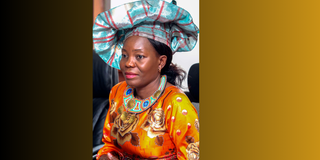
Busia Woman Rep Catherine Omanyo.

What you need to know:
- Dismissed as too young and unmarried when she first vied in 2007, Catherine Omanyo faced years of rejection and prejudice.
- Today, she serves as Busia Woman Representative, determined to empower women and vulnerable groups.
They called her an overly ambitious "little girl" who had no idea what lay ahead. When Catherine Omanyo announced her intention to vie for the Nambale constituency Member of Parliament seat in 2007, the dismissal was swift and brutal. She was just a woman in her mid-20s, unmarried, and to many, yet to figure out her life.
"She had failed to prove to the community her capability of taking care of a man through being a wife—constituency would be too much for her," went the whispers. The expectation was clear: she should stop daydreaming and focus on what she was "meant to do as a woman"—wait to be married and take care of her family.
But Catherine was not one to give up. She secured a nomination under the Kenya African Democratic Union (Kadu) party, weathering the scepticism with quiet determination.


"The community waited for me to quit in days, the wait moved to weeks then months, and before they knew it, I was in the ballot," she recalls.
On Election Day, she was the only woman contesting against men she describes as "well established both career and wealth-wise." She came in third position. Two more failed attempts followed in 2013 and 2017.
Eighteen years later, Catherine is more than proud to lead her people, having secured the Busia County woman representative seat in 2022.
"As much as my attempts to be an MP failed, I believe the position I hold today is best suited for the dreams and ambitions I always had for my people. My hope is to create an environment where both women and men are treated to equal opportunities," she says.
The fire that forged a fighter
Born and raised in Nambale, Busia County, by a widowed mother, Catherine admits that becoming a politician never initially crossed her mind. She was one of ten children, and all she ever dreamed of was giving her mother, who single-handedly raised her alongside nine siblings, a better life.
It was witnessing her widowed mother's suffering that ignited her passion for supporting women and the vulnerable in society. After her father's burial, her mother was subjected to gender-based violence that left indelible marks on young Catherine's mind.
"Her land was grabbed and land documents stolen. She was also physically abused multiple times after refusing to be inherited. To date, the horrific pictures remain fresh in my mind," Catherine says. "I also came to a painful realisation that upon the death of a spouse, a woman remains under the mercy of family, clan, and community."
This vow to fight for women would shape her entire political trajectory.
Before delving into politics, Catherine worked as a personal assistant to the late Orie Rogo Manduli. She draws inspiration from Martha Karua and Charity Ngilu, both senior politicians who blazed trails in Kenya's male-dominated political landscape.
When she tried again for the Matayos MP seat in 2013 and 2017, the challenges persisted despite now being married. The opposition remained rooted in one fundamental issue: she was a woman.
"One of the major challenges hindering us from achieving gender equality goals is the patriarchal society that fails to acknowledge women's leadership," says the woman representative. "A number of people do not look at women beyond their gender identity. Instead of leadership, they would rather use women as objects. Any attempts to be bold and they start questioning a woman's ability to be submissive."
Victory at last
In 2022, Catherine finally tasted electoral success, winning the Busia woman representative position under the Orange Democratic Movement ticket by a landslide against seven opponents.
"While I am enjoying the leadership position, I have come to the realisation that the people's needs are way higher than I had expected. This is coupled by increasing poverty levels," she reflects.
True to her word, Catherine has continued supporting widows, a practice she had grown fond of long before assuming office. Her major achievement has been building houses for hundreds of widows within Busia's eight sub-counties through the National Government Affirmative Action Fund (Ngaaf).
"I have put up over 200 houses. My target is to get to 300 by the end of the year," she says. Her office identifies vulnerable widows—while some receive iron sheets, a larger number benefit from complete house construction.
Beyond housing, her office has distributed wheelchairs to the physically disabled, offered scholarships to needy learners, drilled boreholes across the eight sub-counties, distributed sanitary towels, donated umbrellas to women working in open-air markets, and implemented a back-to-school policy for teen mothers.
"Once a young girl gives birth, most families are always quick to abandon them and instead divert educational support to other family members who are branded 'well-mannered.' It is my role to ensure the girls get back to school and achieve their academic dreams," she explains.
Women's groups receive Sh100,000 grants to run development projects, while Catherine has tabled parliamentary statements on various issues including living conditions of police officers, boda boda riders' safety, payment of stipends to village elders and having them uniformed, security of fishermen in Lake Victoria, and stalled roads within the county.
"Tabling a statement on the stalled Mungatsi-Akobwait road has since seen the contractors get back to work," she notes.
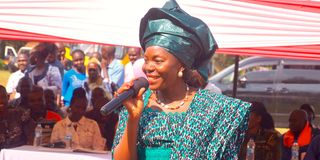
Catherine defends contested woman rep position whilst delivering wheelchairs, boreholes and teen mother scholarships.
Despite these achievements, Catherine faces significant challenges, chief among them limited funding that prevents her from reaching a wider number of beneficiaries. However, she identifies a more fundamental problem: constituents' lack of understanding of her role.
"The major reason why people have been calling for the woman representative position to be scrapped is the fact that they do not understand our job description. Ask them why they want the position disbanded and they have no tangible reason," she says.
This misunderstanding often leads to criticism when she fails to build schools, hospitals, and roads—responsibilities that fall under other elected officials. She advocates for public education on the distinct roles of governors, MPs, woman representatives, and Members of County Assembly.
"Our role as women representatives is affirmative action. We focus on the vulnerable in society, including women and PWDs. Our job is to lobby for resources to empower them," she clarifies.
Insufficient funding remains another major hurdle, complicated by what she sees as duplication of responsibilities.
"The governor's office has a gender department receiving funding for the same, yet we are the main fraternity handling the docket," she explains.
To overcome resource limitations, Catherine has turned to lobbying for funds among partners both locally and internationally, partnerships that prove crucial in helping needy learners achieve their academic dreams.
The impact of Catherine's work resonates differently across Busia's constituencies. Mary Makhoha, a resident of Budalangi, believes the woman representative's office has played a major role in handling grassroots challenges. Budalangi is among the sub-counties that have benefited from water projects courtesy of the Woman Representative's office.
"While the project does not benefit everyone, I am glad that a number of women have now been relieved from trekking over long distances in search of the scarce commodity," Makhoha says.
However, Edward Masiga, a resident of Bunyala, presents a more measured assessment. While he recognises Catherine, he is yet to feel her impact within his locality.
"I have come across a social media post of Ms Catherine launching water and women empowerment projects in Teso South alongside other sub-counties. I am however yet to see women in my village benefit from her leadership," says Masiga. "I am however hopeful that the women in my village will benefit from the leader before the end of her term."
Beyond Kenya’s borders
Catherine believes that while Kenya has made notable achievements regarding international commitments to gender equality, including the Beijing +30 goals, the country still has a long way to go. She points to regional examples for inspiration.
"There is a lot to learn from women's representation in countries like Rwanda, where women hold a majority of parliamentary seats," she observes. "Tanzania has also led by example in the East African region, having the first female president."
She contrasts this with Kenya's treatment of women leaders, citing recent events as evidence of persistent challenges.
"Women in such governments are always motivated. In Kenya, however, women leaders are often subjected to harassment. Take an example of the case of Meru Governor Kawira Mwangaza—her impeachment was a major loss to our country," she argues.
Fight for relevance
As debates about scrapping the woman representative position continue, Catherine remains defiant.
"Scrapping off the elective position can be a big shame to the country. We have made major strides putting women in positions of authority to showcase what they can do. Scrapping off the position will take us back to the dark days, where women were hardly seen," she warns.
Her vision extends beyond mere representation to fundamental change in how women are perceived and treated in leadership.
"It is time we stopped viewing women as baggage. We are part of a solution and should be included in any other department. The place of a woman is not to entertain politicians while resource allocation is left for men. Women should not be on the menu where men choose what to eat—we should be on the table creating the menu," she declares.