Child marriages have reduced in Kenya, but climate shocks could undo that progress
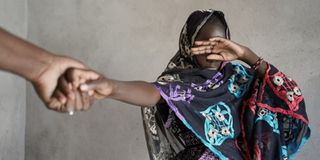
Reluctant child bride.

What you need to know:
- Child marriage tells a similar story. The pace of decline over the past decade has nearly doubled, a rare piece of good news that climate change now threatens to reverse.
- Among the 46 countries where researchers could separate the data by exposure to slow-onset climate events, 24 showed higher child marriage rates in drier regions than in wetter ones.
In Antalya, Turkey
You don't need to go far to see how unevenly climate change falls.
Inside the COP31 venue in Antalya, Turkey, the two nursing rooms set aside for mothers who need to express breast milk tell a story of their own. They are run-down and lack some of the basic essentials.


It is a striking contrast. At a summit where some of the world's most powerful people have gathered to decide the planet's future, even the basic needs of mothers seem to have been overlooked.
It is a small room, tucked away inside a massive conference venue, but it captures what is happening outside these walls. Climate change does not affect everyone equally, and neither do the spaces and decisions meant to address it.
For the women and girls who live with the climate crisis every day, being overlooked is nothing new. A new UN Women fact sheet, released as more than 102 heads of state and government officials gather in Antalya, shows how deep the pattern runs: at least 1.5 billion women and girls already live in climate hotspots. These are places where severe exposure to climate hazards overlaps with precarious work and entrenched gender inequality. Together, these pressures leave little room to adapt.
The document also points to a gap between recognition and action. Roughly 73 per cent of countries acknowledge that climate change poses particular risks to women and girls, but only a little over one in three deal with those risks in a thorough way.
A hotter world, an uneven burden
The backdrop is sobering. On present policies, the planet is heading for at least 1.8°C of warming, a level that brings fiercer droughts, floods, wildfires and cyclones, along with damage to ecosystems and communities that cannot be reversed. The fact sheet argues that the burden does not fall evenly. Women and girls in the countries that have contributed least to global emissions are among those paying the most, in everything from empty plates to personal safety.
Money
Income is the most direct pressure point. Using data from 24 countries, the analysis finds that each 1°C rise in average temperature is linked to women losing 34 per cent more of their total income than men. The likely reason is that when crops fail, women often have fewer routes to other work or to moving elsewhere. In the worst-case scenario the report models, as many as 141 million additional women and girls would be pushed into extreme poverty by 2050.
Climate stress also expands the invisible workload of unpaid care. Women tend to be the ones fetching water and fuel and looking after relatives once a disaster has passed. Of the 1.8 billion people who have no water supply on their own premises, women and girls are the main collectors in two-thirds of households. If emissions stay high, the hours spent gathering water could climb by as much as 30 per cent by mid-century, which means hours lost to school, paid work and rest.
Perhaps the most troubling findings concern violence. When livelihoods collapse, families are uprooted and resources run short, the conditions that feed gender-based violence tend to intensify. In 14 countries, prolonged extreme drought was tied to a 21 per cent higher risk of sexual violence against adolescent girls and young women.
Child marriage tells a similar story. The pace of decline over the past decade has nearly doubled, a rare piece of good news that climate change now threatens to reverse. Among the 46 countries where researchers could separate the data by exposure to slow-onset climate events, 24 showed higher child marriage rates in drier regions than in wetter ones.
The fact sheet also describes a basic imbalance in who makes decisions. Women hold only about 12 per cent of energy portfolios worldwide, even though energy policy sits at the heart of the transition. Meanwhile, 326 million women and girls still have no electricity, a gap that looks starker as the spread of artificial intelligence pushes global power demand upward.
Those who speak out face real danger. Women who defend land, water and forests are often harassed, and some are killed for it.
Money is another fault line. Developing countries are receiving less than a third of the climate finance they require. Of the official development assistance aimed at climate goals, just 4 per cent gives priority to gender equality. Funding that does not reach women and the organisations they run cannot be expected to meet their needs.
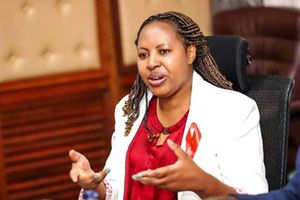
Jackline Makokha, Kenya's lead climate gender negotiator, said the report affirmed that climate change goes beyond environmental issues. "It's also a clear testament that climate change is as much a gender equality issue as well as a social justice issue. This is because climate impacts are not gender neutral.
"For Kenya, the findings should push us towards advocating for more climate finances that are accessible to all, including the very vulnerable populations that include women and children. There's an opportunity for Kenya to be more intentional in ensuring women and other vulnerable groups are effectively engaged in green energy transitions, climate-smart agriculture and other emerging technologies while addressing issues around unpaid care work," she offered.
In her telling, the Belem GAP, a framework to integrate gender equality into global climate policy, is a very critical framework whose implementation needs adequate financing, institutional capacities and sex-disaggregated data to enhance accountability.
If the right policies and funding are in place, the report says women could capture up to 66 per cent of the net new jobs created by the green economy, amounting to 68 million additional jobs by 2035.
UN Women's leadership sees the solution in empowerment rather than rescue.
"Across the world, women are already leading the fight for a better future – in their communities, in laboratories, in parliaments and on the front lines of the climate crisis. We must give women and girls equal rights, resources and the power to lead, and they will help drive the change our world so urgently needs," said Sima Bahous, Executive Director of UN Women.