Children born to teenage mothers share their stories years later

Damaris Omar, James Wamaitha Lydia and Priscah Njambi Wanjiru. The three were born to teenage mothers.

What you need to know:
- Kenyan families revisit painful teenage motherhood experiences while honouring mothers who chose hope despite overwhelming hardships.
- Decades after teenage pregnancies, children celebrate resilient mothers whose difficult choices transformed generations and strengthened families.
Imagine what it takes for a girl barely into her teens to face an unwanted pregnancy in a home where the news alone could get her beaten, thrown out or disowned, and still decide to keep the baby. Not because anyone encouraged her to, or because the circumstances were right, but simply because she could not bring herself to end the pregnancy.
For many women, that decision shaped the rest of their lives while they were still children themselves. Damaris Omar's mother was 15 when she had her first child. By 18, she was raising three children. James Wamathai's mother was under 17, hiding her pregnancy until the day she went into labour. Priscah Wanjiru's mother was barely 18 when she found herself selling vegetables by the roadside to support a child she had no one to help her raise.
These are stories about young girls who were dealt a situation they did not ask for, in a society that mostly frowned upon teen pregnancies, but still made a decision that changed everything. Decades later, the children they kept are now parents themselves, and as the country marked this year's Mother's Day, they had something to say.


A mother’s love: Story of loss, return and resilience
Damaris Omar was raised by her stepmother, her father’s first wife, rather than the woman who gave birth to her. She knew the big house on the sisal estate, the cows, the eggs, and the milk. She knew a life that, by her description, was comfortable. What she did not know, for the first nine years of her life, was that the woman raising her was not her biological mother.
Her mother, Anquilina Memswahili Mkanyika, was born in a coastal community where girls did not get ahead in school. She got to Class Two, and after that, the expectation was simple. You mature, and you are married off. That is exactly what happened. An uncle took her to Malindi, where, at around 12 or 13, she was married off to an older man. By the age of 15, she had given birth to her first child.
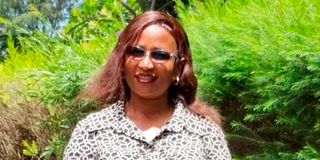
Damaris Omar, born to a teenage mother who was married off at 14 and had three children by age 17.
The marriage eventually fell apart, as often happens when a child is forced into a marriage not of her choice. She later met Damaris’s father, a man born in 1932 and nearly twice her age. But she already had a son from her previous marriage and, in the world she lived in, that left her with few options. Younger men would not marry a woman with a child, and so she settled into the marriage.
By the time she was 17, Anquilina had three children. Two with Damaris's father, including Damaris, and one from her first marriage. When her marriage to Damaris’s father also broke down, she left, leaving Damaris and her slightly older sister behind. She left with her firstborn son.
At the time, Damaris was still breastfeeding. “My mother left to go and fend for herself,” Damaris says. She was handed over to an older stepsister who had just given birth. The stepsister breastfed both her own baby and Damaris. Later, she was placed under the care of her stepmother. Her mother was absent for years, and Damaris grew up believing her stepmother was her biological mother.
This changed when Anquilina reappeared in Damaris’s life at the age of nine, while she was in Class Four. She went to the school and introduced herself as her mother. Damaris had no memory of her, no photogs, and no stories to connect her to the woman. Her father had never spoken her name at home.
"I didn't even have hazy memories of her. Yet she came to my school and told us (my sister and I) that she was our mother," Damaris recounts as if narrating a scene from the movies.
What followed were years of being pulled between two worlds. Her mother attempted to take her to Malindi, while her father resisted. Later, her elder sister, her closest companion, was knocked down by a vehicle while visiting their father’s relatives. She died in Damaris’s arms. Damaris was still a child, left to make sense of the loss on her own.
She was eventually taken to live with an uncle near the coast, on the promise that she would be reunited with her mother. But months passed, and her mother did not come. The promise kept shifting. She longed for her mother’s presence and grew increasingly restless, still grieving her sister and now waiting for a woman she barely knew.
Tired, frustrated, and left to navigate life alone at a tender age, she wrote a long, honest letter to her mother. In it, she asked to be taken back or returned to her father, warning that she would take her own life if nothing changed. She told her mother she would be lost forever, along with her sister. The letter worked. Anquilina came.
They lived together for a few years, first near the coast where life was hard, then later back at her father’s home in Taveta. Difficult as those years were, they are the ones Damaris remembers most.
“She used to sing for us. I still remember some of those songs. She was a funny person. There was never a dull moment with her. Even when you were eating, she would just break into song. If it was not gospel, it was those playful songs that did not really make sense,” she says with a laugh.
Shortly after, Anquilina fell ill. She belonged to a church that did not allow hospital treatment, and she refused medical care, choosing instead to rely on prayer and faith. She died not long afterwards.
Damaris counts those years carefully. From the day her mother first appeared at her school to the day she died, they had four years together. Four years of someone washing her clothes, cooking meals, filling the house with laughter and noise. Then it was gone. Her father died the following year of cancer, during a doctors’ strike, in a foreign country. Damaris had just completed Class Eight.
She was an orphan at the threshold of secondary school. Yet she credits her stepmother, who continued to care for her. “I have a very loving but strict stepmother. She is still very tough on us to date. I could not dare mess around because she would not have allowed it. I also did not want to suffer. I believed education would liberate me. That kept me away from relationships for much of my growing up. I used to fear disappointing both my late mother and my stepmother,” says Damaris, now a mother of five.
What Damaris carries with her is not only absence, but the four years she was given. “I always wish my mum were there,” she says. Her mother had been a child when she became a mother, barely educated, barely supported, and yet, in her own way, she showed up when she could.
She also speaks with gratitude for her stepmother. “To my stepmother, the woman who chose to stay with me after my father’s death, I express my love and admiration. May God bless me to make her happy and to enjoy the fruits of her labour. Her tough upbringing and encouraging words have brought me to where I am today.”
The boy who called his grandmother ‘mum’
James Wamathai Lydia is 42 this year. His mother, Lydia, was 17 when she became pregnant with him, then a Form Three student. For nine months, she told no one about the child she was carrying. “This was in the early 1980s. The community was very strict and judgmental,” James recalls.
She continued with farm work, fetching water and carrying out the duties expected of a girl in a strict household, because the consequences of disclosure felt too dangerous to confront. She feared her father, James’s grandfather, would kill her if he discovered the pregnancy. So, she kept it hidden until labour began, and there was no longer any way to conceal it.

James Wamathai Lydia, born to a teenage mother.
She had also considered abortion, but the fear of it stayed with her. James knows this because she later told him herself. After his birth, Lydia returned to school and eventually joined Kamwenja Teachers College.
His early upbringing was, therefore, left to his grandmother. "She sold vegetables in Nyeri, near the post office, and I used to go with her to the market and back every single day. I used to call her mum because I thought she was my mother. I barely got to see my mother till after my granny's demise," he shares.
When his grandmother died, he was about to join Class Two. Around the same time, his mother completed college and secured a teaching job. On paper, it appeared to be a smooth transition. In reality, he had just lost the person who had raised him and was now living with a woman he barely knew.
“My biological mother took me in, but we were like strangers in the same house,” he says. “We never really bonded. She only spoke to me to say food was ready. Even now, we are not very close, but I do appreciate her.”
He watched her struggle. The Teachers Service Commission did not pay well at the time. There were days when food ran out, and she would send him to a neighbour’s house to ask for something to bring back. He was still young, but he noticed everything, as children often do when the adults around them are under strain.
He grew up slowly and cautiously, carrying low self-esteem that he now speaks about without hesitation. What changed him was faith. Being born again gave him the confidence he had not been able to build on his own.
Then his wife came into his life and, over time, helped him rebuild what the years had quietly taken away. He now has four daughters. He spends time with them, talks to them, and takes them to Sunday school. Together with his wife, they make a point of speaking openly to the girls about life and its challenges.
Today, he supports True Care, an organisation that works with teenage mothers. He visits the young women and tells them he is living proof that their circumstances do not have to define their future. He reminds them that the child they are carrying can grow into anything, urging them not to give up.
His relationship with his mother remains distant. She never remarried and had no other children, leaving James as her only child. She is set to retire next year, having spent her life without building a family of her own, a path he attributes to the stigma and trauma of becoming a teenage mother.
James says they can go days, sometimes a week, without speaking. He now understands her in a way he could not as a child. To him, she was a teenage girl who made a difficult choice and then lived with its consequences for the rest of her life.
He speaks with a measured appreciation of her decision. “She sacrificed herself for me. She never aborted me. Even when she was terrified and risked being turned away by her father, she chose to keep me. I really appreciate her for that, and I want to give her her flowers this Mother’s Day,” he says.
Journey through teenage motherhood
Priscah Njambi Wanjiru grew up in Kabete, Kiambu County, mostly with her grandmother. When we catch up with her for this interview, she is on her farm in Kiambu. It is the home she has known all her life. Her mother, Wanjiru, was barely 18 when Priscah was born. She sold vegetables at the local market to support them, coming from a modest background with limited means.
She later returned to school and trained as a nursery school teacher. Priscah remained in the care of her maternal grandmother, while her mother only came home during school holidays.
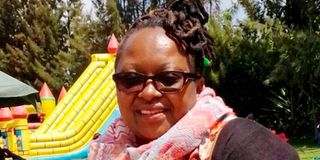
Priscah Njambi Wanjiru, who grew up in Kabete, Kiambu County, mostly with her grandmother.
She does not speak of this with bitterness. Instead, she recalls her grandmother with warmth, the quiet fondness of someone who felt safe and genuinely loved. Village life and the time spent with her grandmother remain her strongest memories. Her mother’s presence, coming and going, was simply how life was structured. It made sense to her, even if it was not something she would have chosen.
Her grandmother died when Priscah was in Class Six, and her mother, who was working away from home at the time, left her job to return and take over the household her mother had left behind. Though she was not particularly close to her, Priscah adjusted and made the arrangement work.
Then, as if following a pattern, just after completing Form Four at barely 19, Priscah became pregnant. She had been a bright student, and her mother had placed great hope in her future. Now she found herself in a situation strikingly similar to her mother’s, standing at almost the same point in life at nearly the same age. The weight of that reality was not lost on either of them.
“History had repeated itself,” Priscah says. “I knew I had disappointed my mother, but I promised myself I would pick myself up, rebuild, and make her proud.”
She did not proceed to university. Instead, she pursued a beauty course. After her son, Kelfa, was born, she relied on that skill and began selling clothes as well, seeking independence and the means to support her child without depending entirely on her mother.
Priscah learned early to make her own decisions. Growing up with a grandmother who loved her deeply but could not guide her through every situation taught her to rely on herself. She later got married and had two more children. Now in her 40s, she is still married. She farms and continues to sell clothes online. Her son, now in his early 20s, has just completed a degree in environmental management. Michelle, her second-born and first daughter, is in Form Four.
She speaks of the stigma of teenage motherhood as something she passed through rather than something that defined her. “I felt it; the whispers, the rejection, the way people looked at me. But at some point, I decided not to let it determine the direction of my life,” she says.
What she is most intentional about now is her daughter Michelle, who, at 17, is the same age Priscah was when she became pregnant. They are close, almost like friends. She speaks to her openly, including about her own experience of teenage motherhood and what it cost her. “When grandparents raise you, you are loved. But there are things parents talk about that grandparents never do. I had to figure out everything on my own. So now I teach her everything. I tell her how it is,” she says.
She does not present her story as easy or neatly resolved. She does not frame it as a perfect ending. Instead, she looks at her children, especially the son she had as a teenager, the one who marked the turning point in her life, and sees something she has built step by step. It is what continues to anchor her. Her mother is now 63 and owns several rental properties. She is doing reasonably well.
For Mother’s Day, Priscah had a message for her. “Thank you for accepting me at a very early age, for giving birth to me, taking care of me, and raising me into a responsible woman. I know I am responsible and very independent. May God bless her and keep her,” she says.
Decades later, the girls who once hid pregnancies are now grandmothers, mothers and survivors, still carrying the memories of the choices that changed all their lives.


