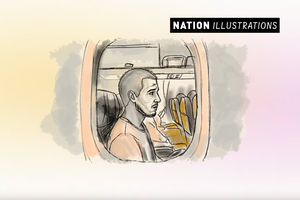
Coaches, control and coercion: The dark side of Iten’s running empire
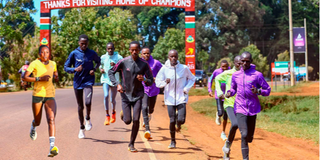
Athletes train during a run at Kiprun 42 House Athletics Training Camp in Iten, Elgeyo-Marakwet County, on October 8, 2025. The camp is among a few in the region that have adopted new safeguarding guidelines to prevent SGBV following rising cases of abuse and exploitation of female athletes in Kenya’s athletics hubs.

What you need to know:
- In Iten, Kenya’s famed “Home of Champions,” female athletes face rampant sexual abuse, harassment, and financial exploitation from coaches and agents.
- Many suffer in silence, fearing stigma, exclusion, or loss of opportunity, even as cases of femicide and gender-based violence rise.
- New safeguarding measures aim to protect athletes, but weak enforcement and deep-rooted silence continue to fuel the crisis.
The high-altitude air bites sharper as dusk settles over Iten. At 2,400 metres above sea level, this unassuming town in Kenya's Rift Valley has earned a name that echoes across continents: The Home of Champions. Every morning, before first light, the roads come alive with rhythmic footfalls—world-beaters in the making, their breath misting in the thin air. But as the sun dips below the escarpment and shadows lengthen across the training grounds, another story unfolds here, one whispered behind closed doors and carried in silence.

A survivor of sexual violence during the interview in Iten, Elgeyo Marakwet County, on October 8, 2025.
Lorna Cheptoo* sits across from us this chilly evening, her gaze fixed somewhere beyond the window, lost in deep thought, perhaps pondering over a disturbing matter. She is an athlete who has won many races both locally and internationally, carrying Kenya's flag with pride. Her journey began like so many others.


She started pursuing her running career while in primary school, representing her school in many competitions. In 2016, she started training in Ngong' before eventually making her way to Iten. Coming from a humble background, she was full of expectations, hoping that Iten would give her the platform to become an international athlete.

Corporal Emmy Chemweno, Head of the Gender Desk, reviews case files at Iten Police Station in Elgeyo-Marakwet County on October 6, 2025. She is among officers handling rising SGBV cases involving female athletes in Iten.
Once in Iten and determined to excel in athletics, Lorna started training on her own.
"I got a tiny room where I started sleeping on the ground," she tells Nation.Africa in an interview in Iten town. "I had to do a side job in a hotel washing dishes to make ends meet."
After the Covid-19 lockdown, Lorna thought she had hit a jackpot when one of the renowned coaches in Iten approached her and volunteered to coach her.
"The coach told me that he had been observing me doing my training and noted that I was very talented and had a promising future in athletics. He offered to help me realise my dreams. I was elated—it was like music to my ears," she says.
The training started well and went on as planned, giving her hope that her dream of becoming a renowned athlete in the country was well on course. However, as fate would have it, her dream would go haywire after the coach started making sexual advances toward her.
She recalls one incident when the coach almost raped her in his car.
"One evening after training, the coach offered to drop me home, and just before we got near my house, he stopped the car and started to caress me against my will," Lorna says, tears streaming down her face. "I asked him what he was doing, and he said that if I wanted him to fix me in upcoming races, then I had to sleep with him. I told him I would never trade my body for my career, and he threw me out of his car, saying that he would 'delete' my life."
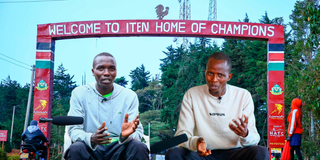
Marathoners Owen Korir (left) and Micah Kosgei during an interview at the Kiprun 42 House Athletics Training Camp on October 8, 2025. The two shared their views on the need to strengthen safeguarding measures and promote a culture of respect and accountability within training camps amid rising cases of SGBV in Kenyan athletics.
That marked the end of her receiving training assistance from the coach. Afterwards, Lorna encountered two other coaches who also demanded sexual favours in exchange for training assistance or help securing a slot in upcoming races.
"Sexual abuse and harassment is rife here in Iten, and the majority of those affected are female athletes," she says. "I have four friends who I know have been sexually abused. They are world champions, but they cannot dare report the matter for fear of being victimised and the stigma that comes with it."

A survivor of sexual violence displays some of the medals she has won, symbolising resilience and strength, during an interview in Iten, Elgeyo Marakwet County, on October 8, 2025.
For the last seven years, Lorna, who specialises in cross-country and marathon, has participated in 34 races, bagging four gold, four silver, and two bronze medals. She did not report the sexual abuse to the police, saying she was not sure that any action would be taken against the coach.
The experience for Doris Wanjiru* carries an unsettling familiarity. The 25-year-old 5,000 and 3,000 metres runner was optimistic about becoming a world champion when she made her way to Iten three years ago.
She started training on her own and in the company of fellow runners. She was over the moon after several coaches approached her with offers to help with training, having seen that she had great potential.
However, her encounters with the coaches only dampened her spirit as she could not cope with their sexual demands.
"All three coaches who approached me with a promise to help me train had one thing in common—they all wanted to sleep with me, promising to help me secure training facilities like shoes, food, and rent," Doris recounts. "When I said no, they all disappeared. In fact, one of them told me I would never make it in athletics for pretending to be a 'holy Joe'."
She says many young athletes harbouring ambitions of becoming world champions are grappling with a myriad of challenges, with sexual harassment and abuse topping the list. Those who reject advances from coaches are normally side-lined and denied a chance to train or be slotted for upcoming races.
These two cases are just the tip of the iceberg of the rampant cases of sexual harassment and sexual and gender-based violence (GBV) that female athletes are facing in Iten—some of which have degenerated into femicide.
Three names, three tragedies
October 2021. Agnes Tirop's name should have been in headlines for her athletic prowess—the two-time world championships bronze medallist had established herself as one of Kenya's finest distance runners. Instead, at just 25 years old, she was found dead at her home in Iten, allegedly stabbed by her husband.
The body of the celebrated athlete was discovered with a stab wound at their home in the athletics training hub. The following month, Ibrahim Rotich, her husband, was charged with her murder. He denied the charges. Eldoret High Court later released him on bond of Sh400,000, with surety of a similar amount, or cash bail of Sh500,000.
Six months later, in April 2022, another athlete's life was violently cut short. Damaris Muthee Mutua, a Kenyan athlete running for Bahrain, was found murdered in a house in Iten—the same training base where champions are made and dreams are pursued.
Police identified her Ethiopian boyfriend as a suspect after he allegedly confessed to the killing. Fellow athletes alerted authorities after the alleged killer called from outside the country, saying he had committed the murder. The postmortem revealed she had been strangled. The suspect had fled with her documents—her ID, her bank papers, the pieces of her identity.
Also read: When home is no longer safe: The unending horror of intimate partner violence among athletes
Then came September 2024, and the news that sent shockwaves beyond Kenya's borders. Rebecca Cheptegei, a 33-year-old Ugandan marathon runner who had competed in the recent Paris Olympics, was rushed to hospital after being doused in petrol and set on fire by a former boyfriend. The attack happened on a Sunday. She had suffered extensive burns.
A few days later, at the Moi Teaching and Referral Hospital in Eldoret where she had been admitted to the ICU, Rebecca died. She had sustained 80 per cent burn injuries. The burns had damaged most of her organs. The suspected boyfriend also sustained burn injuries during the attack and was admitted to the same ICU facility with about 30 per cent burns.
The number of female athletes either harassed and attacked because of their gender or, in worse cases, murdered in mysterious circumstances by people allegedly close to them has been on the increase. In Kenyan sports, there have been several high-profile cases of SGBV targeting athletes. Here in Iten, many female athletes admitted to being victims of both sexual harassment and violence but were too afraid or traumatised to speak up.
What the numbers reveal
Unesco reports that globally, 21 per cent of female athletes report experiencing a form of sexual abuse. Too often, these abuses go unreported, with only seven per cent of women disclosing the violence they face. This is usually due to fear of stigmatisation, exclusion, and reprisal. While some progress has been made through safeguarding policies, significant legislative gaps remain worldwide.
Athletics training camps have been cited as having one of the highest prevalence rates for SGBV. A report of a survey conducted in October 2020 by the ministerial committee on gender welfare and equity in sports revealed that up to 57 per cent of female athletes suffer abuse in training camps. Of these, 11 per cent experienced some form of sexual abuse, with 47 per cent of respondents stating they chose to suffer in silence, while only about 14 per cent reported incidences of abuse—but no action was taken.
Lack of clear guidelines for detection, prevention, and response to GBV in the camps is one of the biggest factors cited for this state of affairs.
This year brought fresh evidence of the crisis. In June, the Aga Khan University's Graduate School of Media and Communications released a study showing that Sexual and Gender-Based Violence (SGBV) in Kenyan sport has risen sharply over the last three years.
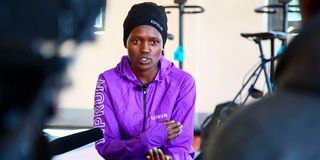
Alice Chemtai Loitasia, an athlete, during an interview at the Kiprun 42 House Athletics Training Camp on October 8, 2025. The camp is one of the few in the region implementing new safeguarding measures to protect athletes from SGBV.
The findings indicate that SGBV is prevalent in sports and that the major perpetrators are people close to the athletes, given that coaches, team officials, and teammates account for 55 per cent of reported notorious perpetrators in East Africa.
The report shows that the prevalence of SGBV in sports is fairly high in East Africa, as 62 per cent of respondents reported either experiencing or knowing a sportsperson who had experienced SGBV in the form of verbal, physical, emotional, or sexual violence. Kenya leads with a prevalence rate of 69 per cent, followed by Tanzania at 62 per cent, while Uganda has the lowest at 48 per cent.
When the study broke down perpetrators by category, the results were revealing: fans led with sexual abuse at 34 per cent, followed closely by coaches with 23 per cent, with teammates coming last with 14 per cent.
The study, Exploring Sexual and Gender-Based Violence Against Women in Sports in Kenya, Uganda, and Tanzania, shows that female athletes—particularly the naïve ones at the beginning of their budding sports careers and those in elite or dependent positions—are especially vulnerable to exploitation by coaches and officials who take advantage of the limited opportunities and abuse athletes.
Athletes, managers, and administrators from more than 22 different sporting disciplines across Kenya, Uganda, and Tanzania participated in the study.
The research examined the prevalence, root causes, impacts, and existing responses to SGBV within the sports sector across East Africa. The study identified lack of awareness and education on SGBV as the most prevalent cause of SGBV in sport. Fear of retaliation and the attendant consequences on athletes' careers emerged as the top reason why athletes fail to report incidents of SGBV in sports.
For Elgeyo Marakwet County Commissioner Julius Maiyo, the deaths of female athletes—particularly Agnes Tirop's murder—served as a wake-up call to enhance security both inside and outside the camps.
Maiyo identifies intimate partner violence as the major cause of GBV among athletes, adding that some people masquerading as coaches are also to blame for the menace.
"We are working with the county government and the County Gender Sector Working Group to explore ways to enhance the security of the athletes," he tells Nation.Africa. "We have also partnered with Tirop Angels to create awareness against GBV among the athletes and in the community."
He notes there is a need to streamline coaching and ensure that only coaches accredited by Athletics Kenya are conducting the coaching.
On financial exploitation, the administrator notes that athletes make a lot of money, but many people, including their partners and friends, normally take advantage. "They lack the requisite financial literacy that is paramount to help them use their money prudently. There is a lot of exploitation of athletes financially by many people, including their families," he says.
Iten Sub-County Police Commander Patrick Njoroge shares Maiyo's assessment. Cases of SGBV among athletes have been on the increase, he says. This year alone, six cases of SGBV among athletes have been reported. Data from Tirop Angels, a lobby fighting the scourge among athletes, shows they have documented six cases of sexual violence in June this year. Most victims and survivors do not report to the authorities, Njoroge notes.
While exonerating the police from any blame, he points to interference in cases from families and friends, which leads to lack of justice for the survivors.
"Most of the time when there are such cases, the athletes are normally approached by coaches and agents and warned that if they continue pursuing the matter, they will be thrown out of the training camps and also miss out on being fixed in races," Njoroge says in an interview. "Out of fear of being victimised, they usually withdraw the cases, and as the police, there is nothing we can do at that point."
He adds that many cases of GBV among athletes are not reported, as many female runners depend on agents or their male colleagues for training and upkeep.
Records from authorities indicate Iten is home to more than 6,000 athletes—both Kenyans and foreigners who throng to the town for training. The town is considered ideal for training due to its high altitude.
Where justice struggles
Even when athletes attempt to seek justice, systemic obstacles stand in their way. Reporting mechanisms within sports federations and training camps are weak or compromised by conflicts of interest, particularly when investigations involve high-ranking officials.
Victim-blaming is rampant, with survivors questioned about their behaviour rather than the actions of perpetrators. Many survivors hesitate to report abuse due to concerns about being side-lined, losing sponsorships, or facing public stigma. Without protections, athletes who speak out risk their careers, leaving abusive systems unchallenged.
Many training camps lack well-documented safeguarding policies, leaving room for exploitation and abuse. Many training camps also lack accountability mechanisms, particularly within their management structures. This weakness creates gaps in oversight, making it difficult to enforce safeguarding policies, address misconduct, or ensure transparency in decision-making.
The United Nations Population Fund and the Centre for Enhancing Democracy and Good Governance have been working on Standard Operating Procedures (Sops) aimed at detecting, preventing, and responding to GBV and sexual exploitation and abuse in athletics training camps. The guidelines primarily focus on legal and psychosocial clinics for athletes and technical support for integrating safeguarding protocols into athletic camps' governance structures.
The absence of clear detection, prevention, and response guidelines for GBV in training camps was identified as a significant gap fuelling this crisis.
Three camps have taken the lead in implementation: Kiprun 42 House Camp, Nzimaheart Runners Camp, and Iten Athletics Training Camp have adopted safeguarding policies tailored to their specific contexts.
Paul Masese, Executive Director at CEDGG, says these guidelines, aligned with international best practices, reflect a clear zero-tolerance stance against GBV and Sexual Exploitation and Abuse, and have established formalised reporting mechanisms, accountability frameworks, and preventive protocols.
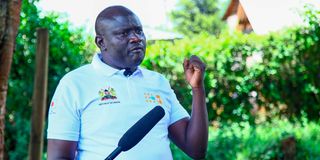
Paul Masese, Chief Executive Officer of the Centre for Enhancing Democracy and Good Governance, during an interview in Iten town, Elgeyo-Marakwet County, on October 8, 2025.
For the athletics training camps, sports clubs, and organisations, Masese says the guidelines mean effective safeguarding policies and procedures, codes of conduct for all participants within the athletics ecosystem, safe recruitment processes, and relevant training for staff and volunteers.
“Sops provide a comprehensive framework to prevent and respond to GBV, including technology-facilitated GBV and sexual exploitation, abuse, and harassment in athletics training camps in Kenya's North Rift Region," Masese tells Nation.Africa.
The Sops draw on existing regulatory frameworks and international best practices to address a range of issues, he explains, including traditional forms of GBV, as well as emerging threats like technology-facilitated violence, cyberbullying, harassment, and non-consensual sharing of private images. The guidelines outline clear procedures for reporting, investigation, and support for survivors, ensuring a survivor-centred approach.

Dr Byron Kipchumba, athletics coach at the Kiprun 42 House Training Camp in Iten, Elgeyo-Marakwet County, interacts with athletes after a morning run on October 8, 2025. He is among coaches championing the adoption of new safeguarding measures in training camps.
Dr Byron Kipchumba, a coach at Kiprun 42 House Training Camp, agrees that Iten has become notorious for rampant cases of GBV among athletes.
Kipchumba reveals that money is playing a great role in enhancing GBV in athletics but also blames some of the coaches for being enablers of the vice by taking advantage of vulnerable and innocent female runners.
"Lack of financial literacy and education is a key driver of GBV among athletes in Iten," he notes. "Cultural differences by virtue of having foreign runners is also in a way enhancing the vice."
He hails the development of the new guidelines, terming them a game-changer in the management of GBV in athletics. To ensure such cases do not arise, Kipchumba says his training camp has guidelines that must be followed by members of staff, management, and athletes.
He advises parents to ensure that they take responsibility for their children-cum-young athletes, since if they fail, men will take advantage, which may at times lead to GBV.
George Obumba, the Chief Sports Officer for Elgeyo Marakwet County, acknowledges SGBV among athletes has been on the rise, adding that measures are being put in place to tame the menace. The issue has been amplified by the fact that the majority of athletes are not in training camps and therefore are hard to monitor, he explains.

George Obumba, Chief Sports Officer for Elgeyo-Marakwet County, during an interview at a restaurant in Iten, Elgeyo-Marakwet County, on October 8, 2025.
Currently, there are about 25 athletics training camps in Iten, a majority of which are privately owned, with some by foreigners. There is no public training camp that is either run by the government through the Ministry of Sports or Athletics Kenya.
Obumba notes that in order to tame the rising cases of SGBV among athletes, there is a need to enhance capacity building through training of coaches and managers to help them manage the sport better.
"We are working with partners to provide counselling to athletes who have been affected by sexual violence or harassment," he says. "Plans are also underway to come up with a safe space where victims or survivors can seek refuge."
Elgeyo Marakwet County government is currently coming up with two sports academies to help in the development of sports, with athletics included, he reveals. The county has also developed a sports policy that mostly focuses on athletics management, including licensing of training camps and development of sports, which entails how sportsmen can be nurtured and trained.
To reign in financial exploitation of athletes, Obumba says proper financial literacy for athletes is needed to prevent them from becoming vulnerable and victims of rogue agents. "Financial literacy is paramount to enable them to conduct negotiations effectively without being duped. They need to be trained on better financial management and negotiation skills to help them get the best deals without being short-changed," he adds.
Joseph Amuke, the County Gender Officer, shares the same concerns about the rising cases of sexual violence among athletes. He observes that they mostly get to know about the cases when they have already happened, as many of them occur outside the training camps.

Joseph Amuke, Gender Director for Elgeyo-Marakwet County, during an interview in Iten on October 8, 2025. He highlighted ongoing efforts to implement new safeguarding guidelines in athletics training camps.
Amuke notes that the Sops will be instrumental in detection, prevention, and response to SGBV cases inside and outside training camps.
"All the training camps must adhere to the newly developed Sops," he says.. "It clearly stipulates where and how to report cases of sexual violence and where to get help. This will ensure our young athletes are safe and are not exploited."
He identifies the lack of a rescue centre in Elgeyo-Marakwet County as one of the major factors impeding the fight against the menace.
To eradicate this scourge, Amuke is proposing an elaborate male engagement campaign that will help create awareness on sexual violence. "There is a need to create awareness among men, as they are mainly the perpetrators," he says. "We need to use men to fight GBV by converting them to prevent GBV."
Apart from SGBV, athletes are also grappling with financial exploitation by some rogue agents or managers.
Gladys Chemutai, a 29-year-old marathoner, has lived this reality. In the past, she won bronze in several international marathons but ended up not getting even a penny, she says.

Marathoner Gladys Chemutai Kosgei during an interview at Iten Athletics Training Camp in Elgeyo-Marakwet County on October 6, 2025. She shared her experience of financial exploitation by agents and coaches—one of the challenges many female runners in Iten face.
"In one instance, I was supposed to get Sh400,000, but I only ended up getting Sh20,000," Gladys says in an interview. "When I followed up, I was told that they had used the money to pay for air tickets, accommodation, and meals. Ideally, the agent is only supposed to take 15 per cent of the money as the agreement entailed. I felt cheated and exploited, but there was nothing I could do."
Gladys, an international marathon champion, has fallen victim to financial exploitation three times in total, with agents and coaches behind it.
"Many athletes here are undergoing financial exploitation but cannot dare speak up as they fear being victimised," she says. "It is very bad to work that hard and have someone else eat your sweat."
The reason many athletes fall into the trap of coaches and agents is due to lack of money, the marathoner explains. "You can opt to go directly for international races, but many of them do not have money. The agents, on the other hand, provide all the logistical support, including training facilities, and deduct their money later."
Among the races that Gladys has won in the recent past include the Leiden Marathon in the Netherlands in 2023 and the Linz Marathon in Austria in 2022.
As our mission ends in Iten, one thing is evident: stringent measures are urgently needed to curb the SGBV menace, which is threatening to curtail the dreams of many young athletes here.
*Names changed to protect identities.