Coming home to lead: Scholars who chose impact over Ivy League
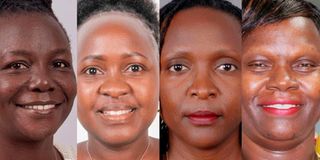
From left: Dr Lucy Wakiaga, Dr Fridah Kiambati, Dr Lydia Namatende-Sakwa and Dr Benta Abuya.

What you need to know:
- At the cross and in classrooms, women remain present, steadying fragile systems when uncertainty tempts others to walk away.
- From Jerusalem’s dawn to Kenya’s classrooms, women researchers quietly hold the line, shaping futures through persistence and care.
About 2,000 years ago, in Jerusalem on a Friday, Jesus Christ was crucified and died. The world went quiet and hope seemed to die with him. In the gospel accounts, while most of the disciples and onlookers scattered, a small group of women stayed. Mary Magdalene, Mary the mother of James and Joseph, Mary the mother of Jesus, and a few others stood at a distance, then moved closer. They could not stop what was happening, but they refused to leave like everyone else.
They prepared spices to anoint his body as an act of honour, kept vigil when it was taken down, and returned at dawn to find the tomb empty, and still Mary Magdalene refused to leave, standing at the entrance, crying. It is perhaps no surprise that she is mentioned in all four gospels and recorded as the first person to see the resurrected Christ; Jesus appeared to a woman first.
There is something about the way women show up in moments of crisis and stay when leaving would be easier. It has always been part of the Easter story, and almost two thousand years later, that pattern quietly holds.


In Kenya today, the education system is in its own season of upheaval. The curriculum has changed, and opinion on it remains sharply divided. Amid all this, a group of women researchers are doing what those women at the cross did: staying put and watching closely when others would rather look away.
According to Unesco's latest global report, women account for roughly 30 per cent of researchers worldwide, and in sub-Saharan Africa the numbers are still lower in some disciplines. Their findings shape what happens inside classrooms, how teachers are trained, and which children get left behind. Each carries her own story into that work.
Dr Lydia Namatende-Sakwa - Global academic who chose family over fast-paced success
Sitting across from her, you notice an admirable calmness. Her story, however, is one of persistence against odds. She was born and raised in Uganda, with a mother who saw brilliance in her even when she was not the top student, a father who encouraged her constantly, and two aunts who became professors and showed her what was possible.
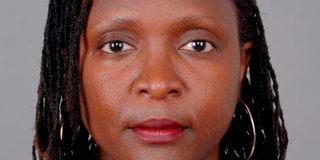
Dr Lydia Namatende-Sakwa, education and youth empowerment expert with a special interest in gender and education.
“I didn't grow up with the focus of becoming a researcher," she says. "I just knew I had to study hard. I had a vision to do a master's and a PhD degree right from a young age."
The dream was valid, but the road was harder than she had imagined. When her first opportunity to study abroad for a PhD came through, she left behind a daughter who was only two and a half months old. The guilt was constant. She says she could hear the baby crying in her head, and when she called home after her classes, the baby would be crying.
Her supervisor made it worse. He was, she recalls, openly racist. Nothing she did was good enough, and when her work was good, he doubted she had done it herself. "Later, I discovered that the scholarship I had been given was initially meant for a British student, not an African. The supervisor had never wanted me to succeed," she says. Instead of completing a PhD, she graduated with a master's degree, giving her two master's degrees in total. "That is how I ended up with two master’s degrees," she laughs.
She returned home feeling like the world was crashing. She had left a young baby behind for what felt like nothing. But her father's words carried her through. "I remember him telling me that destiny can be delayed, but it cannot be stopped," she says.
Back in Uganda, she applied for more than ten scholarships. Two came through: one from a university in Belgium, and a Fulbright scholarship to Columbia University, an Ivy League school in New York. She decided to pursue both. For a period, she was doing two doctorates simultaneously, in different countries, with different supervisors, different theoretical frameworks and different methodologies. Her Belgian supervisor was so supportive that when she disclosed the Columbia opportunity, she told her she could not pass it up, and they worked out a leave year arrangement so she could return. "I managed to do both concurrently," she says. "Totally different fields, different universities, different everything."
When she finished, she had offers to stay in the United States. But she thought about her children. "I did not want to raise my kids in New York City," she says. "It was too fast. I felt I would lose them. I didn't think I would manage to discipline them and bring out the best in them."
She came home to Uganda. The transition was not easy. She had taught in the United States with small class sizes, responsive students and a community of scholars, and returning to a Ugandan university with large classes, unpredictable students and limited resources required real adjustment.
"But it was still rewarding to work with students, to inspire girls, to have conversations, to be at home," she says.
It was during this time in the classroom that she developed a keen interest in working with women and girls in refugee camps, and that interest is what eventually pulled her out of teaching and into research fully. She joined the African Population and Health Research Centre in Kenya, where her work now spans curriculum design, gender, mental health and the inclusion of refugee teachers into Kenya's education system. Part of that work involves ensuring the curriculum itself is gender balanced, that not every pilot in a textbook is a man and not every illustration of house chores features a woman.
Today, her work spans curriculum design, gender, mental health and the inclusion of refugee teachers into Kenya's education system. She has seen how women in refugee camps struggle with the burden of care, with insecurity and with being paid less than their male colleagues. She has seen how girls in those camps need female teachers as role models, but how the system makes it hard for women to stay.
When asked about the importance of her work, she points to the statistics: girls are more likely to drop out of school, more likely to experience sexual harassment and more likely to carry the burden of care. Girls are six times more likely than boys to contract HIV. "In the bigger ecosystem, if we support women, we are supporting everybody. When we support the most vulnerable, the ones struggling the most, the whole society is propped up," she says.
She credits her success to luck as much as effort. She had a supportive husband, supportive in-laws and a father who celebrated her. Her father-in-law would throw a small party every time she came home, cooking for her himself and inviting the whole family. Her mother-in-law took care of her children. "The people we marry are too important," she says. "It can determine whether you do a PhD or not. It can determine whether you end up in a mental institution or not."
Her personal best, she says, is not any of the accolades but her family. Close behind is the impact of her work. "Going to refugee camps and seeing water points installed because of a project I was part of, or seeing teachers trained in mental health and able to support their learners, touches my heart," she says.
Dr Benta Abuya - From chalkboard to policy; a teacher’s journey into research
She started her career in a classroom, teaching at Maranda High School, then at a school in Kiambu, then at another in Nairobi's Kariobangi area serving children from nearby informal settlements. It was there, watching her students struggle with things that had nothing to do with textbooks, that she realised teaching alone would not be enough.
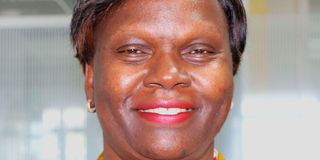
Dr Benta Abuya, an education specialist and research scientist whose work focuses on education access, equity, quality, gender in education, and the link between education and adolescent health outcomes.
"Girls had issues like absenteeism. Sometimes you'd hear stories of, 'yesterday I slept hungry, or yesterday as I was walking home somebody accosted me'," she says. "Being a class teacher, those stories were ingrained in my head."
She had grown up watching women teachers go out of their way to keep girls in school, checking on them, asking why they were not performing and finding ways to help. At Alliance Girls High School, where she studied, those teachers had planted something in her. Now, as a teacher herself, she saw the same struggles repeating.
She enrolled for a master's degree in population studies at the University of Nairobi while still teaching, wanting to understand the bigger picture: why poverty kept children out of school, why teenage pregnancy derailed some girls and not others, and why the system seemed to work for some while failing so many. "I realised I couldn't do much more as a teacher. You can only impact the lives of those 40 students in your class," she says. "I needed to get into research."
A Ford Foundation scholarship took her to Pennsylvania State University for a PhD, where she earned a dual degree in education theory and policy and comparative and international education, with a minor in demography. It was an unusual combination but a logical one for someone who had spent years watching how population issues, teenage pregnancy, early marriage, household poverty, shaped a child's chances in school.
When she finished, an assistant professorship at Ohio State University was on the table. Her professors assumed she would take it. "I told them it's a good opportunity, I would love to have done that, but I think I should go back and do something more practical that will actually change the lives of those girls from where I started," she says. She came home.
At the heart of her work is a straightforward belief: educating a girl changes everything. She points to World Bank data showing that keeping a girl in school for one extra year can boost a country's GDP by 10 to 20 per cent, though for her the numbers are only part of it.
"Educate a girl and you educate a community," she says, citing a common African saying. "Health and survival, child mortality, the acceptance of family planning, all of that depends on girls' education. An educated girl is less likely to experience an unintended pregnancy, less likely to be married early, and she will take her children for immunisation."
She speaks from experience. When she lost her husband 16 years ago, she found herself facing cultural expectations she had no intention of meeting. People assumed she would need to remarry, that a woman alone could not manage. She pushed back.
One of the projects she is proudest of ran for nine years in two informal settlements in Nairobi, working on literacy, numeracy and life skills for both girls and boys, while also engaging parents, especially fathers. What she found surprised her.
"We got to a point where male parents were actually talking about sexual reproductive health issues, saying that because I am a man, I can impact my daughter's life better. She'll see me as a man and see a future partner. If I am supporting her now, it means her future life with a partner will be better," one father told the researchers.
When the programme ended, community leaders came to her. A village elder used an analogy that has stayed with her: the programme was like a river that had started flowing and gone all the way to the ocean, meaning it had changed not just the children but the parents and the whole community.
She is now evaluating a teenage pregnancy policy in Uganda, looking at how it affects school re-entry and retention, work that brings together her two areas of focus, education and demography. "There is still work to be done," she says. "Particularly for populations in marginalised areas and rural communities."
Dr Lucy Wakiaga - From teacher’s daughter to research leader
Her mother was a teacher, her father a scientist who worked at Kenya Breweries. Neither ever suggested that her gender should limit her ambitions. "My mum always said, I can't give you wealth, the only thing I can give you is an education," she recalls. "For me, I didn't grow up with this hang-up that I'm being discriminated against."
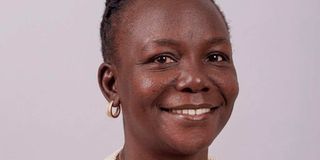
Dr Lucy Wakiaga, Associate Research Scientist at the African Population and Health Research Centre leading the Higher Education focus and serving as gender lead.
She did well in school, got leadership opportunities and attended a girls' high school where she competed only against other girls. It was at university that she began to notice different dynamics, but by then she had already developed the habit that would define her career: she knocked on doors until they opened.
When the Teachers Service Commission announced an opportunity for teachers to pursue fully funded master's degrees, her colleagues held back. She applied immediately, got the scholarship and was placed at Howard University, a historically Black institution in the United States. After that, she set her sights on a PhD, seeking funding with the same persistence until a full three-year scholarship came through. "Opportunities can be there, but how persistent are you in knocking the door until they open?" she says.
She spent nearly a decade in the United States, from 2003 to 2014, becoming a David Clark Scholar, a prestigious distinction given to only 40 students across the entire country each year, and building a strong academic career. But she had always intended to come home. "When you are out there, you will always feel like you are a second-class citizen," she says. "There is that feeling of tokenism. But when you are home, even when you have nothing in your pocket, it's home. People accept you the way you are."
Before she left Kenya, she had lived near the Catholic University of Eastern Africa and told herself she would come back and teach there. She knew no one at the institution, but when she was finishing her PhD, she sent a LinkedIn message to the vice-chancellor, introducing herself and expressing interest in contributing. He told her to get in touch when she was done. Two weeks after she reached out, she was invited for an interview and got the job.
Today, she leads higher education research at her organisation, with a particular focus on building research capacity at African universities. She is part of an initiative called Harnessing Education Research for Impact in Africa (Heri Africa), whose goal is to strengthen universities so they can produce their own evidence rather than depending on research done by outsiders.
"Africa produces less than three per cent of global research," she says. "Yet by 2050, we will have 45 per cent of the world's youth population. Foreigners come and do research in Africa and take that research back. Then they are the experts who provide solutions. Where are our voices?" She is blunt about what that means: "If you are not at the table, you are the menu. They will be feasting on you."
Part of her work involves ensuring that early-career researchers, particularly women and persons with disabilities, get the training and mentorship they need. In the Heri Africa initiative, half of the researchers whose capacities are being built are women and ten per cent are persons with disabilities.
She recently completed a study on young women in Stem undergraduate programmes, examining the barriers they face in the classroom. She found that even in practical sessions, gender roles played out: men conducted the experiments while women sat on the side, washing beakers or taking notes. "The educator is not facilitating a gender-inclusive classroom environment," she says.
On imposter syndrome, that feeling of inadequacy that many women in male-dominated fields know well, she admits it never fully goes away. But she has learned to manage it. "If you listen to imposter syndrome and let it crush you, you will give up," she says. "I listen to motivational talks. I tell myself, just do it. You'll make mistakes. Sit on those mistakes, ruminate a little, then pick yourself up."
Her advice to young women? Know who you are, have a plan, surround yourself with the right people and be kind to yourself. "Don't beat yourself down," she says. "Success can come at any time."
Dr Fridah Kiambati: From visual impairment to visionary researcher
Her journey into education research began with her own experience of nearly being pushed out of it. She grew up with a visual impairment that limits her peripheral vision, causes double vision and makes it difficult for her eyes to move smoothly. When she got to university, the challenges became overwhelming and she had to take a break from school, going for rehabilitation and learning Braille and assistive technology before fighting her way back.
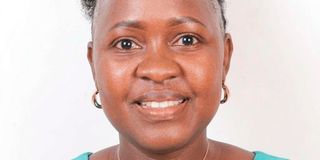
Dr Fridah Kiambati, a research scientist whose work focuses on inclusive education, assistive technologies, and improving learning outcomes for learners with disabilities.
Even then, it was not straightforward. While studying commerce, a dean advised her to change course, suggesting that because of her low vision she should choose something that relied less on mathematical calculations and more on listening. "I remember crying so much at the dean's office," she says. "I didn't want to go." Her parents were called in to help convince her. She left, changed universities, changed courses and started over, eventually landing in education at Kenyatta University, one of the few universities at the time with support services for students with special needs.
That experience shaped everything that followed. She worked at the Kenya Institute of Special Education for eight years, lecturing in visual impairment and coordinating rehabilitation services for people who had lost their vision, helping others navigate the same challenges she had faced. "Seeing a student who had lost hope because they had lost their vision, taking them through skills they had never dreamt of, skills that would boost their ability to come back to work or go back to school, that gave me a lot of motivation," she says.
She eventually earned a doctorate in information science, focusing on the usability of digital information systems for persons with visual impairment, a topic that came directly from her own experience. Today, her research covers inclusive education, disability studies, competency-based education and foundational literacy and numeracy. She has studied how learners with autism transition through the education system and documented the struggles parents face finding schools that can accommodate their children as the content gets harder.
"On paper, the policies are good," she says. "The sector policy for learners and trainees with disability, the 2025 Disability Act, the competency-based curriculum, all have good provisions. If we could get to implementing them, we would be doing well."
Implementation, however, is where things break down. Teachers often lack the skills to identify learners who need additional support, children with learning disabilities are dismissed as slow learners, and parents of children with autism are left wondering which school will accept them after Grade 10.
Dr Kiambati works long hours, often reading and writing in visually demanding ways, and she has learned to accept what she can and cannot do. When her eyes are tired, she takes a break and returns to it. "What has kept me going is accepting the fact that there are things that are doable," she says. "When it is not doable at that moment, I give myself a small break."
On imposter syndrome, she acknowledges it is real, particularly for women in research. She was steered away from science because of her visual challenges and told to choose something more arts-based, but she found her way back through research. "Research needs a daring spirit," she says. "It needs somebody who is prepared to join that pathway."
She was steered away from science, told it was not for someone with her challenges, and she found her way back anyway. That is the thing she most wants younger women to hold onto. "It is a beautiful thing to live the profession of your dream," she says. "But you have to work hard towards it."