From culture to cash: How beadwork is empowering pastoralist women
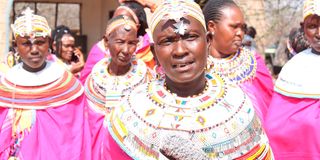
Maria Lekidayo, a star beader, among other women from Melako Conservancy, addresses the press in Marsabit.

What you need to know:
- Once a cultural craft, beading now fuels women’s economic freedom, supports families, and strengthens girls’ education in pastoralist communities.
- Over 1,200 women earn from beadwork, raising millions for conservation while gaining leadership, business skills, and household independence.
The rhythmic click of beads against thread has taken on new meaning in Pamela Morijo's hands. What once represented cultural tradition and leisure time now translates to school fees, family meals, and financial independence. For this mother from Ngarendare in Laikipia, every completed piece of jewellery represents a small victory against economic dependency.
Like countless women before her in the Il Ngwesi community, Pamela learned beading as a young girl. It was more than a pastime; it was cultural DNA passed down through maternal lines, each pattern and colour combination telling stories of identity and tradition.
But eight years ago, what had always been a cherished cultural skill became something revolutionary: a pathway to economic independence.

"I was relying on my husband for everything. My family was banking on livestock for all daily needs. This made our life difficult whenever there was drought," Pamela recalls, her voice carrying the memory of those uncertain times.
"But when I started selling my beaded items, I also started contributing to my family's income."
Her transformation reflects a quiet revolution sweeping across northern Kenya's pastoralist communities.
Since 2016, more than 1,200 women have turned their traditional beadwork into sustainable livelihoods through the Mashinani Works programme, supported by BeadWORKS Kenya. Today, these women support 45 community conservancies across the region, weaving together economic empowerment and environmental conservation with every threaded bead.
The numbers tell a remarkable story of collective impact. In 2024 alone, the women's sales generated Sh3.5 million for conservation efforts across nine community conservancies. Over eight years, their nimble fingers have created more than Sh13 million in conservation funding, supporting environmental protection in Isiolo, Samburu, Laikipia, and Marsabit counties.
But beyond the figures lies a deeper transformation—one measured in children's school fees, improved nutrition, and restored dignity.
"The majority of women engaged in beadwork from our community are now behind the success of their households," Pamela explains.
"Women are now supporting the education of their children. The beadwork business has also significantly helped us improve our nutrition. Since women have a source of income, there are fewer quarrels in polygamous families."
This sentiment resonates across the conservancies.
In Kalama Conservancy in Samburu, Joyce Lerukai has become what colleagues call a "star beader." For her, the craft has evolved far beyond its cultural roots.
"Beading is no longer just a cultural skill but a weapon for women's empowerment in northern Kenya," Joyce says with conviction.
"Through the income we get from making beaded jewellery, we can now secure loans to do business and pursue other development activities. This has had a significant impact on the education of girls in the Samburu community."
The ripple effects extend into the most traditional corners of these communities. In Melako Conservancy in Marsabit, Maria Lekidayo from the Rendille community speaks of transformation that goes beyond economics.
"In my community, women had no voice in the midst of men," Maria reflects. "However, through the beadwork initiative, we now have business and leadership skills. Women can now participate in socioeconomic development in remote parts of Kenya."
The business model is refreshingly straightforward. In a good month, each woman earns at least Sh10,000 from her beadwork. Every Friday, mobile money transfers ping across phones in villages scattered across the vast landscape, carrying with them dignity, hope, and financial autonomy.
"This has become a story of resilience and economic empowerment," explains production manager Salma Lekoomet. "The monetisation of traditional skills has transformed women into key players in our communities, enabling them to earn a living using their beading expertise rather than through charcoal production and other environmentally damaging activities."
The conservation impact adds another layer to this success story. Five per cent of each artisan's annual sales income flows directly into supporting conservation efforts and community development projects across the nine conservancies.
"It has diversified incomes for pastoral communities," notes Mashinani Works chief executive Vishal Shah, highlighting how the initiative addresses both economic vulnerability and environmental protection simultaneously.
For Pamela and her fellow beaders, each piece they create carries multiple meanings—cultural preservation, economic empowerment, and environmental stewardship all threaded together. In communities where drought can devastate livestock-dependent families overnight, these women have discovered that their ancestral skills hold the key to resilience.


