From pain to policy: How 2025 sparked new efforts to protect women and girls
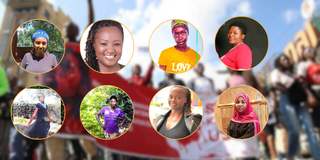
Some of Kenya's femicide victims. In 2025, Kenya confronted femicide through art, policy and community movements.

What you need to know:
- Kenya lost 129 women to femicide in the first quarter of 2025, with men responsible for 85 per cent of the killings.
- Stakeholders responded with various initiatives, marking a shift from fragmented interventions to coordinated, evidence-based responses.
In January, 43 women were killed. In February, 42. In March, 44. By the end of the first quarter of 2025, Kenya had buried 129 women—victims of femicide. Men were responsible for 85 per cent of these killings. Half were linked to domestic disputes. Most perpetrators were known to their victims. And in 72 per cent of cases, the murders happened where women should have felt safest: at home.
The data from the National Police Service and the National Crime Research Centre paints a harrowing picture of a country grappling with a crisis that shows no signs of abating. Kenya has now lost a total of 579 women to femicide. The Rift Valley, Eastern and Western regions have recorded the highest number of deaths.
But amid the grief and outrage, a wave of initiatives has emerged this year, bringing together activists, artists, policymakers and international partners in a concerted push to end sexual and gender-based violence.


Young women, intimate violence
According to the Silencing Women Project, a ground-breaking initiative by Africa Uncensored that documents femicide in Kenya, the methods of killing have become increasingly intimate and brutal. The project notes a rise in cases involving sexual assault (7.0 per cent) and hacking incidents (6.0 per cent). The use of easily accessible tools, including household items, underscores the intimate nature of these crimes.
Young women face the greatest risk. Those aged 18–35 remain the most vulnerable, accounting for more than half of all reported cases. The pattern holds on the other side of the crime: 66 per cent of perpetrators presented in court between 2016 and 2024 were young men aged between 18 and 35.
While Nairobi remains the leading county in femicide cases, Kisii, Kitui, Meru and Nyeri have emerged among the top 10 most affected areas.
Data from Femicide Count Kenya shows that in 2024, Kenya recorded 160 femicide deaths—the highest in the region. Uganda reported 127 cases, while Tanzania recorded 102.
A UN Women-commissioned study titled Social Analysis of Femicide in Kenya found that 40 per cent of women in Kenya have experienced emotional, physical or psychological intimate partner violence. The study also revealed that 30 per cent of women and 19 per cent of men believe a husband is justified in beating his wife under certain circumstances. Additionally, 34 per cent of women aged 15–49 have experienced physical violence.
The Nairobi Women's Hospital Gender Violence Recovery Centre reports receiving approximately 4,000 gender-based violence cases every month, underscoring the scale of the crisis.
Where art meets activism
The Maskani Initiative, launched during the 16 Days of Activism Against Gender-Based Violence, is using art and exhibitions to raise awareness, educate the public and demand justice for victims of femicide.
The initiative is a collaboration between Usikimye, a women's rights organisation advocating against gender-based violence, and Creative Garage, an arts organisation that provides a platform for creative networks. "Maskani" means dwelling or home in Swahili—a place meant for rest, laughter and safety, but which for many women has become a site of violence and crime.
Through real-life stories, sound installations and visceral imagery, the exhibition highlights the severity of femicide in Kenya. Usikimye executive director Njeri Migwi, the brains behind the initiative, says the use of art combined with statistics and documented cases helps the public better understand the crisis.
"What we see in the exhibition reflects our lived reality. These are actual cases of women killed through femicide. Maskani is more than an exhibition; it is a movement where art meets activism. Every installation and every painting tells a story that cannot be ignored," she says.
Njeri notes that research shows 72 per cent of murders occur in the home, with 60–70 per cent of victims killed by intimate partners or family members. The initiative calls for accountability from duty bearers, including the police, the Judiciary and healthcare institutions, insisting that business cannot continue as usual amid the rising femicide cases.
In Nairobi, Nakuru, Kisumu and Mombasa counties—where the exhibition has already been held—it attracted more than 5,000 visitors, amplifying local voices and fostering solidarity in the fight against femicide.
Njeri says the initiative was born out of frustration at seeing perpetrators walk free. "This is both a cry for help and a call to action. We are communicating to society that something must be done to end this menace," she adds.
Chris Wanyande of Creative Garage says the exhibition offers a raw and unfiltered reflection of reality. "It reminds us that our rights and freedoms often depend on someone else's whims. When people see the statistics and writings in the exhibition, the reality becomes undeniable," he says.
Akinyi Odera of the Heinrich Böll Foundation, which supports Maskani, says the initiative serves both as commemoration and a call for responsibility. "Duty bearers must act. It cannot be business as usual in the face of such loss of life," she says.
The initiative has also conducted awareness caravans in Nairobi, Nakuru, Kisumu and Mombasa.
Taking the fight to the workplace
This year, the International Finance Corporation (IFC) unveiled two major initiatives—the GBV Centre of Expertise and the Respect@Work Programme—to address gender-based violence and workplace harassment, with Kenya among the focus countries.
The initiatives seek to foster safer and more inclusive workplaces, recognising that eliminating gender-based violence is crucial for gender equality, business growth and unlocking the economic potential of women and other marginalised groups.
According to IFC, the Centre of Expertise will serve as a global knowledge hub, providing toolkits, training and advisory support to help organisations prevent and respond to gender-based violence.
It also supports companies in implementing policies that promote safety, resilience and accountability.
The Respect@Work Programme, part of IFC's Kenya2Equal Initiative in partnership with the Federation of Kenya Employers, offers a peer-learning platform for companies to collaborate and implement best practices based on international standards, including ILO Convention No. 190, which recognises the right to a world of work free from violence and harassment.
"Gender-based violence and harassment is not just a personal issue; it is a workplace issue that demands urgent collective action," says IFC Principal Country Officer Gillian Rogers.
From fragmented interventions to coordinated response
Kenya has also stepped up efforts to combat gender-based violence and harmful cultural practices with the launch of the National Gender Research Agenda 2025–29, spearheaded by the National Gender and Equality Commission (NGEC) in partnership with the Japan International Cooperation Agency.
The agenda aims to move Kenya from fragmented interventions to a coordinated, evidence-based and measurable national response.
Dr Purity Ngina, CEO of NGEC, says the initiative marks a shift towards evidence-driven transformation in addressing gender-based violence, particularly in marginalised communities where harmful practices continue to limit girls' access to education.
Letters from mothers, freedom for daughters
The My Dear Daughter campaign was launched during the 16 Days of Activism against Gender-Based Violence in Suswa, Narok County. The initiative calls on mothers, elders, fathers and community members to publicly commit to ending female genital mutilation and safeguarding girls' rights.
Through letters written by mothers to their daughters, the campaign seeks to break the generational cycle of FGM and promote alternative rites of passage.
First Lady Rachel Ruto, who officiated the launch, declared that the eradication of FGM is non-negotiable. "We must not stop until FGM and child marriage become stories of the past," she said.
The campaign, led by the Anti-FGM Board, also empowers survivors and girls through the 'Daughters Against FGM' movement, encouraging them to stand up against the harmful practice. Anti-FGM Board CEO Bernadette Loloju emphasised that ending FGM requires collective action from elders, mothers, survivors and young people alike.