Grief and abuse: Inside Kenya’s shocking widowhood rituals

From left: Diana Lukosi and Mellen Mogaka.

What you need to know:
- The assault on Mellen Mogaka ignited national outrage, spotlighting retrogressive customs that violate widows’ human rights and demand urgent reform.
- Diana Lukosi rejected widow inheritance, highlighting deep-rooted harmful practices that strip widows of dignity, rights, and safety.
Diana Lukosi was at home doing household chores when she received a call one afternoon in 2007 informing her that her husband had died in a grisly road accident.
In an interview with the Voice, she says the untimely death of her family’s sole breadwinner left her devastated. “As I mourned the father of my two children, my main worry was how I was going to bring up the children. I had no job. I feared and dreaded what the future held for me and my children,” she says.

Diana Lukosi, widow and founder of Support Widows and Orphaned People Organisation, during an interview on Kimathi Street, Nairobi, on May 17, 2023.
After her husband’s funeral, things took a dramatic turn, much to her disbelief. She recalls one day receiving a call from one of her brothers-in-law informing her that she was on his way to her place as her “new husband”.
“I told him off and said I could not agree to be inherited. I said my primary goal was to bring up the children left behind and not to look for a husband. After realising that I was not welcoming, he backed off.”
The experience is just the tip of the iceberg of the agonies widows undergo. The death of a husband is a moment of devastation and sadness due to loss of love, care, company and livelihood. However, this is usually not the case for some who have to grapple with myriad challenges against their wishes. The Constitution protects the rights of widows. The Bill of Rights recognises that every person is equal and equally protected under the law.
The Constitution prohibits discrimination of any kind, including based a person’s sex or marital status. The Protocol to the African Charter on Human and Peoples' Rights on the Rights of Women in Africa, commonly known as the Maputo Protocol, for example, urges states parties to take appropriate legal measures to ensure widows enjoy all human rights. It requires the African governments to ensure that widows are not subjected to inhuman, humiliating or degrading treatment.
“The state parties must also ensure that widows shall automatically become the guardian and custodian of her children, after the death of her husband, unless this is contrary to the interests and the welfare of the children, and that a widow shall have the right to remarry, and in that event, the person of her choice,” Maputo Protocol reads.
In 2022, the United Nations General Assembly adopted a resolution to uphold the rights of widows and called on member states, the UN and other international and regional organisations to urgently address all forms of discrimination, violence, marginalisation, stigmatisation and exclusion, and to work towards ending harmful practices.
Assault
Recently, a widow was attacked by a group of men during a funeral, sparking public outrage, with Kenyans calling for the arrest of the culprits. Mellen Mogaka was violently attacked and forced to participate in burial rituals against her will in Nyabisimba, Nyamira County.
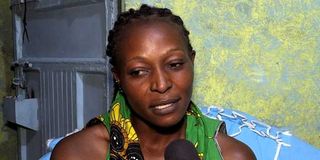
Mellen Mogaka, who was assaulted in Nyamira, during the burial of her ex-husband, speaks out about the ordeal at her home in Narok town on March 24, 2025.
The viral video of Mellen emerged on March 21. Mellen was assaulted and humiliated during her husband Wilfred Osoro’s burial. Her crime? Refusing to drop soil in his grave. Speaking to journalists later, she revealed that she had separated from her husband and had only attended the burial as a mark of respect. She also disclosed that before the burial, some Gusii elders had locked her up in a room with the corpse for a while, an action that traumatised her.
Though the elders were forcing her to perform the cultural practice, she refused because they were separated. So, why is the dropping of soil so important in Gisii culture and what are the consequences of complying or refusing?
In Kisii culture, a widow’s act of dropping soil carries a deep meaning. It symbolises her commitment to remaining in that household forever, signifying that she can never remarry. It also acts as proof that she has no hand in her husband’s death. However, noncompliance indicates her intention to move on, or possibly enter into a new relationship or marriage.
But George Nyakundi, an elder, rejects the claim that act is a Kisii cultural practice. The chairman of the Mwanyagetinge Heritage Council explains that dropping soil into the grave is not necessarily a customary practice. “In the past, throwing soil into the grave was not a traditional practice. It is the white man who founded the church who introduced this custom, which has since been preserved to date,” he says.
Widows being subjected to rites upon the death of their husbands is not new in Kenya. Inheritance, where a widow enters into a loose marriage with a brother-in-law, has been the most pronounced in some communities.
In some cultures, a widow is expected to wail loudly and uncontrollably while putting her hands on her head as a sign of sorrow. She is expected to run and jump, fall on the ground and sometimes roll as funeral rite. In other communities, a widow also wears a traditional robe called amakhola as she mourns her husband.
In some cultures, a widow is supposed to keep vigil over her husband's body. This is reportedly part of a cleansing ritual to purify such women in readiness for inheritance. While at it, she is expected to experience an odd ‘mandatory dream’ of themselves making love with her dead husband for one more last time to be considered ‘freed’ and ready to get remarried.
If the dream never comes to pass, more elaborate cleansing rituals take place. This is just an example of the weird and crazy cultures practised in Kenya. In some communities, when a man dies and his wife was unfaithful, the woman is restrained from going near the grave as she “may die”. The widow is also supposed to get a new bed and change its position in the house.
Diana says such traditions are real, adding that many widows have no voice and are less-empowered, hence suffering in silence. She terms these rites outdated vices that should not be given a chance in modern-day Kenya. “These cultural traditions that widows are subjected to are outdated. They should not be entertained at all and widows should not accept to be subjected to them. Many of them are scared of these rites,” she says.
She is calling for a special kitty for widows to enable them to have access to money to file succession cases in court, educate their children and start businesses to uplift their living standards.
However, Aggrey Majimbo, an elder from Kakamega, tells the Voice that he fully supports some of the rites reserved for widows.
“As a man, I support some of these rites as they safeguard a lot of marriages by ensuring faithfulness. Widows who perform some of the rites cannot dare date a married man as it is prohibited,” he says, adding, however, that he opposes some ills committed against widows like being dispossessed of property by in-laws.
The Kenya Women Parliamentarians Association (Kewopa) has condemned archaic and retrogressive cultural practices against widows. The women MPs held a press conference after the Mellene case.
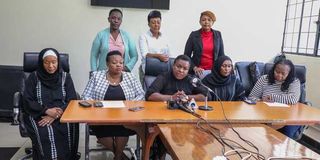
The Kenya Women Parliamentarian Association of Kenya, led by Kisii Woman Rep Doris Ndonya, addresses the media at Bunge Tower, Nairobi, on March 25, 2025. The MPs condemned the attack on Mellen Mogaka during the burial of her ex-husband in Nyamira.
The legislators, including nominated senators Veronica Maina, Catherine Mumma, Karen Nyamu, Hamida Kibwana, and women representatives Doris Donya (Kisii) and Betty Maina (Kirinyaga), wondered how violence against the helpless widow happened. “It is quite unfortunate that a rowdy group of adult men, in a most detestable, uncivilised, barbaric, form of gender violence attacked her, purporting to implement some retrogressive and uncouth cultural practice,” they said in a joint statement.
Migori Woman Representative Fatuma Zainab criticised the church for watching as the widow was being mistreated, saying the incident portrays Kenyan women as lesser humans without any law that protects them. “We wonder if the culprits would want their daughters and their wives to be treated in the same manner; culture protects and preserves dignity, and no amount of hiding behind any culture can ever justify this form of violation of Mellen Mogaka’s rights.”
Read: Entrench widows’ rights
The National Gender and Equality Commission (NGEC) has also condemned the horrific assault. NGEC in a statement said the vile act, captured in viral footage, exposes the deep-rooted gender-based violence disguised as culture, and violated the woman’s fundamental rights and dignity. “Such abuse is an outright affront to Article 27 of the Constitution, which guarantees equality and freedom from discrimination. This egregious violation of human rights constitutes gender-based violence, assault, and coercion—criminal acts punishable under Kenyan law,” NGEC statement read.
The gender commission noted that harmful cultural practices like this persist because of fear of stigmatisation and ostracisation. These oppressive traditions, it observed, blatantly contravene the Constitution and international human rights standards that mandate gender equality and non-discrimination. “The Commission calls on communities to abandon retrogressive customs and seek lawful and alternative dispute resolution mechanisms like mediation and arbitration when aggrieved. No culture or tradition should override an individual’s dignity, autonomy, and human rights,” NGEC said.
The seven men accused of assaulting Mellen were charged with locking up, roughing up and torturing the widow contrary to the Prevention of Torture Act of 2017. The suspects, who were charged alongside others not before court, denied the charges before Nyamira Chief Magistrate Bernard Ondego. They were accused of forcing the widow to participate in Abagusii cultural rites of burial that required her to pour a handful of soil into the grave of her husband.
The magistrate released them on a bond of Sh100,000 with a surety of similar amount each, with an alternative bail of Sh50,000 each. The case will be mentioned on April 23.
Dianah Kamande, the executive director of Come Together Widows and Orphans Organisation, says widows continue to bear the brunt of retrogressive cultural rites that infringe their human rights. She lists property disinheritance, cleansing, ostracisation, and inheritance as some of the harmful rites.
“Widow ostracisation, where a widow is discriminated against and stigmatised by society, makes it hard for them to participate in any economic activity, as they are considered a bad omen. The cost of health that comes with ailments resulting from widow cleansing is unmatched. During this process, a widow is forced to have unprotected sex with a cleanser. This impedes their economic growth and adds to the burden of a psychologically traumatised woman.”
Dianah notes that widows face double marginalisation, hence the need for a legal framework that addresses specific needs. “The Law of Succession Act, for instance, exempts community/pastoral land, leaving most widows under the mercy of men. This greatly affects women’s ownership of land, which they would have used for economic activities.”
She has called for a comprehensive legal framework tailored to the needs of widows. She advocates the revival of economic empowerment like the Thamini Mjane Loan and economic empowerment package under the Women Enterprise Funds.
Sidebar
It's not only in Kenya where widows are subjected to certain rites. In Uganda, the widow is obliged to mourn her husband for about three to 12 months depending on the ethnic group. She is also required to shave her hair and drink the remains of the bathwater used to clean her husband’s corpse. She is also not allowed to bathe or clean her surroundings during the mourning period. In neighbouring Tanzania, a widow engages in sexual intercourse with a male cleanser unknown to her.
In Nigeria, the hands and feet of a widow would be sprinkled with water treated with leilane and her head shaved. Immediately after a burial, she would participate in a general washing of the hands and feet, and the grave is sprinkled with water treated with leilane, a plant used extensively to neutralise impending danger. This is done to ensure the widow, together with her family, does not constitute a ritual danger to the community.
This ritual is followed by shaving the head of the widow, a rite involving other family members. Sexual cleansing for widows has also been rampant in Nigeria, with the rite used as part of social transition for widows to remarry after the death of their husbands. It is conducted to clean the widow of alleged evil spirits resulting from the death.
The practice of sexual cleaning indicates that the widow is eligible for marriage through inheritance. This cultural practice is considered a rite of passage to widow inheritance, which allows continuation of the family as new unions produce children to carry the family name. Drinking the water that has been used to clean a corpse proves that the widow is innocent of murder. The practice of head shaving is common among the Zulus of South Africa (both in rural KwaZulu-Natal and urban Soweto).
Here, the widow is required to wear black clothing and behave in a manner that shows she is grieving. The widow, wearing black clothes, also has to sit at the back of a bus or taxi in order not to expose other travellers to “bad luck”. She also has to give way to other road or path users whom she meets.


