Herding dreams, healing herds: Meet Marsabit’s first women animal health officers
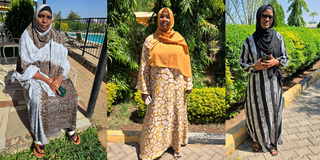
In Marsabit and Moyale, three women (from left) Hawo Guyo Boru, Jenerita Khoboso Lesila and Jillo Shama are rewriting what's possible for girls who were meant to marry young.

What you need to know:
- Three women from Marsabit defied cultural barriers to pursue education and careers in animal health, a field long considered the preserve of men.
- Their journeys, marked by rough roads, long separations from family, and limited resources, reflect the struggles many pastoralist girls face in accessing education.
- Today, they stand as trailblazers, protecting livestock and inspiring a new generation of girls to follow in their footsteps.
"I wanted to become a veterinarian, but mathematics did that thing."
The room erupts in knowing laughter. But for Jillo Shama, Marsabit County's Assistant Director Social Services, standing before a group of scientists discussing how taboos and gender roles affect zoonotic disease prevention in pastoral communities, this opening line is more than a joke. It is evidence of the struggles many young girls and women in Marsabit County have endured to attain basic education and pursue careers at higher learning institutions.
"All my age mates were married off at an early age," she tells The Voice after her PowerPoint presentation. "My dad was an orphan, and he was taken to school for one day. Then the clan members denied him a chance because his dad had a lot of cows, and he was told he had to look after them. Those days, people who attended schools were the prominent ones."

Because her father was denied basic education, Jillo knew nothing of school for her first five years. When old enough to help at home, her parents sent her to her grandmother to tend young goats and sheep far from Gombo village during droughts.
When she turned six, her father brought news that would start her education.
“That day, I discovered school existed—I had never seen a school building or students before," says the former Hekima Primary School pupil. “When I started school and learned to read, I felt like other kids. I told myself I'd make my parents proud."
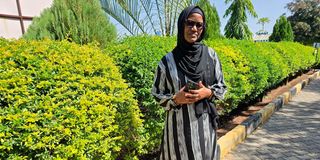
Jillo Shama, Assistant Director Social Services in Marsabit County during an interview on July 31, 2025. Photo credit: Tebby Otieno/Nation Media Group....
With support from her parents, Jillo dedicated herself to her studies, embracing this opportunity that her parents had missed. Today, as she sits in the county's Social Services office and chairs roundtable discussions on how cultural practices continue to hinder the health of her community members, she sees her parents in herself.
"I was six when my father arrived one evening and told me we were going home. He didn't mention school. The next day, he took me to my mother, and together they enrolled me in nursery school—a privilege no other girl from my village had received before starting primary education," says the firstborn in a family of ten.
Her commitment saw her excel in her Kenya Certificate of Primary Education examinations, earning her a place at Bishop Cavallera Girls, one of the high schools she describes as the best in Marsabit County. While she went to school, her two siblings were denied the same opportunity—they had to stay home tending the family's livestock.
"When my younger sister married so young, I realised school was the only thing protecting me from the same fate. I focused on my studies, earned a B plain, and enrolled at Maseno University in 2010 to study Sociology with IT."
Maseno University in western Kenya was Jillo's first chance to leave her home county. The journey was gruelling—poor roads and scarce transport made travel difficult. But Jillo and her parents were determined she would enrol.
"We travelled on a rough road from Marsabit to Isiolo, to Nairobi, to Maseno. It was the longest journey for me. Then there was the culture shock: the first time I stepped in Maseno University was the first time I ate fish," she recalls.
Coming from Marsabit, a pastoral community where milk and meat form the basic diet, Jillo faced significant adjustments when she moved over 600km to university. The lifestyle change was profound—from the foods she ate to the environment around her. But the spirit of camaraderie among students helped her adapt and opened doors to new opportunities. Her lecturers' career guidance proved transformative, leading her to embrace a path different from the veterinary or medical careers she'd dreamed of throughout her schooling. Before her first year concluded, she was nominated class representative, serving two consecutive terms that honed her leadership abilities.
"Although I wanted to be a vet, I didn't pursue that career. Still, animal health, environment, and human health are all interrelated. The cultural and social aspects are also critical, especially through the social and behavioural communication work I do to change community attitudes and perceptions," she shares.
Jillo's drive to study remains high—she is currently pursuing her master's in Environmental Science, Climate Change, and Sustainability. As a sociologist working with vulnerable groups like children, women, and persons with disabilities, she is fighting for gender equality.
“We are all seeing the impact of climate change, but it hits these vulnerable groups differently. Through this course, I also want to understand how climate change affects them specifically and how best we can safeguard or protect them from its negative impacts," the mother of two shares.
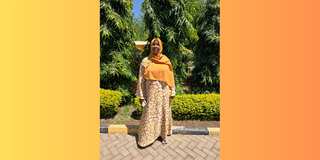
Jenerita Khoboso Lesila, a veterinary and animal health officer in Marsabit County.
Over 100 kilometres away, we meet Jenerita Khoboso Lesila, a veterinary and animal health officer in Marsabit County. Her entry into the veterinary field was inspired by her father, also a veterinarian who mentored her.
“On my graduation day, I was very happy because, you know, I had initially told my dad that I would not manage to complete the course. People were even telling me that the course was very difficult and that it was a course for men. Because of that, I was very afraid at the beginning,” says an elated Jenerita.
Like Jillo, she was eager to pursue her career away from home, but the journey from Marsabit had its equal share of challenges.
"We planned the journey, then left our rural home in Korr for Marsabit town, where we spent the night. The following day, we got on a bus to Isiolo. At that time, there were no tarmacked roads in Marsabit. Because of the rough road, we were forced to spend the night in Isiolo since we arrived in the evening. The next day, we planned the journey to Nairobi and arrived around 4pm," the former Korr Primary School pupil remembers.
When she finally arrived in Nairobi, she found herself in a new world and felt her dreams had come true.
"I was very happy seeing many vehicles and people in the capital city that I had never seen in my life. It was no longer hearsay—I had arrived in Nairobi," Jenerita, who also studied at Bishop Cavallera Girls, shares with soft laughter during the interview.
When she reported to the Animal Health and Industrial Training Institute in Kabete for her two-year certificate course in Animal Health, she hoped to see other young girls from pastoral communities. That didn't happen.
"According to our culture, we wear long dresses and cover our heads, but I didn't have any other female classmate who dressed like me, as I had desired from my first day in college. We did, however, have two male classmates from North Eastern who motivated me in a way."
Walking out of the institution with her father on graduation day, her heart overflowed with joy and satisfaction. She was ready to vaccinate and diagnose animals, offer treatment, monitor their health, and assist with births. Yet her desire to advance her studies still burned bright. So she enrolled for a diploma in Animal Health, pursuing it while working for a non-governmental organisation in the same field.
"Even for my diploma, I was the only Cushite female student. That made me feel like a go-getter who took on a male-dominated course, because even at the beginning, friends used to tell me it was difficult. But I now believe it's just the mind-set that animal health is a difficult course. Things are changing. After I joined, other girls started joining, and we now have ladies, though still few women," Jenerita tells the Voice.
Growing up in a community where most young girls lacked educational opportunities meant that the few who did, like her, had to make the most of it—the entire society was watching. Jenerita, who joined college in 2012, is proud that things are changing. While not all young girls within pastoral communities attend school, a significant percentage are now enrolled.
"Many things motivated me to work harder in college to complete my course. But beyond my dad, I wanted to finish my studies so my three younger sisters could have a role model. That's the pressure that came with being the firstborn."
Although she initially wanted to pursue medicine before switching to animal health through her father's mentorship, she's happy to have knowledge she can share to empower her community.
"After completing my diploma in 2018, I met my fiancé, and we got married in 2019. I then started my own family. We were blessed with our firstborn in 2020, and this year, with our second child," she shares about how pursuing education delayed marriage until she was of age and had established her career—uncommon in most pastoral communities.
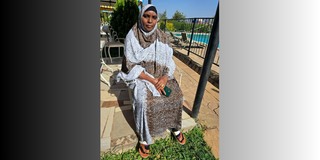
Hawo Guyo Boru, an Animal Health Assistant in Moyale Sub-County, Marsabit County, speaks during an interview on July 31, 2025. Tebby Otieno/Nation Media Group.
In Moyale Sub-county, Animal Health Assistant Hawo Guyo learned on the job. After completing her primary and secondary education, she remained at home, lacking school fees for college.
During this period, she joined a Community Disease Reporters (CDR) group in her Sololo community. They visited pastoralists in the interior regions where animals grazed, sharing information about disease outbreaks and scheduled vaccination campaigns. Additionally, she was part of the team that reported observed animal diseases during field visits to veterinary officers, who would then diagnose and provide treatment.
When I enrolled for CDR, that's when I learned what the job entails. I then became their storekeeper, also selling medicines for the group that was trained by the livestock department and NGOs who were donating medicines. After working for some time, I was trained on animal treatment and vaccination," says the former Moyale Girls Secondary School student.
Her commitment and dedication earned her a scholarship to pursue animal health at the Animal Health and Industrial Training Institute, Ndomba, when opportunity arose in 2007. Consequently, she became the first and only female in Moyale region's animal health department to date.
"During that time, there was a mandatory requirement that one of us get a certificate in animal health. That's when I was nominated. I studied and graduated in 2009. I came back home with my certificate and worked even harder than before. I continued until the government employed me in 2016," Hawo shares.
Like Jillo and Jenerita, Hawo remembers the challenging academic journey that shaped her into today's career woman. She tells the Voice that her educational path demonstrates the crucial need for parents to support their children's education and pay school fees, even for government institutions.
"We used to leave home two to three days before the opening day and travel on a lorry that carried livestock to the market, which made the journey very long. We would arrive at school exhausted, but we kept pressing on because three days on the road was not easy. It was worse during rainy season, but I continued till I completed my studies."
The price of being first
Though kilometres apart, these three women share several similarities. They are all mothers and firstborns, passionate about animal health careers, who travelled difficult roads to acquire their education.
Now they've returned to care for the health of their communities' main economic livelihood—livestock, a job most women believe is meant for men. However, with them at the frontline raising awareness, this stereotype is gradually changing.
"I used to ask myself, why are there no other women here except me? I decided to continue working passionately so that young girls can see me as an example and get inspired to consider careers in animal health. I feel very proud to be in this field," says the mother of six, adding,
"Two of my children already want to pursue animal health careers and be like me. Through my daughter, I am confident there will be more female animal health officers from this region."
They all admit that the nature of their work, following nomadic herders, presents unique challenges for mothers.
"Sometimes we're away for two weeks or a month, and we usually wake up at 4 or 5am at the latest. As a mother with young babies, when I go for field vaccinations, I have to bring someone to care for the baby because I cannot carry the baby into the forest until I return to the settlement later in the day. Since I have two babies, I also need another caregiver who stays home to care for the baby and ensure he doesn't miss school while I'm away on field duty," says Jenerita.
The challenges include risking their health and that of those around them.
"We mostly wear gloves, which can tear. We also wear dust coats, which only protect against dust, not diseases—like when we're vaccinating against rabies. We must always work once a job is planned and the community we've mobilised has gathered. You cannot tell them the work can't be done because you lack protective gear," says Hawo.
Not wearing proper protective gear exposes frontline animal healthcare workers like Hawo to high risks of contracting zoonotic diseases, according to Millicent Minayo, Surveillance Coordinator at Kenya Medical Research Institute, who coordinates a population-based integrated disease surveillance platform.

Millicent Minayo is a Surveillance Coordinator at Kenya Medical Research Institute (KEMRI) coordinating population based integrated disease surveillance platform, implemented by KEMRI, Washington state university, and US Centers for Disease Control and Prevention. Photo credit: POOL.
"Even as we perform these duties, our safety comes first because while you're going out there as a veterinarian, there's always the risk of animal-to-human transmission. If you return to the office unprotected, you can then transmit diseases to your colleagues and so on," says the field epidemiology and laboratory training program alumna.
Millicent adds that female veterinarians and animal health officers make significant sacrifices, including challenging cultural norms by wearing practical attire, riding bicycles, and spending several days away from their families—collecting samples, vaccinating, treating, or helping animals give birth up to 100km from home.
"We have major challenges, especially in government facilities. Protective gear is not a luxury. Sometimes we run out of stock, but with collaborators, we're able to obtain supplies and put them to use. Pastoralists' livelihoods depend on animals, so animal health really matters. We also remind them that they need to protect their own health first before caring for their animals to earn a living," she adds.
Dr Dismas Oketch, a research scientist at Washington State University Global Health Kenya, says their previous research in pastoral communities like Marsabit and Kajiado counties shows that frontline animal health workers face significant exposure to zoonotic diseases, making protective gear non-negotiable.
"Human resources are a critical component of intervention. Beyond having the required commodities, you need people who are experienced, qualified, and always ready to respond to emerging events, as is the case with infectious diseases. We've realised that most infectious diseases affecting humans actually jump from animals to humans. That's why, through our research findings, we want to ensure health workers are aware of emerging disease syndromes they need to identify before they become major catastrophes."
Back in Moyale, Hawo watches the sunset over the plains where she once travelled three days on a livestock lorry to pursue an education. Her children are in school. Two of them want to follow in her footsteps. She thinks of her younger colleagues—the few other women now joining the field—and smiles.
The roads are still rough. But they are no longer travelling them alone.


