How three rape survivors found their way back to life
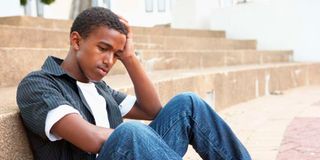
Male victim of rape. Many are condemned by society, yet they, too, deserve justice.

What you need to know:
- A young man raped by his employer breaks years of silence, revealing the deep psychological scars left by sexual violence.
- His story, alongside those of women like Lila and Esther, shows how counselling, community support, and understanding can transform lives, yet healing remains inaccessible for many.
I recently interviewed a young man who was raped by his female employer in 2020. Throughout our conversation, he fought back tears, his voice fading in and out—the voice of someone still carrying immense pain.
When I asked whether he had ever received counselling, he said he hadn't. Moments later, he broke down and whispered, "I need help. I need counselling.”
By the time our conversation ended, we were both in tears. Are you also battling against the pain? Below is a guide, drawn from the experiences of survivors who have healed and the insights of a counselling psychologist.


Gang-raped
For nearly six years, Lila* hid herself inside her family's rented house in Manyatta, a low-income settlement in Kisumu County—desperate to avoid a ruthless world that constantly reminded her of the horror she was trying so hard to erase.
In 2013, during the violence that followed the disputed election results, three men forced their way into her home and raped her in front of her husband and four children. Her husband tried to fight them off, but they overpowered him as the children screamed helplessly
"When they finished, they walked away like they had done nothing wrong," Lila recalls. "I felt dead. How could they do that to me in front of my husband and children? I hated myself. I hated my body."
Her pain grew worse at home. Her husband withdrew completely. From March 2013 to February 2019, they had no physical intimacy at all. "He would blame me for allowing myself to be raped," she says.
Yet she needed his understanding to cope with the stares and whispers that followed her everywhere. "On my way to the water kiosk, the shop or the market, I'd hear people say, 'Look at that woman… she was raped. Such a shame. Is the husband still living with her?'" she remembers. "I felt like the world had ganged up against me. The only place I felt safe was inside my house. After finishing the chores, I'd go straight to bed."
Lila, who had just been promoted at a construction company in Kisumu, had been stripped of her right to bodily autonomy and to work—rights guaranteed in the Kenyan Constitution and the Universal Declaration of Human Rights. Among the women in her village was one who grew tired of being defined by what had been done to her. She too had been raped during the 2007/08 post-election violence and had long been labelled "that woman who was raped."
In 2019, she decided it was time to stand up for herself and others. She formed a support group for women survivors of election-related sexual violence. Forty women joined initially, but the trauma was overwhelming. Many were too fragile to share their experiences and, one by one, they left. Only ten remained. It was this founder—before her death in 2022—who saved Lila from isolation. "She counselled me for days before I finally agreed to join the group," Lila says. "She also counselled my husband, and he changed. Since 2019, he has been different. He no longer blames me, and he treats me better."
The renewed unity at home has helped her heal. She can now share her feelings openly with her husband, and she speaks about her experience without breaking down. Every Friday, the women meet to weave door and table mats and make soap — activities she finds therapeutic. "Every Friday I go home lighter and happier. Sharing with sisters who understand what you're going through is so relieving," she says.
Repeated abuse
Esther* endured suffering that began in childhood and followed her into adulthood. "As a child, I was defiled three times — all by men known to my parents," she says. "I was too afraid to tell my mother. I didn't even know how to start explaining it. So I kept it inside, even though it was tearing me apart."
Adulthood brought new wounds. "The man I married was loving and caring at first. But once he paid dowry and it became known we were married, he started treating me like I was not human," she recalls. "The rejection, the insults, the way he spoke to me — it broke me emotionally and psychologically. I even contemplated suicide."
Eventually, she confided in her mother, who stepped in and helped her leave. She then began counselling — a journey that transformed her life. "I went through 18 counselling sessions, beyond the capped 12 that the organisation could offer for free," she says. "That helped me shed the weight I had carried for years. The pain had turned me into a hostile mother. I would beat my daughter so badly that any time I approached her, she would beg me not to hurt her. I wish I could turn back time and be the good mother I am today. But that change would not have happened without counselling."
Counselling as the beginning of healing
Why is counselling the beginning of healing? Peris Miano, a counselling psychologist and founder of Pillar for Mental Health Support in Kerugoya, Kirinyaga County, breaks it down. Many rape survivors experience rape trauma syndrome, a form of post-traumatic stress that unfolds in three phases.
The acute phase
Immediate reactions such as shock, fear, confusion or emotional numbness. "Some appear calm, but inside, they're overwhelmed," she says.
The outward adjustment phase
Survivors resume daily routines and may seem fine. "But they're suppressing the trauma," Peris explains.
This phase is marked by anxiety, avoidance and emotional detachment.
The resolution phase
Healing begins. Survivors start processing the trauma, rebuilding self-worth and reconnecting with life. "But not everyone reaches this phase without support," she cautions.
The consequences of rape trauma are extensive. Psychologically, survivors may suffer nightmares, panic attacks, flashbacks, persistent sadness, suicidal thoughts and deep self-blame. Physically, they may experience injuries, sleep problems, chronic headaches, eating disorders and risks of sexually transmitted infections or unwanted pregnancies.
Behaviourally, some turn to substance abuse, withdraw socially or engage in self-harm. "Trauma can make survivors distrust even the people closest to them," Peris says. "It destroys relationships, affects work and school performance, and in some cases pushes people to the brink."
Yet trauma counselling remains out of reach for many. "Counselling sessions cost between Sh2,000 and Sh6,000—an amount most survivors simply cannot afford," she says. "Rape isn't just a moment of violation. It becomes a lifetime of pain if we don't respond with the care, urgency and compassion survivors deserve."


