Kenya rolls out new protections for athletes in Iten after wave of femicide
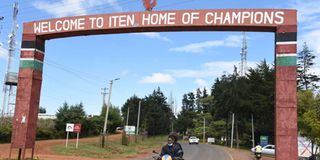
Iten, where champions are made, in Elgeyo Marakwet County.

What you need to know:
- The "Home of Champions" is haunted by the murders of female athletes who have made a mark in world.
- Now, the government and international partners have stepped up efforts to keep runners safe from gender-based violence.
Iten is where champions are made. This small town in Elgeyo Marakwet County hosts about 5,000 athletes from Kenya and beyond, all drawn by the high altitude and ideal training conditions that have been compared to St. Moritz in Switzerland.
But Iten has been burying its women. In recent years, female athletes have been killed by their partners, forcing the athletics community to confront a problem it can no longer ignore.
Agnes Tirop, the 2015 World Cross-Country champion, was allegedly killed by her partner in October 2021. She died in Iten. A year later, Damaris Mutua, a Kenyan-born Bahraini athlete who won bronze in the 10,000 metres at the 2010 Youth Olympics, was found dead in the same town. Police named her boyfriend as the prime suspect.


Now, the government has partnered with international organisations to protect the athletes who train here.
New rules for training camps
Working with the European Union and the United Nations, the government has developed Standard Operating Procedures for athletics training camps in the North Rift.
Three camps have already received customised guidelines: 42 House KipRun, Nzima Heart Camp, and Iten Athletics Training Camp. The procedures set out how to prevent and respond to gender-based violence, including how to report cases and how to involve communities.
The guidelines also cover newer forms of abuse like cyberbullying, online harassment, and the sharing of private images without consent.
'We cannot tolerate it'
Cabinet Secretary for Gender, Culture and Children Services Hannah Cheptumo spoke in Iten about the government's response.
"We want to appreciate our partners from the European Union because GBV and femicide are national problems," she said.
"In Elgeyo Marakwet County, 30 per cent of women aged 15 to 49 have experienced GBV, and the government cannot tolerate it."
She said athletes face particular pressures. Spouses, coaches, and sponsors all push for results, and that pressure, combined with public attention, puts athletes at greater risk of abuse.
A task force report on the issue will soon go to cabinet.
"The task force report was released the other day. It will head to the cabinet for discussion so we can study it and come up with actionable measures to deal with this problem that is affecting our society," she said.
Ms Cheptumo said the government needs help from others.
"We must work with international partners, the athletics community, and local leaders to protect our athletes and ensure they can train and compete safely," she said.
International support
European Union Ambassador Henriette Geiger, said the EU has put significant resources into fighting gender-based violence in Kenya.
"We have made progress, and as part of this mission in Elgeyo Marakwet, we have met athletes and engaged communities on the need to change perceptions about GBV," she said.
"The county government is at the forefront of fighting this menace, and the CS is also here because we all have to team up to end it."
The partnership also includes the United Nations Population Fund and the Centre for Enhancing Democracy and Good Governance (CEDGG).
Paul Masese, Executive Director of CEDGG, said the guidelines were developed with input from people who live and work in the camps—coaches, athletes, camp managers, and medical staff.
"Their lived experiences ensured the guidelines address the real challenges faced in athletic training camps," he said.
CEDGG noted that globally, 21 per cent of female athletes report experiencing sexual abuse in sport during childhood, and studies consistently show women face higher rates of gender-based violence than men.
Athletes want more
Marathoner Joan Jelimo, who represents Romania and runs the organisation Stride for Africa, welcomed the government's action but said more is needed.
"We want to thank the government for stepping in, but the Sports Department should also regulate the registration, management, and operations of all the athletics camps," she said.
She called for safe spaces where athletes who experience violence can recover and rebuild.
"They should establish safe spaces for athletes who undergo GBV to recover, get support—both psychosocial, legal, and economic support—and be reintegrated back into society," she said.
Ms Jelimo said the State Department of Sports should set aside money to regularly educate athletes about gender-based violence and the Referral Pathway. She added that all athletes need protection, whether they live inside training camps or outside.
She also suggested bringing in retired athletes to serve as anti-GBV champions.
"I would like to work with other athletes from other continents in the world, and I intend to borrow from expertise and experience from other parts of the world on how GBV among athletes has been handled," she said.


