Happening Now: NTV KENYA LIVE | Senate Proceedings
Kenya’s lost boys: The untold pain driving violence, addiction, and despair among men

Kenya's new National Male Engagement and Inclusion Strategy (2025-2030) acknowledges for the first time that men and boys are not just allies in gender equality but beneficiaries who need support.

What you need to know:
- Martin Mwariri’s life story reveals how childhood trauma, neglect, and violence can shape broken men who struggle with anger, addiction, and pain.
- His journey from suicidal thoughts to healing through therapy mirrors the struggles of many Kenyan men.
- A new national strategy now seeks to address men’s mental health, inclusion, and empowerment as part of Kenya’s broader gender equality agenda.
By eight years old, Martin Mwariri was already sleeping outside, chased from his home. By Class Five, he was carrying daggers to school. The fights, the substance abuse, the sex addiction—all of it, he says, came from one place: a childhood so brutal it nearly killed him decades later.
"I had reached the last stage—suicidal or homicidal," he says, his voice steady but heavy. "When your brain is constantly in fight-or-flight mode, you cannot think clearly. Everything feels like a threat. You either turn it inward and kill yourself, or you turn it outward and hurt others."
"That is why men snap. That is why you see the killings in the news. It is not random. It is pain."
Now 55, Martin speaks of a dark place where he lived for decades—a place where pain festered until some miraculous light shone through and guided him towards healing. Behind his story lies something larger: intergenerational trauma, passed down like an inheritance no one asked for.
"My mum's father was in the army during World War II," he explains. "He had post-traumatic stress disorder (PTSD) because of the war. And such a man raised her. And then she got married to my father, who was also a policeman. That's another PTSD. Can you imagine what was coming to me as a child? I had a very rough childhood."
He pauses before continuing. "I had complex PTSD from childhood. I was abused, neglected, and ostracised. By the age of eight, I'd already been chased out of the house. I started sleeping outside."
"I grew up a very isolated person. I started running away from school in Class Three. I was always in fights, carrying daggers to school by Class Five. I abused substances, alcohol, and sex addiction. All of it messed me up."
He draws a deep breath. "It's a kind of pain most boys go through. You find grown-up men, but inside they're still boys. Unless you go through therapy, that's a life sentence."
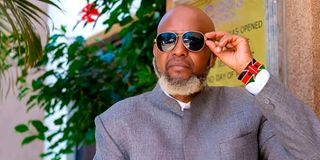
Martin Mwariri, a counsellor and men's mental health advocate. His journey from childhood trauma and suicidal thoughts to healing through therapy informs his belief that Kenya's new male engagement strategy must prioritize affirmation, identity, and professional mental health support.
Sadly, this cycle of violence, neglect, and unhealed trauma did not just leave scars that have taken him a lifetime to confront; it also denied him the life he longed for: a happy marriage. He carried that unresolved pain into his relationship, and eventually, their marriage could no longer hold.
Listening to him now, you are transported into another world—one suffocating under a mound of indescribable emotion. The scars of his childhood still feel raw and alive.
Martin's story captures the many challenges that boys and men face in Kenya; issues the Ministry of Gender, through the State Department for Gender Affairs and Affirmative Action, has finally moved to address through its newly launched National Male Engagement and Inclusion Strategy (2025–2030).
For decades, men in the gender equality conversation have largely been cast in the role of "allies"—standing beside women as they fought for space in leadership, education, politics, and public life. But for the first time in Kenya's equality journey, this strategy puts men and boys at the centre too—not just as supporters, but as beneficiaries whose own needs and vulnerabilities also demand attention.
Yes, it calls on them to help end gender-based violence and to champion women's leadership. But it also recognises something long overlooked: that men, too, are becoming an endangered group in many respects.
Young men, men with disabilities, and those living in poverty remain side-lined in leadership and decision-making, even though their lived experiences and perspectives could drive more inclusive and just governance.
Then comes socialisation that has taught boys to wear stoicism like armour, dismissing health care as weakness. The result? Poor health-seeking behaviour, high mortality rates, low self-esteem, and a neglect of self-care.
Worse still, men and boys are disproportionately caught up in crime, both as perpetrators and as victims. The strategy refers to the United Nations Office on Drugs and Crime, which notes that men are three to four times more likely to commit intentional homicides.
In Kenya alone, the homicide rate in 2022 stood at 4.9 per 100,000 people, with men accounting for most of the 2,643 deaths. The reasons? Unemployment and poverty that push young men into risky, often deadly paths—gangs, drugs, and crime.
What the strategy promises
The strategy takes these realities head-on with targeted interventions. It plans to train men and boys on positive masculinity and behaviour change, helping them unlearn harmful stereotypes and embrace healthier ways of expressing strength and responsibility.
It also intends to create safe dialogue forums where men and boys can seek psychosocial support. For a society where vulnerability is often dismissed as weakness, these spaces could be a lifeline for those silently battling depression, stress, or trauma.
It promotes advocacy to dismantle the stigma that keeps many from walking into a hospital until it is too late. With an end to the stigma, the department hopes to help men and boys embrace health-seeking behaviours.
On the economic front, it pushes for male-targeted empowerment programmes to address the crushing weight of unemployment and poverty—the two forces that frequently drive young men into crime or substance abuse.
Leadership training is also on the table, especially for marginalised men and boys. The aim is to show them the value of gender-balanced leadership whilst equipping them with the skills and confidence to take part in decision-making.
Moreover, the strategy seeks to use innovative platforms to challenge and transform the social norms that discourage men from seeking help. At the same time, it will partner with stakeholders to run sensitisation campaigns against alcohol, drug, and substance abuse—problems that have destroyed more than two million young men's lives, according to government data.
Lastly, communities will be encouraged to welcome male ex-convicts into development activities, creating pathways for reintegration instead of pushing them further to the margins.
Whilst the department recognises these as pathways for addressing challenges related to men and boys, Martin's perspective highlights a missing foundational element that is crucial to effectively tackling these issues.
"Affirmation and identity are the foundations of a healthy manhood. Without them, boys grow into broken men—men who self-medicate with drugs, alcohol, and risky behaviours. If we affirm our boys, if we give them identity, we save them. If not, we lose them," he affirms.
Martin describes trauma as a thief of normality—something that cannot be restored without therapy.
"In trauma, the abnormal becomes normal, and the normal becomes abnormal," he explains.
"A boy raised on insults, beatings, and neglect will grow into a man suspicious of love, threatened by kindness, and conditioned to pain. It is why many men cannot sustain healthy relationships. Unless they go through therapy, they remain boys in adult bodies—dysfunctional, angry, and broken."
For him, healing began not through the church, where he has been active for more than two decades, but through therapy. A pastor introduced him to a professional counsellor. It was a turning point.
"I lost my marriage because of violence and anger issues," he admits.
Unhealed trauma
"I was active in church, very prayerful, but I was struggling. It was only when I started therapy during Covid-19 in 2020 that I discovered what my real issues were. They began when I was just a small boy."
Martin admits he came to the brink himself. His unhealed trauma drove him to suicidal thoughts.
"I had reached the last stage—suicidal or homicidal. When your brain is constantly in fight-or-flight mode, you cannot think clearly. Everything feels like a threat. You either turn it inward and kill yourself, or you turn it outward and hurt others."
"That is why men snap. That is why you see the killings in the news. It is not random. It is pain."
Through therapy, Martin confronted his childhood traumas, understood his violent patterns, and began a process of transformation. He studied short courses in counselling, psychology, theology, and life coaching. But more importantly, he combines those studies with his lived experiences to help other men.

Gender Cabinet Secretary Hanna Wendot on May 19, 2025. Her ministry has launched Kenya's first National Male Engagement and Inclusion Strategy, aimed at addressing the unique challenges facing men and boys while advancing gender equality.
Though the department had not responded to queries on the strategy, in the document Cabinet Secretary for Gender Hanna Wendot notes that the strategy acknowledges the unique roles, influences, and responsibilities that men and boys hold within our families, communities, and institutions.
As such, it seeks to challenge and reshape harmful gender norms, nurture positive masculinities, and create spaces where men can be allies and advocates for gender equality—whilst at the same time addressing the distinct vulnerabilities and challenges that men and boys face.
The Gender CS maintains that the engagement of men and boys is not about shifting focus away from women and girls, but about reinforcing the foundations of equality through shared leadership, mutual respect, and inclusive participation.
Perhaps the inclusive participation that Coalition Action for Preventive Mental Health Executive Director Mathew Mutiso foresees could bring "repair and restoration" to the broken, helpless, and hopeless men.
"These conversations need both genders," he notes. "Society does not operate with one; it works with both. Because if men are perpetrators, at one point they were also victims. For someone to become an alcoholic, a drug addict, a womaniser, or a school dropout, you have to ask: what was the root cause? That's how we can prevent cycles of violence and brokenness."
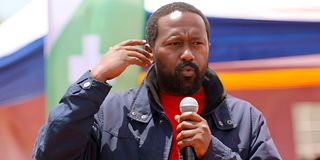
Mathew Mutiso, Executive Director of Coalition Action for Preventive Mental Health. He advocates for inclusive gender conversations, noting that many men struggling with addiction, violence, or mental health issues are products of neglect, rejection, and social determinants that need to be addressed at their root.
He highlights the undercurrents of the challenges men face, many of which are tied to mental health.
"For too long, our approach has been biomedical," he says. "That leads to diagnoses of schizophrenia, attention-deficit/hyperactivity disorder, bipolar—mainly for medication purposes. But what about the majority who struggle with mental health issues rooted in behaviour, social experiences, and environment? They don't always fit medical categories, yet they make up 80 per cent."
He adds that the World Health Organisation's well-known statistic—that one in four people will experience a mental health condition in their lifetime—often feels abstract until it is examined through the lens of social determinants.
"Neglect, rejection, abandonment, single parenthood, poor housing, poor sanitation, violence, abductions, killings—these are the super determinants of mental health," he explains. "Even when both parents are present, if one is abusive or narcissistic, the child suffers. It affects the brain's executive function, lowering memory and learning ability. That's why some children underperform in school or later struggle to form and sustain relationships."
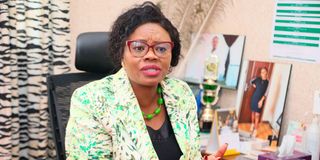
Githunguri MP Gathoni Wamuchomba during an interview at her Membley office in Kiambu County on October 1, 2025. She believes the women's movement should resolve its internal challenges before focusing on male engagement in gender equality efforts.
But there are those who don't see the necessity of this strategy.
Githunguri Member of Parliament Gathoni Wamuchomba says the women's movement must first look inward. She criticises women leaders for undermining each other rather than building solidarity.
"Those jeering at me when I was kicked out of Parliament were not men, they were women," she says. "So why should I invest in men before investing in women? Change women's mentality first."
Last August, the National Assembly Speaker suspended her for 20 days after she walked out in protest, maintaining that Interior Cabinet Secretary Kipchumba Murkomen's response to her question on the recovery of women's bodies from the Kware dumpsite in Embakasi South, Nairobi County, had clearly failed the victims' families.
For Gathoni, the inability to pass gender-friendly legislation in Parliament, including the two-thirds gender rule, is a glaring example of lost ground.
"We have struggled for 14 years. This rule has been raised eight times and rejected each time. You want to tell me the reason we failed is because men were not our allies? No. The women's movement has lost its way," she emphasises.
She believes it is time to urgently undertake an audit of Kenya's gender agenda.
"Before we reach out to men, can we go back to the drawing board and ask ourselves: where did we lose it? Why can't we even pass women-friendly legislation? Until we fix that, talk of male allies is misplaced," she asserts.

Tony Mwebia, Executive Director of Men End Female Genital Mutilation Foundation. He supports the National Male Engagement Strategy.
Nevertheless, other gender equality stakeholders see this as a stepping stone towards bridging a gap that has, for years, cried out to be filled.
Men End Female Genital Mutilation Foundation Executive Director Tony Mwebia says the new national strategy to engage men and boys in gender equality is a significant step forward.
"For me, it's a good move. There's been a lot of noise from men saying the boy child has been left behind, that young men are struggling, so this document is important because it addresses some of those concerns," he says.
However, Tony emphasises that unless the strategy is implemented effectively, it risks becoming "just another document."
"It talks about male inclusion, which is something we've needed. It goes beyond just allyship, where men are only engaged to support women and girls. Male inclusion means creating safe spaces for boys, men, or elders to talk about the issues they themselves are facing."
He points to the high rates of male suicide, incarceration, and substance abuse in Kenya as signs that men are struggling in silence.
He argues that society tends to overlook the suffering of boys and men.
"Go to the streets of Nairobi; most of the street children are boys. That's become normal. If it's a girl on the street, someone usually intervenes. But boys are just left there. We're more concerned about girls being harmed, which is valid—but we forget that those same boys are at risk of causing harm or being harmed too."
He believes male inclusion will reduce the sense of exclusion and competition that some men feel when it comes to gender equality efforts.
"If we address these overlooked issues, we can reduce the discomfort men feel when they say they've been left out. That's how we build genuine equality," he notes.
Political will
For Griphase Masinde, a gender and development expert, the strategy could not have come at a better time.
"It's a good time to have it. In fact, it was long overdue," he says. "For years, we've talked about gender, but the focus has mostly been on women. Empowering women is important, but unfortunately, men have been left behind. Because many of them do not understand what gender truly means, misconceptions have flourished. Engaging men so they understand and know how to offer support is the best thing we can do."
He explains the gap through a simple illustration.
"Suppose you are my wife. You've been invited by big organisations, trained, empowered. Then you come home and start implementing what you've learnt, yet I have no idea what it's all about. Do you think we will agree? Of course not. We won't," he says.
"The best approach is that as women are empowered, men should also be made to understand. Only then can we give full support."
Still, Griphase cautions that good strategies risk failure if they are not implemented.
"We come up with strategies, policies, and laws—but too often, they gather dust on shelves," he says. "And budgets for gender equality are nearly non-existent at national, county, and even international level. Yet who makes most budget decisions? Men. If they were sensitised, they would be able to factor in something."
The strategy, he says, holds promise—but only if it is backed by political will, proper resourcing, and a genuine effort to bring men fully into the conversation.
Where it all begins
After all is said and done, it is the boy and man who remains to see the change in him, about him, and for him.
Back to Martin.
"Yes, it's good that we've finally sat down to ask, 'What's going on with boys and men?' Parents are damaging their sons with words—insults like 'you're stupid,' 'you're useless,' 'you'll never amount to anything.' Then, when femicide happens, everyone asks, 'What kind of cruel man does this?' But we rarely ask, 'Where did the problem really begin?' So, are we addressing the root causes of damaged boyhood and manhood? That's where we need to start," Martin suggests as a way forward.