Kenya's next chapter? A conversation with presidential hopeful Esther Waringa
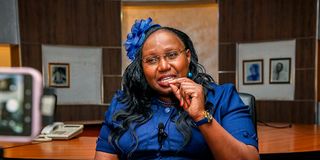
Public Service Governance Founder Esther Waringa during the interview on January 7. Lucy Wanjiru | Nation

What you need to know:
- With only three women ever directly elected president in Africa, Esther aims to add Kenya to the list.
- She talks about her independent bid, her policy priorities, and the lessons from her last campaign.
Across Africa, 24 women have led 18 countries, but only three have won direct presidential elections: Ellen Johnson Sirleaf of Liberia, Netumbo Nandi-Ndaitwah of Namibia, and Samia Suluhu Hassan of Tanzania. Samia first assumed office in 2021 following the death of President John Magufuli, whom she served as deputy, before winning the election in her own right. The other women who have led African nations assumed office through parliamentary appointments or succession. These women have been credited with achieving tangible gains in their respective countries.
Take former Liberian President, Sirleaf. During Samuel Doe's military dictatorship (1980–85), Sirleaf found herself in trouble for openly criticising his leadership even though she had served in his administration as Finance minister. She was arrested twice and sentenced to 10 years in prison, but was later freed under pressure from the United States.


When Sirleaf was elected president in 2005, Liberia had experienced only two years of peace after the end of a brutal 14-year civil war in August 2003. The economy was in tatters. Yet, in her final address to the United Nations General Assembly in September 2017, she said Liberia had remained stable, peaceful and secure during her tenure. The country recorded an economic growth rate of 8.7 per cent in 2013, up from negative growth when she assumed office.
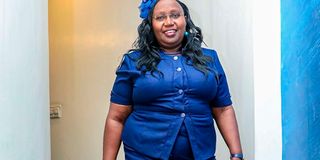
Esther Waringa during the interview.
Women have also led international institutions, often at great personal risk, and still stood firm. Consider Fatou Bensouda, who served as Prosecutor of the International Criminal Court (ICC) from 2012 to 2021. A Gambian lawyer and diplomat, Bensouda made history as the first woman to hold the top prosecutorial position at the ICC since its establishment under the Rome Statute.
In 2022, she was appointed The Gambia's High Commissioner to the United Kingdom and the Commonwealth. Speaking at the African Investigative Journalism Conference 2025, held at the University of the Witwatersrand in Johannesburg on November 5, 2025, Bensouda said she remained steadfast in upholding the court's mandate to deliver justice for victims of atrocity crimes, despite facing "significant personal risks, threats and pressure, sanctions and what have you."
Here in Kenya, one woman now wants to add the country to this list of nations that have given women the opportunity to steer the wheels of change. Her name is Esther Waringa, a strategic management specialist with experience at the United Nations, the International Committee of the Red Cross, and Plan International.
In 2022, her bid to run for president as an independent candidate was cut short after the Independent Electoral and Boundaries Commission disqualified her, a decision she attributes to the late submission of nomination papers by her running mate. Now, she is making a second attempt. We sat down with her to unpack her vision for Kenya.
You are a presidential hopeful running as an independent candidate. What drives your bid?
Running independently is not about being different for the sake of it. It is about offering a new model of leadership, one that is free from political party-driven conflicts.
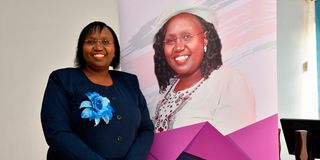
Esther Waringa at her office in Kilimani, Nairobi on February 24, 2022.
Today, every village seems to have a political party, and people are judged based on their political affiliations rather than their abilities or character. Rivalries, threats, and hatred have grown because of party politics. My vision is to create a government where all Kenyans matter equally, where we are united as one family, and where decisions are made for the benefit of the people, not for party interests. The Constitution of Kenya 2010 clearly allows any citizen to run as an independent candidate, and I intend to demonstrate that it is not only possible but effective.
What is your vision for Kenya if elected?
My vision is for a Kenya where governance is citizen-centred, accountable, and focused on real results. Our government will tackle corruption decisively, reduce the cost of living, and build a double-digit economy that creates opportunities for all.
I see myself as a leader who cares deeply about every Kenyan, from children in school to the elderly struggling without proper healthcare. I want to ensure that every citizen, regardless of gender, tribe, or region, feels represented, included, and empowered. I am
committed to creating spaces where everyone can thrive.
What would be your three non-negotiable priorities in your first 100 days?
In my first 100 days, I would focus on decisive actions that restore trust, stabilise livelihoods, and set Kenya firmly on a reform path. Three priorities would be non-negotiable: one, restoring integrity and accountability in government through immediate public audits of key ministries and state corporations, strengthening independent oversight institutions, and setting clear performance contracts for all senior public officials. Two, easing the cost of living by taking urgent measures to stabilise food and energy prices, support farmers and small businesses, and streamline taxes that disproportionately burden ordinary citizens.
Three, resetting the social contract through a structured national dialogue bringing together counties, youth, women, faith leaders, business people, workers, the private sector, and civil society. These first 100 days would send a clear message: leadership has changed, the people come first, and Kenya's future will be built on integrity, inclusion, and action, not promises.
What specific steps will you take to ensure everyone can thrive?
Corruption has eaten deep into Kenya's public service. Our government will conduct comprehensive audits of public funds and promote synergy across agencies — the Judiciary,
Directorate of Public Prosecutions, Directorate of Criminal Investigations and Ethics & Anti-Corruption Commission — so that fighting corruption is coordinated and effective. Corruption will be a no-go zone in my administration.
Youth are the foundation of Kenya's future. But many young people today feel disconnected from governance, frustrated, and even compelled to leave the country in search of better opportunities. In me, they will find a leader who listens, understands, and creates real opportunities for them to thrive in Kenya.
Within my first 100 days, I will lay a strong foundation for industrialisation, creating jobs across agriculture, finance, veterinary services, accounting, and other sectors.
Kenya is a rich country with vast untapped potential. My government will de-politicise development, focusing on sustainable growth and self-sufficiency.
On road safety, I know corruption has severely impacted this sector. My administration will remove corrupt officers and strengthen oversight to ensure that roads are safe.
Road safety is a priority because every life lost is a tragedy that can be prevented with proper governance.
How will you resolve the healthcare challenges that have become a nightmare for many Kenyans?
I have visited several hospitals just to understand how the system functions and where the gaps exist. What I found was alarming. The system is inefficient. Take the Social
Health Insurance Fund, for example — it costs taxpayers a lot of money, yet services remain inadequate. At one dispensary in Nairobi, I engaged with patients and was shocked.
Some had arrived at 7am but by 11.30am, the reception was still closed, the system was down, and they couldn't access care. Imagine holding people's lives hostage because a Wi-Fi connection isn't working or data systems have failed.
In my administration, health comes first. We will ensure that systems are seamless, coordinated, accurate, and convenient, with a manual backup so that patients are never delayed. I reject the idea that patients must pay in advance before being treated. Treatment must come first. This is especially critical for patients with chronic illnesses like diabetes or cancer. Chemotherapy, dialysis, and other critical services must be available at local dispensaries within walking distance, not just in big cities. My administration will also address corruption in the health sector, ensuring that drugs meant for public hospitals are not diverted to private chemists for profit.
The rising cost of living is a pressing concern. What steps would you take to make life more affordable for everyone?
The cost of living is indeed a crisis in Kenya. In 2023, I submitted the Affordable Kitchen Bill to the National Assembly's Committee on Trade and Industrialisation, proposing to zero-rate five essential food items: cooking oil, maize flour, sugar, rice, and bread. The Bill has not yet been formally introduced in the House as parliamentary guidelines require a legislative sponsor — either a legislator or a committee — to bring it to the floor. My vision is simple: every woman should be able to put food on the table, and every child should have access to nutritious meals. When I become head of state, one of my first priorities will be to push this Bill through Parliament so that food becomes accessible to every household.
Agriculture is the backbone of our economy, yet corruption and poor planning has crippled it. Fertiliser scandals, rotting bananas, and inefficient milk processing plants show a lack of strategic governance. My administration will depoliticise agriculture entirely. We will create funds for agricultural processing, ensure farmers have access to inputs, and establish systems to prevent wastage.
What about taxation?
We cannot grow the economy solely through taxation. Kenyans are being squeezed while economic growth stagnates. My administration will progressively reduce VAT from 16 per cent to seven per cent, a target we can achieve by fighting corruption, industrialising the country, and optimising public spending. Reducing the cost of energy is another critical step — when energy costs go down, manufacturing costs decrease, food becomes cheaper, and transport becomes more affordable.
Justice is another concern, especially for those violated or survived violence. How will your administration ensure justice?
Justice is non-negotiable. Without it, there can be no peace. My manifesto rests on three pillars: good governance, economic recovery, and social justice. Every Kenyan has the right to life and protection from harm. My administration will train and equip security agencies to understand their mandate, ensuring that the police and defence forces protect citizens rather than violate them. Whether it involves the 'big fish' or the 'small fish,' all perpetrators of violence will be held accountable. Within the first 100 days, we will establish mechanisms to bring justice to survivors and ensure that no human life is treated with disregard.
How will you address gender equity and social inclusion in government budgets?
My government will take deliberate action to implement the two-thirds gender rule as the Constitution mandates. Appointments for Cabinet, diplomatic missions, and state agencies will reflect merit and gender equity, ensuring that women in leadership positions can deliver real results. The Ministry of Gender will be fully equipped and funded, with resources trickling down to counties, wards, and grassroots levels. We will also establish women's caucuses to discuss local challenges and solutions, ensuring that women at every level of society can access services and participate meaningfully in governance.
How would your administration tackle femicide and gender-based violence?
My administration would treat femicide and gender-based violence (GBV) as a national emergency, not a social side issue, and respond with the same urgency we apply to terrorism or natural disasters.
First, I would declare GBV a national emergency. This would unlock emergency funding, fast-track legal and policy reforms, and require all security and justice institutions to prioritise prevention, protection, and prosecution. Second, I would strengthen prevention and early-warning systems. We would invest in community-based prevention, working with counties, chiefs, faith leaders, schools, and civil society to identify risk early, challenge harmful norms, and intervene before violence escalates. Education for boys
and men would be central to this effort.
Third, I would guarantee survivor-centred justice and protection. This means specialised GBV units in police stations, fast-track GBV courts, mandatory timelines for investigations, and survivor-friendly reporting mechanisms. Fourth, I would ensure access to comprehensive survivor support—safe shelters, trauma counselling, medical care, and legal aid in every county, supported by sustainable national funding, not donor dependence. Finally, I would enforce accountability without exception. Perpetrators will face swift investigation and prosecution, regardless of status or connection. Data on GBV cases, convictions, and outcomes will be publicly reported so the nation can measure progress.
What specific gender reform would you commit to delivering within your first 12 months?
Within my first 12 months, I would commit to delivering full, enforceable implementation of the two-thirds gender rule, not as a promise, but as a completed reform.
Specifically, I would ensure a binding legal framework in place. Within the first year, my administration would work with Parliament to pass a constitutionally compliant law with clear timelines, enforcement mechanisms, and penalties for non-compliance. All presidential appointments, boards of state corporations, commissions, and senior public service positions would fully comply with the two-thirds gender principle from day one. I would establish a transparent, publicly accessible gender compliance dashboard, updated regularly, so Kenyans can track progress across Parliament, counties, and state institutions in real time. This reform would send a clear message within 12 months: constitutional rights are not negotiable, women's leadership is not optional, and Kenya's democracy will finally reflect all its people.
What lessons did you learn from your 2022 presidential bid?
The 2022 experience taught me many valuable lessons. First, timing matters—and so does your team. My disqualification came down to my running mate's late submission of nomination papers, which taught me the importance of coordination and ensuring everyone on your team understands the stakes. Second, engaging with citizens directly is essential; people must feel you at the grassroots, in their communities.
Third, strategic planning from national levels all the way down to constituencies and villages is crucial. Fourth, resource mobilisation cannot be underestimated. Finally, I learned the importance of adapting —understanding who is progressive, who can help, and how to work with them to deliver real impact.
How are you applying these lessons to your 2027 campaign?
For 2027, we are implementing these lessons fully. Our campaign planning started early—almost two years before the elections—giving us time to structure everything properly.
We have created presidential coordination teams from the national level down to counties, constituencies, and even villages. We are planning a "market-to-market, shop-to-shop, village-to-village, door-to-door" engagement strategy. Resource mobilisation is already underway, both locally and internationally. We are actively engaging faith-based groups, youth, women's groups, and ordinary citizens because they are the heartbeat of this nation.
What is your parting shot?
To the voters, I ask you to change your mindset. Just one year after electing this administration, Gen Zs were back on the streets protesting the very leadership that was put
in place. It is time to truly understand what leadership means. Do not elect leaders simply because they are handing out money. Look for a leader who will carry you on her shoulders, who will stand with you in both thought and action.


