Kenyan men are dying in silence — But a new movement of healing is emerging
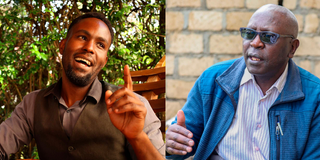
Two men Kenneth Mwangi in Nairobi, and Paul Olochoki Keriako in Narok, are building safe spaces for other men battling depression, to heal.

What you need to know:
- Men account for 56.9 per cent of Kenyans with mental disorders, yet cultural expectations keep most suffering in silence.
- Survivors are now creating safe spaces for men to share their struggles.
- Stigma, embarrassment and a shortage of professional counsellors remain major barriers.
The statistics are stark: 56.9 per cent of Kenyans suffering from mental disorders are men, compared with 43.1 per cent of women. Men also record higher suicide rates.
Yet cultural expectations that portray them as stoic and resilient continue to discourage them from seeking help. The result is a generation of men suffering in silence, turning to alcohol and drugs to cope, and dying before their time.
But across Kenya, a quiet revolution is taking shape. Men who have walked through the fire of addiction, depression and despair are now reaching back to pull others from the flames.


Breaking free
When you meet Kenneth Mwangi, nothing about him suggests a troubled past. He is jovial and sociable, easily interacting with those around him. It is only after sitting down with him that the depth of his struggles becomes clear.
During an interview in Nairobi, Kenneth reveals that he battled addiction for 22 years before finally breaking free in 2023.
"I struggled with addiction for more than two decades. I was hooked on pornography from Class Four, battled alcoholism for 10 years, and was also addicted to bhang and miraa for three years," he tells Nation.Africa.
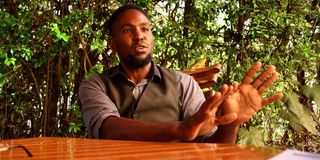
Mental health advocate Kenneth Mwangi during the interview at Bibilica in Nairobi on December 2, 2025.
His addiction forced him to drop out of university in his fourth year while pursuing a Bachelor of Science in Computer Science at Kenyatta University. Despite several attempts to quit, he relapsed repeatedly. Matters worsened after his marriage collapsed in 2019 and his business failed during the Covid-19 pandemic.
These challenges, Kenneth explains, took a heavy toll on his mental health and fuelled his drinking. Deep down, he longed to permanently overcome his addiction, prompting him to look inward and confront the root causes of his struggle.
"I knew I had a serious addiction problem but did not know what to do about it. I had no idea how to stop," he says.
Through deep self-reflection, Kenneth realised he was carrying deep resentment towards his father and had never forgiven him. This bitterness, he says, had significantly affected his mental wellbeing and contributed to his addiction. Growing up, Kenneth was distant from his father, whom he describes as violent and alcoholic.
"I chose to forgive my dad and also sought his forgiveness for any wrongdoing on my part. After that, I completely lost interest in smoking and drinking. Resentment eats you up; it is a wound that never heals until you let it go. My father is now my best friend—we talk and laugh for hours," he says.
After conquering his addiction, Kenneth decided to help other men facing similar challenges. In 2023, he launched a weekly podcast titled The Breakdown Space, which focuses on addiction and recovery. Beyond the podcast, he offers mentorship and support to men struggling with mental health and substance abuse.
"I did not go to rehab to overcome my addiction. Instead, I found healing through conversations with other men who shared their stories and mentored me. Now, as a way of giving back, I offer the same support to men battling mental health and addiction challenges," he says.,
Kenneth notes that sharing his experiences and offering one-on-one mentorship has helped many men recover. He attributes many mental health and addiction struggles among men to strained father–son relationships and the environments in which they grow up.
Addiction struggles
Looking ahead, Kenneth hopes to establish a rehabilitation centre focused on prevention, recovery and restoration for men affected by mental health and addiction issues. He acknowledges that many men find it difficult to speak openly about their struggles.
"Many men suffer in silence. It takes courage to speak out. My advice is to find a safe space and a trusted person and seek help. Asking for help does not mean you are weak—it means you are brave," he says.
About 150 kilometres away in Narok, another man shares a similar mission. Paul Olochoki Keriako recounts how an unexpected family dispute plunged him into depression, nearly costing him his life. It took the intervention of well-wishers to help him recover through counselling.
As he healed, Keriako realised that many men were silently suffering from mental anguish due to life's challenges. Having walked the same path, he understood that many men were reluctant to open up. Determined to act, he launched an initiative to support men facing similar struggles.
"I would have died of depression had I not been helped. I did not want to see another man go through what I experienced," he says.
His initiative involves monthly forums where men gather to share their experiences, fears and challenges. These forums, he says, have revealed the hidden struggles men face in their homes and families.
"During these forums, men pour out their hearts. Many are undergoing mental torture that has driven them into depression. They open up about challenges at home and in the workplace, including denial of food, conjugal rights, gender-based violence, neglect and marginalisation, all of which affect their mental health," he explains.
The initiative has so far brought together 30 men. During the meetings, participants share experiences, compare notes and offer solutions to one another. Keriako says many men turn to alcohol and drugs as coping mechanisms for domestic challenges.
Stigma, he adds, remains a major barrier, as men fear ridicule if they speak out. In Maasai culture, men are traditionally discouraged from disclosing mistreatment by their wives or women. The programme also includes a spiritual component, with religious leaders invited to offer guidance and encouragement.
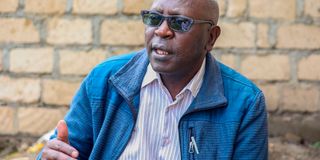
Paul Olochoki Tobiko during the interview in Narok County. After nearly losing his life to depression, he now runs monthly forums where men pour out their hearts.
However, the group faces challenges, including a shortage of certified professional counsellors.
"We need professional counsellors to help members struggling with serious mental health issues. We also need motivational speakers to inspire and restore hope. We appeal to anyone who can offer pro bono services to assist us," he says.
Transformed life
Encouraged by the impact of the initiative over the past year, Keriako hopes to expand it to all five constituencies in the county, subject to the availability of funds.
One beneficiary, Timothy Githinji, says the programme has transformed his life. "Before joining, my marriage was chaotic and marked by violence, which affected my mental health. Today, we live in harmony, and I actively support my wife in running the family," he says.
Psychologist Andrew Mwangi explains that many men hesitate to seek help because they fear their personal issues will be discussed publicly. "Men value secrecy. When they hear others' issues discussed openly, they withdraw further and suppress their own problems," he says.
He adds that women often cope better with life's challenges, which can leave men feeling sidelined and reluctant to express themselves. "This can lead men to disengage from family problem-solving, worsening their mental health," he notes.
According to a 2022 Kenya National Bureau of Statistics report on the status of men and women, 56.9 per cent of men, compared with 43.1 per cent of women, suffer from mental disorders, including significant disturbances in thinking, emotional regulation and behaviour.
In Kenya, the prevalence of mental health disorders is estimated at 4.4 per cent, with depression and anxiety among the most common conditions. KNBS data also show that men have higher suicide rates than women, underscoring the urgent need for targeted mental health interventions.
Cultural expectations that portray men as stoic and resilient often discourage them from seeking help, while stigma compounds the problem.
A survey conducted by Priory, a leading independent mental healthcare provider in the UK, found that 35 per cent of men believe they have experienced a diagnosable mental health condition at some point. Of the 1,000 men surveyed, 77 per cent reported symptoms of anxiety, stress or depression.
About 40 per cent said they had never spoken to anyone about their mental health, with 29 per cent citing embarrassment and 20 per cent pointing to stigma. Work (32 per cent), finances (31 per cent) and health issues (23 per cent) were identified as the leading causes of mental health challenges. Notably, 40 per cent said they would only seek professional help if they had suicidal or self-harming thoughts.


