The Kenya National Union of Teachers (Knut) has called on school administrators to create an inclusive working environment that accommodates the aspirations of younger teachers while tapping into the experience and expertise of older professionals.
Knut secretary-general Collins Oyuu said schools were increasingly bringing together teachers from different generations whose professional experiences, expectations and approaches to teaching differed.
He said younger teachers teaching in junior schools were seeking greater professional autonomy, recognition and opportunities to participate in decisions affecting their work, urging school leaders not to dismiss their demands but find ways to accommodate them within existing institutional and financial frameworks.
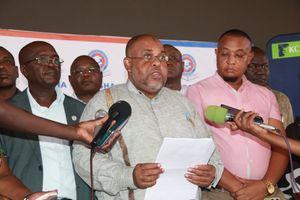
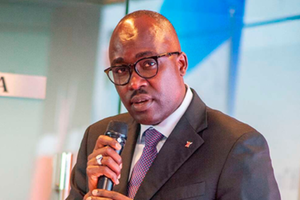
Speaking during the Kenya Comprehensive School Heads Association (KECSHA) 2026 conference in Mombasa, Mr Oyuu said the future school should encourage collaboration between experienced teachers and younger professionals rather than suppressing the strengths of either generation.
“The younger generation, in particular, is increasingly interested in professional autonomy, recognition, participation, innovation and opportunities to influence decisions affecting their work. These aspirations should not be dismissed. They are legitimate expressions of a changing professional environment,” he said.
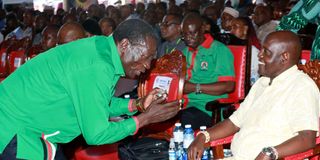
Head Teachers attending the Kenya Comprehensive School Heads Association (KECSHA) National Annual General Meeting in Mombasa in on November 9, 2026.
Photo credit: Kevin Odit | Nation
He, however, cautioned that professional autonomy must go hand-in-hand with responsibility, accountability and respect for institutional leadership.
Mr Oyuu said school administrators needed to strike a balance between teachers' expectations and what institutions could afford and sustainably implement.
“As KNUT, we believe that the teacher's voice deserves to be heard, respected and incorporated into decision-making. We also believe that professional autonomy must be accompanied by accountability, ethical conduct and respect for institutional leadership,” he said.
He cited research by the Organisation for Economic Co-operation and Development (OECD) through its Teaching and Learning International Survey (TALIS), which has demonstrated positive relationships between teachers' instructional autonomy, participation in school decision-making, professional well-being and job satisfaction.
The union boss said schools should create opportunities for experienced teachers to mentor younger colleagues while allowing the latter to contribute their creativity, technological skills and innovative approaches to learning.
He warned against sidelining experienced teachers, saying their professional wisdom remained important in shaping the future of education.
“The wisdom of experienced teachers should not be lost, while the creativity and technological competence of younger teachers should not be suppressed. The future school must be an institution where mentorship is encouraged, professional dialogue is respected and innovation is welcomed,” he said.
Mr Oyuu said the changing professional environment required school administrators to recognise the different strengths of teachers and create opportunities for them to contribute meaningfully to institutional decisions.
Head teachers purchase textbooks during the 2026 Kenya Comprehensive Schools Head Teachers Association (KECSHA) National AGM and Conference in Mombasa on November 10, 2026.
Photo credit: Kevin Odit | Nation
He said professional autonomy should not be interpreted as allowing individual teachers to operate outside established policies and administrative structures, adding that participation must be accompanied by accountability and collective responsibility.
The KNUT secretary-general said the future school should be built around a working relationship in which teachers' experiences, ideas and professional aspirations are recognised as important components of institutional development.
“As we seek to give teachers a greater voice, we must equally appreciate that the future of education requires strong, responsible and visionary leadership. Participation should not be confused with the absence of authority. Consultation should not be interpreted as an invitation to institutional disorder. Professional autonomy should not mean that every individual operates independently of established policies and collective responsibilities,” he said.
Mr Oyuu said Article 10 of the Constitution of Kenya, 2010, establishes national values and principles of governance, including participation of the people, inclusiveness, transparency and accountability. Article 232 further emphasises the importance of public participation in policy-making, accountability and efficient service delivery.
“These principles should not remain abstract constitutional provisions. They must be reflected in how we manage our schools, formulate education policies and engage the professionals responsible for implementing them. Listening must be followed by action. Consultation must lead to understanding. And decisions must be guided by the law, fairness and the common good,” he added.
He said one of the most significant developments in the future organisation of education in Kenya is the movement towards a more integrated school structure.
Mr Oyuu said the proposal to bring Pre-Primary 1 through Grade 9 within a comprehensive school arrangement presents both opportunities and important questions that must be carefully addressed.
The Kenya National Union of Teachers (Knut) Secretary-General, Collins Oyuu, (left) with John Ololtuaa, the Principal Secretary, State Department of Education, during the 2026 Kenya Comprehensive Schools Head Teachers Association (KECSHA) AGM and Conference in Mombasa on November 10, 2026.
Photo credit: Kevin Odit | Nation
“The idea of sharing infrastructure and institutional resources across different learning levels is commendable, particularly in a country where resource allocation remains a major consideration in the provision of equitable education,” he said.
The unionist said the success of comprehensive schools will therefore depend on careful institutional design, appropriate infrastructure, adequate financing, clear management structures and effective coordination among the different cadres of teachers.
However, he urged the stakeholders to ensure that the transition does not create unnecessary professional tensions between teachers serving at different levels. Instead, it should encourage professional collaboration, exchange of experiences and a shared understanding of the entire learning journey.
“Imagine a school that is safe, inclusive, technologically enabled, adequately resourced and professionally managed. A school where every child, regardless of background or economic circumstances, has an opportunity to discover and develop their potential. A school where the teacher is respected, professionally supported and meaningfully involved in decision-making,” he said.
He said the future school cannot be built by one institution, one government agency or one professional association working in isolation. It requires collaboration among the Ministry of Education, the Teachers Service Commission, KECSHA, KNUT, other education stakeholders, parents, communities and development partners.
“It requires us to appreciate that the interests of teachers, school administrators and learners are not competing interests. They are interconnected components of one educational ecosystem,” he added.
He reaffirmed KNUT's commitment to constructive engagement, social dialogue, professional advocacy and collaboration with all education stakeholders in building a responsive, equitable and sustainable education system.