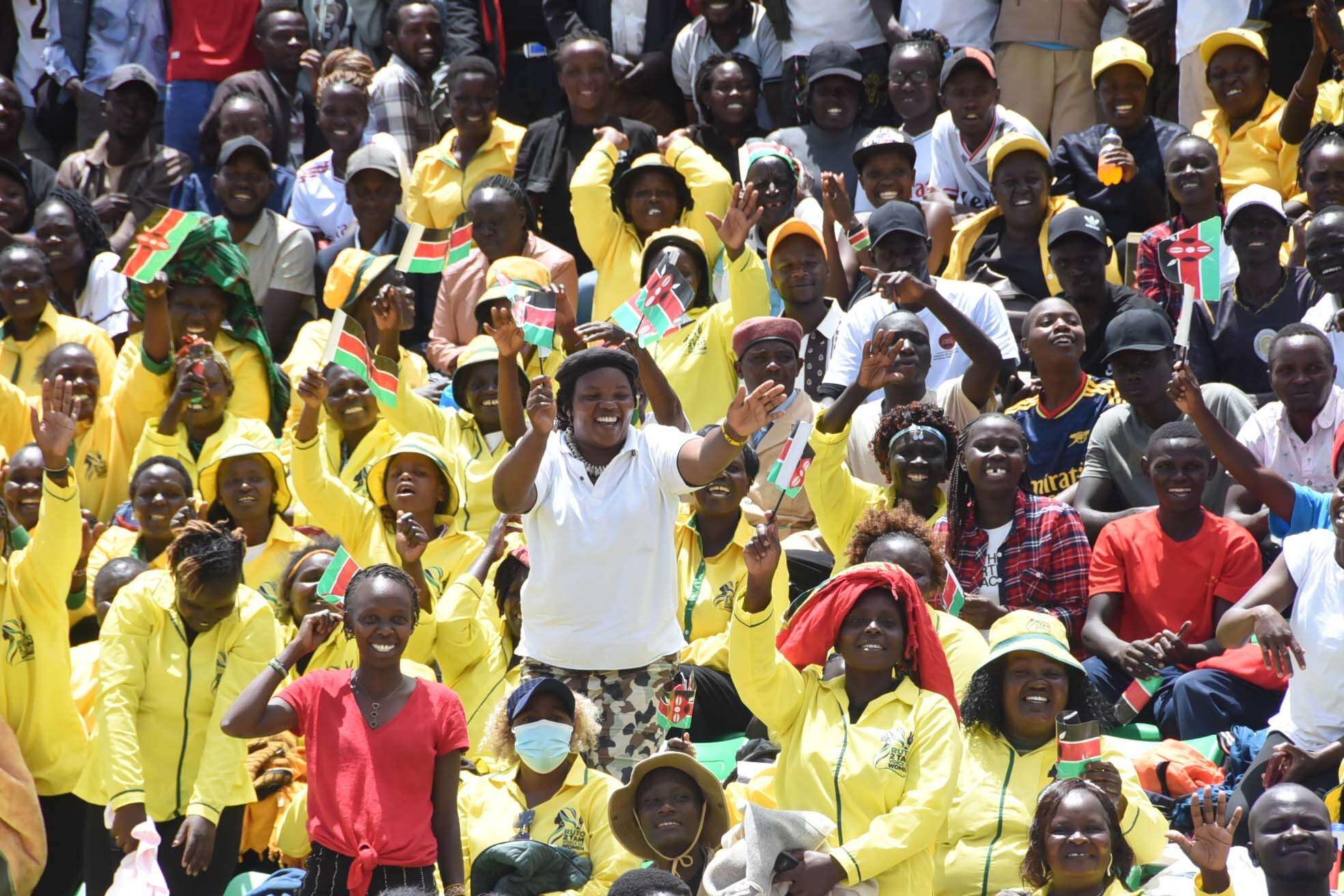
MPs’ bid to let parties resolve primaries disputes raises stakes for women in 2027 polls
Rehema Dida Jaldesa, chairperson of the National Gender and Equality Commission. She insisted that whichever body holds the mandate must deliver affordable, accessible and timely decisions before ballot papers are printed.

What you need to know:
- Through the Elections (Amendment) Bill, 2024, MPs propose removing the Independent Electoral and Boundaries Commission from handling disputes arising from party primaries and transferring the mandate to the Elections Disputes Tribunal.
With fewer than 10 months to go before the August 10 2027 General Election, MPs want political parties to control how disputes arising from party primaries are resolved, a stage that shapes whether more women secure tickets and boost their chances of winning seats.
Through the Elections (Amendment) Bill, 2024, MPs propose removing the Independent Electoral and Boundaries Commission (IEBC) from handling disputes arising from party primaries and transferring the mandate to the Elections Disputes Tribunal.
They argue that political parties are private clubs and that the commission has no business interfering in their internal nominations.


According to Article 88 of the Constitution, the IEBC is responsible for conducting or supervising referenda and elections to any elective body or office established by the Constitution, and any other elections as prescribed by an Act of Parliament.
Specifically, Article 88(4)(e) gives the IEBC the power to settle electoral disputes arising from nominations, but excludes petitions and disputes that come after election results are declared.
The road to winning
The road to the final contest begins with winning the party primaries and resolving any disputes that arise.
“Who appears on the ballot will be decided in party nominations in the coming months,” said Rehema Dida Jaldesa, chairperson of the National Gender and Equality Commission, during a high-level policy forum on 14 October 2026 in Nairobi.
She stressed that Kenya’s gains in electing more women were secured at the nomination stage, before ballots were cast.
“In 2022, Kenyans elected seven women governors, more than double the number in 2017. Yet women won only 29 of 290 constituency seats, three of 47 elected Senate seats and 115 of 1,450 ward seats. Most of these outcomes were settled at nomination, before a single vote was cast,” she said.
She reminded parties that Article 91 of the Constitution requires them to respect the rights of minorities and marginalised groups and to promote gender equality. The Political Parties Act (2011) also demands that no more than two-thirds of a party’s governing body be of the same gender, tying eligibility for the Political Parties Fund to inclusive governance.
Affordable, accessible and timely decisions
While acknowledging Parliament’s role, Rehema warned that reforms must remain consistent with Article 88(4)(e).
“Aspirants need settled rules well before nominations, because a late change of forum risks confusion when a few days can decide a candidacy,” she said.
She insisted that whichever body holds the mandate must deliver affordable, accessible and timely decisions before ballot papers are printed.
“A displaced aspirant, whether a woman in Turkana, a young person in Kisii or a person with a disability in Nairobi, must obtain an affordable, accessible and timely decision before ballot papers are printed,” she said.
She emphasised that while internal dispute resolution mechanisms remain the first line of redress, they must be impartial, free from the influence of contestants and accessible to every aspirant.
She urged Parliament to consider alternating party lists between women and men to strengthen inclusivity.
A study on intersecting inequalities in women’s political inclusion in Kenya, published in the International Feminist Journal of Politics in 2024, highlights the struggles women face within parties in securing tickets. It cites the experience of a woman senator from the Orange Democratic Movement (ODM) who was nominated by her party and served until 2022.
“Within the nominations, a particular proportion should be given to women, and probably [an] even higher proportion, so that some of the women would be voted in,” she said.
“But you know the dynamics of political parties. They are trying to see who will get in and who will represent the party, and therefore the key driving factor is not gender but the political party’s agenda,” she said.
For her part, a woman parliamentarian from ODM, elected as her county’s County Woman Representative in the 2013 and 2017 parliamentary elections, described the party primaries as “a very mucky and very, very bad process.”
Women stuck together
She went on to recount her first electoral experience.
“I did not know that people steal [party nomination] certificates. My certificate was taken and given to the person who was second [on the party list]. But the people, and especially women, were fighting,” she said.
“They told the [party] people: ‘Mama has won; we want her certificate!’ When they realized that these women were not relenting, they finally released it. If we had been intimidated and become fearful, we would have lost the opportunity. Our women were very strong, and we stuck together and stayed there until we got the certificate.”