Why more than 50 Baringo women are seeking 2027 political office
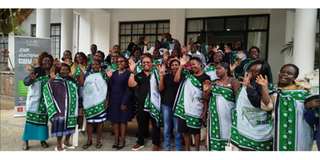
Women aspirants during a forum organised by the Gender Violence Recovery Centre in Kabarnet in Baringo County.

What you need to know:
- More than 50 women are preparing to contest elective seats, challenging patriarchy, financial barriers, intimidation and stereotypes ahead of the 2027 elections.
- Women eyeing political office say they will not be deterred by body shaming, cultural expectations, violence or limited campaign resources.
For years, politics in Baringo has mainly been a man’s field, with women often relegated to supporting roles even when they have been active in campaigns and community mobilisation.
However, more than 50 women eyeing elective positions are seeking to change that narrative, declaring that they will no longer remain on the political sidelines or allow money, patriarchy, intimidation and stereotypes to determine who gets to lead.
This is evident in the growing number of women preparing to enter the 2027 races. More than 35 women have expressed interest in the woman representative seat, dozens are eyeing MCA positions, while at least six are preparing to contest parliamentary seats and one for the Senate.


For the women, the decision to enter the race is as much about challenging long-standing attitudes as it is about winning seats. This emerged at a forum in Kabarnet organised by the Gender Violence Recovery Centre (GVRC). They said women in Baringo have been discouraged from seeking major elective positions by the high cost of campaigns, limited access to political networks and resources, cultural expectations and gender-based violence.
The forum gave the aspirants an opportunity to discuss the risks they face and develop strategies for navigating the campaign period. Baringo has never elected a woman governor or senator. At constituency level, only two women have been elected MPs: former Mogotio MP Helen Sambili and former Baringo South MP Grace Kipchoim.
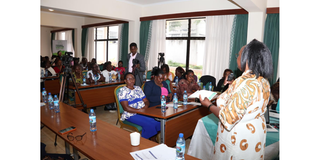
An ongoing forum organised by the Gender Violence Recovery Centre for Baringo women aspirants in in Kabarnet.
The women now say the 2027 election offers an opportunity to challenge that history. Baringo Central parliamentary aspirant Betty Birchogo said one of the biggest obstacles confronting women is the perception that they are not serious contenders and are only seeking party nominations. “Some people perceive that women are not serious when contesting seats and are just vying for positions to get nominated by their parties. That is not true. We are spending money, time and going to the villages.”
She said women should be judged on their ideas and ability to serve rather than their age, marital status or appearance. “Some of us feel that it is time for leadership to change for young people. We no longer want to sit back and complain but be part of the solution.”
She said attacks on women sometimes come from fellow women leaders, making it harder for aspirants to withstand political pressure. She cited instances where women are discouraged from seeking office because they are unmarried, young or have no children. “If we instead bring the conversation to be issues-based and stop attacking women and body-shaming those seeking elective seats, we can focus on what we can do to change the community and address the issues affecting the people.”
She also cited “goonism”, insecurity and lack of campaign finances as challenges women face, saying many cannot match the resources available to their male counterparts.
Baringo South parliamentary aspirant Peninah Bartuin said the growing number of women entering the political arena has marked a shift from the past, when major elective positions were largely regarded as the preserve of men. “As women, we have made the ultimate decision to create our political space and compete with men because we are also equal to the task.”
She said intimidation, body shaming and cultural beliefs would not deter the women. “No amount of intimidation, body shaming or archaic cultural beliefs will cow us. We are no longer taking the back seat.”
The aspirant said the women had used the forum to strengthen their campaign structures, share experiences and discuss ways of supporting one another despite belonging to different political camps. “We have resolved as women that we have to be our sisters’ keepers and support each other on this political journey, despite our political affiliations.”
She also challenged established women leaders to support those seeking office rather than discouraging them. “We are unique, given the patriarchal nature of our society by virtue of our gender; we call on other women who have gone ahead of us in politics to hold our hand and support us.”
She said many women lack financial resources required to sustain campaigns, while cultural attitudes continue to associate leadership with men. “Women culturally may not own a lot of resources and tend to shy away from vying for the seats. Our communities still perceive leadership as male-dominated and patriarchal in nature.”
She urged professionals and other influential groups to support women seeking elective office and help change attitudes towards female leadership.
Sylvia Mutai, 23, a woman representative aspirant, said age and marital status were among the issues being used to question the suitability of young women seeking office. “People criticise us a lot, claiming we should have a family to be elected. I don't believe that is a measure of leadership. We need to elect leaders based on their performance and ability to lead.”
She said young women also faced sexual harassment, insecurity and cultural resistance. “Cultural beliefs are another impediment, as people believe that women should not lead. However, we will go for the seats because we need leaders who have the interests of the people at heart.”
The women’s concerns have also prompted the GVRC to focus on their safety during the election period. GVRC official John Chege said the convention brought together more than 50 women to discuss election-related gender-based violence, its causes and ways of responding to incidents. “We identified the election laws, types of election gender-based violence and, in the event it happens, how they are able to respond.”
Participants were also informed of where to report cases and encouraged to include gender-based violence prevention in their campaign agendas.
Advocate of the High Court and gender-based violence trainer Rachel Muthoka said the women were being equipped with practical strategies to identify and mitigate election-related risks. She said the threats could range from verbal and physical attacks to online harassment, including insults, shaming and dragging candidates’ families into political disputes.
“Cultural issues and patriarchy were also dominant. We want to ensure women have the capacity and information regarding preparedness, strategies and referral pathways in case of sexual and gender-based violence,” she said.
The women said they want the 2027 election to be different. They want voters to look beyond gender, age and marital status and judge candidates on their ideas, leadership and ability to serve.