Paradox of denial: The evidence state officials won’t read on child trafficking
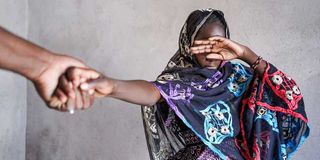
Child trafficking crisis.

What you need to know:
- Despite official reports confirming trafficking, leaders dismiss BBC exposé, raising questions on systemic denial.
- Government agencies collect child exploitation data, yet officials contradict findings, undermining trust in state structures.
On August 4, BBC Africa Eye released a documentary showing child sexual exploitation in Mai Mahiu, Naivasha, Nakuru County.
Four days later, Nakuru Governor Susan Kihika formed a seven-member committee to look into the problem. The team was asked to find out how deep the problem is, its causes, the people involved, and to suggest ways of stopping and preventing it from happening again. The inquiry also covered other centres along the Northern Transport Corridor, including Salgaa, Kikopey, Total, and Longonot.
But on the same day, County Commissioner Loyford Kibaara told journalists in Nakuru: “We analysed the documentary and found it was alarming, probably meant to tarnish the government’s name. The idea that any child below 18 years is involved in sex in Mai Mahiu, Naivasha, and this county is not true.”


A day earlier, Principal Secretary for Gender Affairs Anne Wang’ombe and Principal Secretary for Children Services Carren Agengo had visited Mai Mahiu after the exposé. They were joined by Nakuru’s multi-agency security team led by Deputy County Commissioner Josiah Odongo.
Their mission, they said, was “to uncover and rescue children at risk of trafficking and sexual exploitation as reported in the documentary”.
But later, the State Department of Gender Affairs posted a statement on its X account, saying that “no such threats exist in the area, though investigations are ongoing.”
Then, on August 13, Interior Cabinet Secretary Kipchumba Murkomen also dismissed the BBC exposé while responding to Gilgil MP Martha Wangari in Parliament. He said the Directorate of Criminal Investigations found the documentary “fake because the people interviewed were not under 18”.
“They paid people to do the interview. And we stand by our story. It is true they paid people to do the story,” he insisted.
A day before, at a media briefing in Nakuru, he had already said the documentary failed because of “false information” from interviewees. According to him, the producers mainly spoke to women in sex work, some of whom lied about their age in the hope of getting sponsorship from the BBC.
Yet, in Parliament, he admitted: “That does not mean we don’t have problems with trafficking in children for sexual purposes.”
So, which is true? How much do government officials really know about child sexual exploitation in Kenya?
The truth is not hidden. The government runs a 24-hour national child helpline (116) in partnership with Childline Kenya. A test call showed it took one minute and 32 seconds to get a response. The helpline exists to protect children from abuse, including sexual violence.
Data from the helpline shows that nearly half of girls (45.9 per cent) and more than half of boys (56.1 per cent) in Kenya face violence during childhood. Among the 15.6 per cent of girls who suffer sexual violence in childhood, almost two-thirds (62.6 per cent) go through it more than once before age 18.
That is not all. The National Crime Research Centre, a government agency, has repeatedly flagged Naivasha and the Nakuru corridor as hotspots for child trafficking. In 2015, its report on human trafficking in Kenya mentioned cases in Nakuru County, noting: “Cases of child trafficking in Naivasha town and the flower farms in the area have been reported.”
In 2022, an updated report gave even more worrying results. Children made up four out of 10 victims of domestic trafficking and two out of 10 victims of trafficking to other countries. Among women, four out of 10 were victims of domestic trafficking, while six out of 10 were trafficked abroad. Men were the main victims trafficked into Kenya (four out of 10). Sexual abuse and forced prostitution were the main forms of suffering they went through.
The Kisumu–Kericho–Nakuru–Nairobi–Loitoktok corridor is among the eight main trafficking routes in Kenya. This makes it hard to dismiss reports of sexual exploitation of underage girls in Mai Mahiu with the excuse that “it has not been reported.”
This leaves one big question: Do government officials read their own reports, or have they stopped trusting their structures?


