Small beginnings, big ambitions: Women building businesses against the odds

Julia Odhiambo serves a customer at her food kiosk in Homa Bay Town on October 12, 2026.


What you need to know:
- Sandra Chepkemoi worked in a hotel for four years, then saved for two more before resigning with Sh127,000.
- Florence Bett bought vegetables for Sh50 one morning in 2005 and made Sh400 by evening, while Julia Odhiambo started with a small eatery, where she serves chapatis and juice to taxi drivers for Sh130 a plate.
- These women now employ staff and think in millions, not thousands.
The day starts long before the first customer walks in: fruit to peel, dough to knead, accounts to check, or stock to order. For the women running small businesses in Homa Bay and Bomet, there is rarely a quiet hour, and income is never guaranteed.
Many began with a few thousand shillings in savings, a chama, or a Sh50 bundle of vegetables, and kept going by reinvesting the profits. Some avoid banks altogether, while others lose takings to customers who walk away without paying. They run eateries, shops and fish boats, and say the work is worth it. But as the county’s own trade officer admits, women still earn less than men.
Julia Odhiambo has seven seats and no time to spare. By noon, each of them is taken, and for the next two hours her tiny eatery, Julia's Juice Parlour, is a busy stop for hungry workers looking for a quick, cheap lunch. The moment one customer stands up, another slips into the warm chair.


Julia opened the business after spotting a gap in the local food market. Her kiosk sits next to a busy taxi rank, so drivers are her main customers. The rest come from government offices 500 metres away.
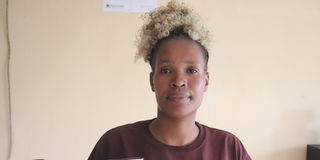
Sandra Chepkemoi, a young businesswoman in Bomet town who rose from waitress to owner of two hotels, during the interview on October 28, 2026.
"I sell chapati and rice paired with beans or green grams, alongside fresh juice," she says. "When I first started, I won over my regulars by offering a free side salad with every meal. That little gesture built immense loyalty."
Also read: From refugee to entrepreneur: Mubalama Adelle builds a thriving tailoring business in Kakuma
While neighbouring kiosks sell heavier meals such as ugali with beef, chicken or fish, Julia offers a lighter and cheaper option. A plate of chapati and beans with a glass of juice costs Sh130, less than a plate of fish elsewhere in town.
"I realised that a lot of people wanted to spend less than Sh150 for lunch. That is the exact market I tapped into," she explains.
Her day begins at 4:30am at home, where she peels and blends fruit and puts the juice in the freezer to chill. While the drinks cool, she kneads and rolls the dough for the day's chapatis. By 10am the preparation is done and she heads to the kiosk.
"At the kiosk, I focus on cooking the chapatis I prepared at home. By just before noon, the first hot meals are ready to serve," she says.
She adjusts her prices by Sh10 to Sh20 depending on what ingredients cost. Customers are another challenge.

Florence Bett, a Bomet businesswoman who started a vegetable business with Sh50 and saved up to Sh70,000 to launch a second-hand clothes business that has grown into a multimillion-shilling enterprise.
"My biggest mistake is failing to collect money the moment someone finishes eating," Julia admits. "When the place gets busy, and my attention is split, some people just walk away without paying."
When cash is tight, she does not go to a bank. She turns to her women's chama, which gives her easy, stress-free support whenever she needs a boost. Julia takes pride in her independence and says she controls every shilling the business makes.
Julia is one of many women running businesses in Homa Bay County. The County Trade Chief Officer Bernard Nyobange says the region has more women in business, but their enterprises earn less than those owned by men.
"Although women make up a huge percentage of the county's trade, men generate more money, with the majority of women involved in small-scale trade," he says.
He attributes this to targeted support from different support groups. He adds that women's resilience keeps them in business, and that a recent survey showed the trend.
Nyobange says the county government has rolled out several programmes to help women start and grow businesses. It partners with banks and other financial institutions to offer loans.
"Right now, there is a bank that is meeting women in the municipalities to give them loans. That has really changed the lives of most women doing business," he says.
The bank is currently holding engagements in Kisumu as part of the programme. Apart from the bank, the county government works with other partners to support women's groups, alongside empowerment programmes run by politicians.
Nyobange admits, however, that implementation faces challenges, chief among them loan repayment.
"We have several challenges, especially loan repayment. Some women do not want to repay their loans on time," he says.
He cites drought, reduced purchasing power and competing family needs as major reasons some women cannot repay on time, with some defaulting.
"Sometimes women have challenges like providing for their families, including fee payment and other related family matters. It affects their ability to service loans," he says.
He also points to insecurity for small traders who operate in the evening, after formal work hours.
"As a county government, we are really trying to make a good environment for their business by installing street lights in markets to ensure traders operate at night," Nyobange says.
In Bomet, Sandra Chepkemoi enrolled at Sot Technical Institute to study hospitality. Like many young people, she hoped the course would help her find a job and earn a living. After working in a hotel in Bomet town for four years, however, she realised she could put her skills to use by starting a small business of her own.
"After two years of employment, I made a decision that I needed to work towards being self-employed, and that could only happen through having a goal, drawing up a budget and saving money bit by bit towards actualising the plan," says Chepkemoi, a youthful former waitress.
"For two years, I saved money, bought equipment, utensils and furniture, before looking for space to operate from. When I had saved enough to start, I resigned from my place of work."
With Sh127,000 in savings, she went looking for space and found a hotel whose tenant had just vacated.
"Initially, I was looking for a small space, but I got a more spacious room," she says.
She opened an eatery at Tenwek, near AGC Tenwek Hospital and several schools. Business grew faster than she expected, allowing her to hire five employees.
A year later, an opportunity came up in Bomet town, where a hotel had been closed for renovation, and the landlord was offering it for lease.
"I approached the landlord, and she agreed to lease the space to me, giving birth to the second hotel which I now operate," Chepkemoi says.
"With Sh400,000 savings, I opened Urban Grill Restaurant, the second hotel, and I have been ploughing back the profits to improve the enterprise bit by bit, and it is bearing fruit."
At the new outlet, she employs six workers and expects to hire more as the business grows. Apart from the cleaners, all her staff have formal training in hospitality. She says this makes it easier to manage the business and maintain service standards.
“My day starts at 6.30am. I begin by checking the previous day's accounts at the Tenwek eatery, placing orders for stock and making sure everything is running smoothly. I then head to Bomet and do the same at the second outlet,” she says.
The two businesses close at 10pm, and by 11pm she is ready for bed. A few hours later, she and her workers are up again, preparing for another busy day.
"I took a gamble starting the business, and I am happy it is starting to pay off, though we still have a long way to go to satisfy the growing clientele base with different preferences, tastes, expectations and demands," Chepkemoi says.
She believes there are many opportunities for women and the youth.
“People who want to start a business should know that they do not need a lot of money to begin. You can start small, grow steadily and build your business over time,” she says.
“From my experience, the hardest part is taking the first step. Many people are afraid of the risks involved. But every business comes with risks. The important thing is to start and deal with challenges as they come while growing your business,” she says.
She says there is beauty in having an ambition, being self-employed, charting your own financial freedom and creating jobs for others.
"In five years, I expect to have grown the business to a level where I can buy land and construct a home of my own, before saving money to buy a plot for a commercial building," she says.
One morning in 2005, Florence Bett, then a jobless housewife, went to a neighbour’s home and bought fresh vegetables for Sh50. She took them to the roadside next to the Bomet main bus terminus to sell. By evening, she had made a profit of Sh400, a whopping 800 per cent.
That day became the launch pad for a business that has grown over the years and moved into other sectors, becoming the main source of livelihood for her family.
“I realised from the first day I stood by the roadside selling vegetables that there was a lot of money to be made in the informal sector, and that some jobs, small and dirty as they might look, are money-minting enterprises,” Florence says.
For five years she sold vegetables by the roadside. The income stabilised her family, and she used it to educate her children and put food on the table until her husband got formal employment.
To keep up supply and raise her profits, she grew kales, cabbages and spinach in the compound of the small plot where she lived. She later leased land in the neighbourhood as the business expanded.
In 2011, Florence, a gospel artist and businesswoman, moved from vegetables to second-hand clothes, sourcing them from Kericho town.
“I used Sh70,000 savings to start the second-hand clothes enterprise, which I engaged in for five years before shifting to new clothes due to the high demand from my customers,” she says in an interview in Bomet town.
As the business grew, she moved to a more spacious shop in Bomet town’s main business hub, where she has operated for the last 10 years.
“Inch by inch, I have improved my business by ploughing back the profits into restocking, which has increased from the initial Sh70,000 to more than Sh3 million. I deal mainly with children’s and women’s clothes, which are fast-moving,” she says.
At first, she ran the shop alone, so it closed whenever she travelled to source new stock, fell ill or had family engagements to attend. Each closure cost her customers and income.
“Currently, I have two employees who operate the shop when I am not around. It has made work easier for me and more profitable,” Florence says.
She has also installed CCTV in the business to help with accountability.
Also read: Electric boda bodas cut back strain, boost savings and deliver stress-free maternity leave for women
To reach more customers, she has turned to digital marketing. Her ten years as a gospel artist have also exposed the business to a wider audience.
“I use TikTok a lot to market my business under the name Mama Jeptha. It has connected me to many customers across the country, and we supply them with clothes as single items or in bulk,” she says.
Florence, who has never been in formal employment, says she has not taken a bank loan to expand the business because of the high interest rates and a repayment regime that does not suit her kind of business. She hopes to open more outlets and serve more customers while creating jobs for the youth.
Back in Homa Bay, one organisation working with women in business is Geno Community Development Initiative (GCDI) Trust, which supports women's groups. One of its latest programmes gives women's groups in the fish business boats to operate on Lake Victoria.
Its portfolio manager, Hannington Nyamori, says the organisation recently gave out more boats in Sango Rota and Kusa in Kisumu County to help women earn their own income.
He notes that cases of gender-based violence against women are still widespread in some parts of the county.
"We conducted a needs assessment and established that there is a lot of abuse, where male owners of boats still demand sexual favours before supplying fish to women. Giving women the power to control the catch saves them from having to submit to the men," Nyamori says.
He says the pilot project aims to promote women's dignity on the lake.
GCDI Chief Executive Officer Enosh Odera says many women in the fish trade are exploited. He notes that ‘jaboya’, where male boat owners demand sexual favours before supplying fish to women, is driven by poverty and is being made worse by a declining fish population.
"If the women depend on the fish business for their livelihood, it would not be right to have men control them. We are empowering them to enable the women to make decisions on the catch that they bring from the lake," he says.
Financial experts say starting a business “from nothing” in rural Kenya does not mean doing nothing. It means having a business idea but zero capital to start.
Kivuli Universal Sacco chairperson Kevin Jaoko says that is why some people look for other ways to begin.
"That is why you find somebody looking for ways to start. Maybe someone is starting to sell something else to accumulate capital, or somebody starts a brokerage business," he says.
Some traders know where to find customers but do not have enough money to buy goods to sell, he says. They get products from other traders and sell them to their customers. After making a profit, they can raise enough money to buy their own stock.
He gives the example of traders who know where to find customers but do not have enough money to buy stock. They get goods from other traders and sell them to their customers. Over time, the profits help them build enough capital to buy their own stock.
On measuring success for women-owned businesses, Jaoko says it goes beyond daily sales.
"When we measure success, we look at where you started and where you are today. We look at your income and the assets you have built over time," he says.
He says women start businesses for different reasons. Some do it because they have no other way to earn a living, while others start businesses because they have a strong interest in entrepreneurship.
"There are those who start because they have nothing to do. That spirit of entrepreneurship is in them. So, they just feel like they need to do some business," he says.
Jaoko says many rural women struggle to expand beyond village markets because they lack information and capital. Some are not exposed to opportunities outside their communities, while others do not have enough money to grow their businesses.
He says women need two kinds of support: training and capital. Those who lack knowledge need guidance and exposure to business opportunities, while those who already know what to do need financial support to expand.
"If, for example, they are in a circle like ours, you can provide them with loans. If they can get grants, traders with ambition will be able to move," Jaoko says, whose Sacco supports grassroots entrepreneurs, especially women, to access credit and build assets.
Small business, big lessons
• Offer something extra - Julia won her regulars with a free side salad.
• Price for your market - Julia aimed at workers who wanted to spend less than Sh150 on lunch.
• Collect the money at once -Julia says her biggest mistake is letting customers walk away without paying.
• Save before you quit - Sandra drew up a budget and saved for two years before resigning.
• Start small- Sandra says you do not need a lot of capital to take off.
• Plough profits back - Florence’s stock grew from Sh70,000 to more than Sh3 million.
• Do not run it alone forever - Florence lost customers when her shop closed. She now has two workers and CCTV.