Teenage pregnancy surge exposes reproductive health gaps for Kenyan girls
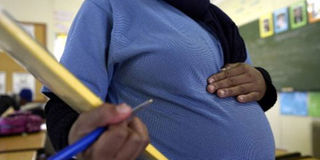
A pregnant adolescent. The Kenya Economic Survey 2026, released early this month, revealed an alarming increase in pregnancies among adolescents aged 10–14. According to the survey, the number of teenage pregnancies increased from 224,333 in 2024 to 235,938 in 2025.

What you need to know:
- Adolescent girls across Kenya continue suffering sexual violence, stigma and school dropouts amid rising teenage pregnancy rates.
- Survivors and activists accuse traditional justice systems of shielding perpetrators while denying vulnerable girls meaningful accountability mechanisms.
Zainab Ibrahim* from Wajir recalls the night a man entered her room early last year and defiled her repeatedly before leaving her for dead.
Zainab, in an interview with the Nation, says what pains her most is that the man who took away her innocence was her cousin. She was 15.
“My cousin entered my room and forced himself on me. He defiled me repeatedly, and my pleas for him to stop fell on deaf ears. After he was done, he warned me against disclosing what had happened to anyone. He said if I dared mention him to anyone, I would be dead meat,” she says.


Out of fear, she ran away and was lucky to find refuge at a safe house far from home on the outskirts of Wajir town. One month later, she missed her monthly period, a situation that sent her into panic. Assisted by her guardian, Zainab went to a nearby hospital, where she tested positive for pregnancy—one month.
“I could not believe my eyes when I saw the results. Being pregnant was the last thing on my mind. Becoming a mother at such a tender age was beyond anything I had imagined,” she says.
She regrets that she had no information on what she could do to prevent an unwanted pregnancy after the defilement. Zainab admits she had no knowledge of birth control pills. “I had no idea I could use pills after the defilement to prevent pregnancy. If I had known, I would have taken them because pregnancy was the last thing I wanted. I wanted to finish my studies first, then get married and have children.”
Zainab gave birth last October to a baby girl. She still lives with a well-wisher because she fears going back home. What angers her to date is that she has never received justice. Sh50,000 was raised through the Maslaha system, and the case was settled before reaching the authorities. Her relatives shared the money, and the case ended, effectively barring anyone from reporting it, according to the tradition.
Under the system, money or livestock such as cattle, goats, and camels can be used as compensation for a crime. According to this culture, a girl who gets pregnant before marriage is considered a shame to her parents and society. Girls or women who become pregnant after defilement or rape are labelled prostitutes or loose women.
Survey findings
Zainab’s story mirrors those of many other adolescent survivors of sexual violence who lack reproductive health education that could help them avoid pregnancy. Teenage pregnancy continues to rise, with the Kenya Economic Survey 2026, released early this month, revealing an alarming increase among adolescents aged 10–14.
According to the survey, the number of teenage pregnancies increased from 224,333 in 2024 to 235,938 in 2025. The data highlights a 14.6 per cent increase among girls aged 10–14, with Nairobi County leading in reported cases.
Pregnancies among adolescents aged 10–14 also rose to 11,605 in 2025 from 11,126 in 2024. In 2023, cases stood at 10,670, a drop from the 13,034 cases recorded in 2022. The counties with the highest numbers are Nairobi (14,291), Kakamega (11,835), Narok (10,934), Bungoma (10,443), and Migori (8,663).
Fatuma Abdi, Zainab’s guardian, notes that teenage pregnancy has become a menace in Wajir, with horrifying numbers being recorded. A trained paralegal and co-founder of the Arid Areas Paralegals Network, which offers pro bono services to survivors, Fatuma has been at the forefront of fighting sexual and gender-based violence in the county.
“A lot of adolescent girls who are sexually abused end up getting pregnant, thereby dropping out of school. Many survivors need psychosocial support and counselling services because they suffer trauma and mental health issues arising from the violations,” she adds.
Fatuma faults the Maslaha system for encouraging repeat offences. She says no mediation should be conducted or entertained in matters involving sexual and gender-based violence, adding that all perpetrators should face justice.
Wajir County data shows that 44 cases of defilement were reported between January and September last year, while another 40 rape cases were reported during the same period. Cases of sodomy reported over the same period stood at 14, while intimate partner violence cases totalled 13.
Halima Bachola, a leading human rights activist in Wajir, terms the teenage pregnancy menace a disaster for girls. “A lot of defilement of girls is going on in the county. The prevalence of sexual violence against girls in Wajir County is high. Many cases are not reported because the community is discreet,” she tells the Nation.
She says a lack of reproductive health information is to blame for the surge in prevalence. “We need to make reproductive health information and sex education available so that survivors of sexual violence know what to do.”
She also blames elders for the surge, noting that elders and victims’ families usually ask what they stand to gain by reporting cases to the police. “The elders are the ones perpetuating these vices by shielding perpetrators. Nothing will prevent a sex offender from violating more girls and women in the future. By accepting money through Maslaha, the clan or community is, in a way, celebrating what the perpetrator did.”
Halima notes that most survivors, especially adolescent girls, do not receive any form of counselling or psychosocial support, despite undergoing trauma.
Meanwhile, the National Council for Population and Development (NCPD) is spearheading a transformative reproductive health and girls’ empowerment programme designed to strengthen systems and expand opportunities for adolescent girls across Kenya. The initiative is strengthening county health systems to deliver quality, youth-friendly services and ensure no girl is left behind.
The Her Health Project is designed to transform health systems to respond to the realities, rights, and futures of girls and young women. It also strengthens community structures so that adolescent girls and young women can access quality sexual and reproductive health services, maternal health services, youth-responsive care, and services centred on dignity, inclusion, and rights within health systems. It also helps empower girls with reproductive health information, services, and agency to shape their own futures.
The initiative is being implemented in partnership with Reproductive Health Network Kenya, the Ministry of Health, and the International Planned Parenthood Federation. Dr Mohamed Sheikh, director-general at NCPD, emphasises the council’s commitment to long-term systems reform.
“This is not a short-term intervention. The Her Health Kenya project is a deliberate systems transformation effort aligned with our national population priorities. Kenya’s demographic dividend will only be realised if we intentionally invest in adolescent girls today. When we reduce adolescent fertility and keep girls in school, we strengthen families, communities, and the nation,” he says.
“Every girl in Kenya today needs systems that work for her—systems that address her health without compromising who she is or where she comes from, and systems that do not force her to choose between staying in school and seeking care.”
In counties such as Samburu, West Pokot, Garissa, Tana River, and Homa Bay, where the initiative will be implemented, girls face persistent inequalities, including limited access to quality healthcare, disparities in education, harmful cultural practices, poverty, and inadequate youth-friendly reproductive health services. These challenges manifest in high rates of teenage pregnancy, maternal complications and deaths, HIV infections, sexual and gender-based violence, and unmet needs for family planning.
Adolescent health
Dr Patrick Amoth, director-general for health, reaffirms the government’s commitment to adolescent health. “Adolescent reproductive health is a national development priority. High rates of teenage pregnancy, maternal complications, HIV infections, and gender-based violence require coordinated, evidence-based responses. This partnership strengthens county health systems to deliver quality, youth-friendly services and ensures no girl is left behind.”
He emphasises that aligning national policy direction with county-level implementation is critical to achieving measurable reductions in maternal mortality and morbidity.
Dr Nelly Munyasia, executive director of Reproductive Health Network Kenya, underscores the importance of the initiative, terming it a game-changer. “Girls in Samburu, West Pokot, Garissa, Tana River, and Homa Bay deserve access to stigma-free, quality reproductive health services. By working hand in hand with NCPD and the Ministry of Health, we are strengthening systems that will endure beyond project cycles. This is about empowering girls with reproductive health information, services, and agency to shape their own futures.”
She notes that consultation allows access to healthcare, including reproductive health services, terming it unfortunate that adolescent girls cannot access such services without being asked for consent. “We are working with the government to align policies that are not aligned to ensure access to reproductive health information for adolescent girls. This will help them make sound decisions.”
Dr Munyasia adds that they are also working with the Kenya Institute of Curriculum Development to institutionalise sex education and allow schools to make changes in line with their reproductive health information needs. She adds that they are also working with religious leaders to create champions against teenage pregnancy and advocates for maternal health. The five-year initiative seeks to ensure that every girl in Kenya has the opportunity, protection, and support she needs to thrive.
*Name changed to protect the privacy of the defilement survivor.


