The brutal exile of unmarried mothers in northern Kenya
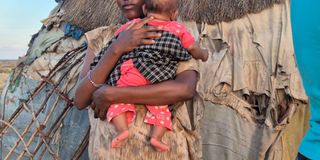
15-year-old Fatuma holds her six-month-old baby outside a manyatta, a temporary shelter where she sought refuge after being chased away by her father.

What you need to know:
- The practice of ostracising unmarried mothers persists across pastoralist communities in Marsabit County, passed down through generations like a bitter inheritance.
In the arid plains of northern Kenya, where dust devils dance across the landscape and ancient customs hold sway over daily life, a cruel irony plays out in silence. Here, motherhood—celebrated across cultures as life's most sacred gift—has become a curse for girls and women who bear children outside marriage. Cast out by their families, shunned by their communities, and abandoned by the men who fathered their children, these women exist on the margins, their only crime being pregnant while unmarried.
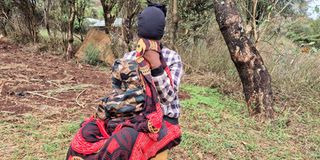
Cradling her youngest son, 23-year-old Rehema struggles to hold back tears as she recounts the pain of being labelled an outcast and the hardship of raising three children alone as a widow.
The practice of ostracising unmarried mothers persists across pastoralist communities in Marsabit County, passed down through generations like a bitter inheritance. While the men responsible face little consequence—often quietly "cleansed" by elders and absorbed back into community life—the women carry permanent scars: exile from their homes, interrupted educations, and a label that follows them like a shadow they cannot shake.


This is their story
Fatuma* sits outside a manyatta in the soft warmth of the morning sun, holding her six-month-old baby close. At just 15 years old, she is learning to balance the responsibilities of motherhood with the fragile hopes of childhood. This temporary home, where she sought refuge after being chased away, offers shelter but little comfort.
Fatuma recently completed her Grade Nine examinations. Yet behind her determination lies a painful reality: she is a teenage mother, a label that has transformed her into an outcast within her own community. Only months ago, she was living an ordinary life with her parents. Then her pregnancy was discovered, and everything changed.
"It was my father who chased me away," she says. "In our village, they do not want any unmarried person who is pregnant. Some parents said I should be given to an older man and married off quickly, but my mother refused."
Her father does not want her to continue with school and insists she should be married instead. In her community, Fatuma explains, when a pregnancy is discovered in its early months, girls are often forced to drink traditional substances to terminate it.
"My pregnancy was discovered at three months, and there were attempts to force me to terminate it, but I refused," she says quietly.
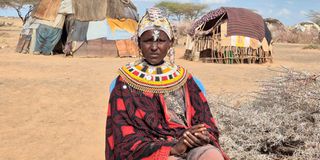
Nameri Jalle, a survivor of forced abortion, during the interview at her home in Kargi, Marsabit County. She is an advocate in her village calling for an end to harmful practices, including the exclusion of single mothers, female genital mutilation, and child marriage.
What broke Fatuma was not just the shame cast upon her—it was the fear that grew inside her own home. Following constant disturbances from her father, she was forced to flee, seeking safety in the only place she could trust: a friend's home. Desperate to protect her pregnancy, Fatuma's mother reached out for help, turning to social workers at a nearby Catholic Church in Marsabit County.
"One morning, social workers came and took me back to school. They found me a place to stay until I finished exams in November," Fatuma says.
In her community, marriage is considered the only acceptable path to intimacy and motherhood, leaving girls like her with no real choice when pregnancy arrives uninvited. But with everything Fatuma has endured, one question hangs painfully in the air: what happened to the man who impregnated her?
"Elders took me to the home of the young man responsible for my pregnancy, but he denied it and continues with his life as usual," she says. Another young girl facing the same harsh reality is Rukia*. She is 17 years old, and her story mirrors Fatuma's. Everything changed for her three years ago when her aunt noticed unexpected changes in her body. "She asked me, and I tried to hide it, but they told me to tell the truth. When the child's father was asked, he denied responsibility. His parents and elders were involved, but he completely denied it," Rukia tells the Voice.
In a community bound by deep-rooted patriarchal norms, the man faces little to no consequence. While women carry the weight of shame, exile, and judgment, the man is often quietly "cleansed," forgiven, and allowed to return to life as though nothing ever happened. This injustice—this brutal double standard—is what continues to break girls long after the pregnancy itself.
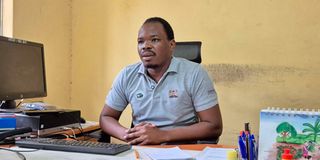
Leackey Mukanzi, sub-county children’s officer in Marsabit.
"I wish they too were treated as outcasts like us. They are accepted at their parents' homes while we are rejected. Why? We both made mistakes, yet only the girl is punished. The boy remains as if he did nothing wrong," Rukia adds.
Despite the cruelty and rejection shown to her by many, one man chose compassion. When her pregnancy was discovered, Rukia was sent away from her home almost immediately. It was her uncle who stepped in, refusing to abandon her when others did.
He took Rukia to a charity home, where she stayed through the pregnancy, gave birth, and later returned to school. But the centre had strict rules: a mother could only stay with her baby for six months. With no one to care for her child, the centre helped her find a children's home in Isiolo. She visits her child only once a year, carrying the weight of a mother's love shaped by loss and survival.
"When the Sister (at the home) asked if my parents would pay my fees, they said no. They said that after giving birth, I was an outcast and would not be accepted back home. I am only allowed to greet them by phone, not to live with them," Rukia says. And though she is back in school, a quiet fear still shadows her. She worries constantly about what the future holds.
"I am stressed about finishing school this year because I do not know where I will go. I am still regarded as an outcast back home. I am studying to make my parents proud, but they do not want anything to do with me," Rukia says tearfully.
The psychological toll is devastating. Crushed by shame, isolation, and despair, some women are pushed to the brink by rejection. Their stories reveal an unseen mental health crisis—one born not of illness, but of exile.
One young woman who nearly followed this path is Rehema*. She was only 16 when she discovered she was seven months pregnant. Her family wanted the baby gone. Instead, she ran away from home, choosing uncertainty over silence and survival over erasure.
"My aunt chased me out, saying I had brought shame and should go to the man who got me pregnant. I slept outside for a week. Everyone in our manyatta knew about my pregnancy, and people talked badly about me. The man responsible refused to take me in," Rehema tells the Voice. She found refuge with a friend who refused to abandon her. When everything felt lost, this friend stayed, carrying Rehema through moments when hope felt out of reach. "My friends turned against me. They spoke about me, mocked me, and
shamed me. At that time, I fell into deep depression. Crying became part of my daily life. I was unwanted because I was pregnant and constantly felt like ending my life," she adds.
After intervention by the local administration, her family allowed Rehema to return home—but only on condition that she provide for herself and the baby. She was forced to leave school to raise her child.
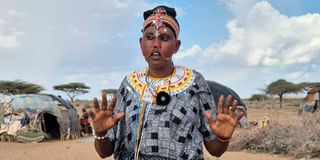
Safi Mifo, member of Kargi Women Advocacy Group.
Although later offered a chance to resume her education, Rehema chose to stay with her baby, fearing the child would suffer the same neglect she once endured. She is now 24 years old, and her child is eight.
"I opened a small hotel, started making chapati and tea, and began helping my siblings with school," she says.
She adds: "The culture that abandons pregnant girls is bad. If she dies, her body is brought back and buried. Is this culture, or cruelty? Some force girls to have abortions, which is not right. I can tell parents: having a child is not the end of life."
Another young woman, 23-year-old Zainab*, shares a similar story. She is a single mother of three and currently pregnant with her fourth child. Unlike many, the man who impregnated her when she was 14 took responsibility, and together they built a family.
"I stayed with him and gave birth to my first child, waiting for him to marry me and pay my dowry, but that never happened. I had my second child, and still he did not pay the dowry. Later, I gave birth to my third child as well. Then he fell ill with tuberculosis and passed away," Zainab says.
Despite having tried to create a home, the label of outcast has not faded, and the shadow of rejection still lingers. Zainab is now left to care for her children alone, carrying both loss and responsibility on her own. Yet the people around her have made the path even harder, offering little support and often adding to her struggle.
School fees
"There is a village list of people who receive support, but my name is not on it despite asking. They still regard me as an outcast. I have stayed quiet, but my son cannot study because I cannot afford school fees. Casual work earns me between Sh300 and Sh400, which is never enough," she says, tears welling in her eyes. Zainab dropped out of school while in Grade Seven, leaving her childhood dreams behind.
"With all these children depending on me, I have no chance of returning to school. Even my mother relies on me sometimes, and I do not see how I could manage to stay in school even if I tried."
According to Leackey Mukanzi, the Sub-county Children's Officer in Marsabit, his office rescued 11 girls last year. Leackey cites the vastness of the area as a key factor, explaining that many incidents occur but do not reach the authorities in time.
"Given that this practice has been going on for a long time, the elders say it is supposed to instil morals in the girls. It is a common practice among the Gabra community," he says. He adds: "We have a close collaboration with advocacy groups. Once they identify cases, they report them to us, and we help girls find hope by placing them in a charitable home." The challenge, however, is that the county does not have a rescue centre, leaving many cases unattended. Girls are not bearing the brunt alone. Even older women feel the heat. In these communities, as long as a woman is unmarried, childbearing is forbidden.
We visit Bubisa village in North Horr Constituency.
On the edge of the village, two small houses stand alone in the dust. They were built for two women who gave birth before they were married—segregated far away from other homes, as if their very presence were a contamination.
We walk into one of the homes, hoping to speak with its occupant, but no one is there. We decide to wait, and moments later, a woman appears, followed by a young boy.
She is 45-year-old Kame Giresa. Kame has lived here since she was chased from her home, raising her four-year-old son in isolation on the margins of her community. She had begun to establish a life at her parents' compound, but motherhood disrupted that stability.
"I had a stone house, but I was forced to leave," Kame says. "The place where I am living now does not belong to me. My sister separated from her husband and built a two-room house, giving me one room while she lived in the other, but she left six months ago."
She adds: "I have no one to support or guide me. This place is isolated, a mere receptacle for boredom. I have been removed from my homes and separated from the community, left to live on the margins with no one to stand with me."
Kame's ability to remain in the village is the result of intervention by a group of 62 women who chose to fight back. The group—made up of widows, persons with disabilities, and women who gave birth outside wedlock and are often labelled outcasts—has been negotiating with village elders to challenge harmful cultural practices.
As a result, women who give birth before marriage are no longer chased away entirely. Instead, they are allowed to settle on the outskirts of the village: a small but significant shift from total exclusion toward reluctant acceptance.
"Some girls get pregnant out of rape when fetching firewood. This is unfortunate, yet they are often chased away. I tell the community that such traditional practices must end," says Adho Ali, chairperson of the Bubisa single mothers group.
What binds the group together is their weaving work. Using strips of recycled cloth and palm fronds, they make roofing material for their homes and for sale. The work has become both a source of income and a powerful metaphor.
With every woven strand, they assert their strength, resilience, and refusal to be erased. Through the steady rhythm of their hands, they are stitching dignity back into their lives, one thread at a time.
"We told them to join us since we are all the same, without husbands. At home they are excluded, but here it is better. They receive training and support," Adho adds.
From Bubisa, we travel 130 kilometres to Kargi in Laisamis Constituency. The road is rocky, hilly, dusty, and in poor condition. A journey that would normally take one and a half hours on a good road instead takes four hours, highlighting how difficult it is to reach and document such cases in remote areas.
After the long journey, we arrive at the home of Nameri Jalle. The mother of five was only 12 when she became pregnant and was chased out of her home by her father. Her mother, seeing her suffering, had mobilised other women to end her pain through an unsafe abortion—a stark illustration of how harmful cultural practices can cause immense suffering.
"All night, she walked me around trying to end the pregnancy. She took me to the forest, where several women pressed on my stomach until they failed to remove the baby. I walked barefoot. The food they gave me had been sitting for five or six days and smelled bad. They treated me badly. My stomach, my upper skin tore. I got a wound and it hurt," Nameri narrates.
Fortunately, a nearby Catholic church and a local advocacy group working towards ending the harmful practice received a tip-off and came to her rescue.
"Sisters took me to the church, built me a small shelter, and gave me a mattress and cooking pots. I did not return home until after I gave birth. There were many girls—two are now mentally unwell, and two died because of what was done to them," Nameri adds.
Later, the foreign sisters returned to America, and her family forced her to marry an older man. He did not want the children to go to school; he wanted them to herd goats.
Having known that pain herself, Nameri made sure all her children received an education. When she lacked money, she sought help from the church to pay their school fees."I am very grateful to Father Alex, Sister Elizabeth, and Darare. Today, I raise my children on my own, doing casual work and educating them," she says.
Her child—the one who endured the mistreatment—survived and is now a university student. Nameri has mobilised other women in the village to speak out and act, forming a grassroots advocacy group calling for an end to harmful practices such as the exclusion of single mothers, female genital mutilation, and child marriage. The group is made up of 30 women, many of whom are survivors themselves. For the first time, women are raising their voices publicly against traditions that have long silenced them. Already, they are witnessing change.
"Since the project began, we have received funds to support groups and the community. We visit each village to raise awareness. Now, girls who become pregnant can give birth and return to school," says Safi Mifo, a member of Kargi Women Advocacy.
Yet the challenges do not end with social rejection. Many women encounter difficulties when trying to obtain birth certificates for their children, often because a father's name is required. Wanting their children to carry a name that shields them from stigma, some mothers turn to informal arrangements to secure a surname. In cases where a woman remains on good terms with her own father, he may allow the child to use his name.
"When cases arise where a child needs a birth certificate but the father refuses to provide his ID, we counsel the parents, urging them to comply. Thankfully, it has worked, and most girls now register their children under the name of the young man who fathered the baby, even if he is not married to them," says Nuria Gollo, Executive Director of Marsabit Women Advocacy and Development Organisation.
The National Gender Equality Commission (NGEC) acknowledges that such cases are rampant in areas that practise pastoralism. The commission says it has been working to address these violations by supporting access to justice and strengthening community awareness to challenge harmful cultural practices.
"There is this young lady in Merti who was impregnated by someone she knew. The community came together to protect the perpetrator. Her parents decided to put her in isolation for nine months. When she gave birth, the baby was thrown into a pit latrine. Two hours later, someone saw the baby and rescued him. But the community turned against that person, accusing her of being the one who had thrown the baby," narrates Rehema Jaldesa, chairperson of the NGEC.
The commission has been collaborating with local authorities and non-governmental organisations to call for an end to such practices.
"As a commission, we partner with other stakeholders such as CBOs and NGOs to explore available interventions, like providing training, encouraging youths to access the Youth Fund, and offering ongoing mentorship and support to ensure they can fully benefit from these opportunities," Rehema adds.
Rehema says the practice is rampant in areas practising pastoralism, and they are working towards ending it. A charity home in Marsabit town is providing a lifeline to girls facing rejection and abuse. The centre offers shelter, protection, and emotional support, giving them a shoulder to lean on when they have nowhere else to turn. It is currently home to 28 girls who live on site with their children. Others are pregnant and awaiting childbirth, after which they hope to return to school and rebuild their futures.
After giving birth, the girls are allowed to stay at the centre with their children for six months. After that period, the children are placed with family members. In cases where no family is willing or able to take them in, the children are transferred to a registered children's home.
"We also provide a safe space for girls to share experiences and see they are not alone. Survivors who have overcome challenges guide them. Some girls receive start-up funds, like Sh20,000, to start small businesses. They all learn and grow from the experience," says Nuria.
Fatuma now lives with her mother in her grandparents' home, the only refuge left after their world fell apart. Their relatives have tried, in their own limited ways, to make space for her and her baby. But even within these walls of supposed safety, she says the word "outcast" clings to her like a shadow she cannot shake. The whispers follow her, the stares pierce through her, and the judgment lingers in every corner.
Yet despite the weight of her experiences, Fatuma still hopes to join senior school, believing that education will create the opportunities life has denied her. She dreams of becoming a doctor. "I want to continue with my education, but there is no money. I dream of becoming a doctor to help my family, because what I have been through has been
very hard for me and my mother."
These young women face rejection, hardship, and lost opportunities, yet they keep dreaming, fighting, and caring for their children. When will the harmful traditions that punish girls and excuse men finally end? Their courage offers hope—but change cannot come soon enough.
Names* have been changed to protect minors' identities.


