The forgotten heroine – and how African spirituality lit the flames of Haitian Revolution
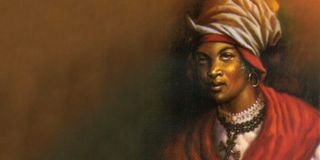
The painting of Cécile Fatiman, the woman whose ritual sparked the Haitian Revolution.

What you need to know:
- Long erased from history, Cécile Fatiman’s role in the Haitian Revolution remains one of defiance and empowerment.
- Her Bois Caïman ceremony united enslaved Africans in revolt, paving the way for Haiti’s 1804 independence and the abolition of slavery in French colonies.
At the height of the Transatlantic Slave Trade, over 800,000 Africans were transported from Central and West Africa to the island of Hispaniola—today divided into two nations: The Dominican Republic to the east and Haiti to the west.
The eastern side became the Spanish colony of Santo Domingo, while the fertile western region evolved into the French colony of Saint-Domingue, the wealthiest slave colony in the Northern Hemisphere between 1500 and 1800.
Saint-Domingue’s prosperity was built on the forced labour of enslaved Africans who produced sugar, coffee, cotton and indigo for export. The colony’s output alone supplied half of the sugar and coffee consumed in Europe, enriching France beyond measure. While absentee plantation owners, the Grand blancs (“Great Whites”), enjoyed opulent lives in France, their estates were managed by Petites blancs (“Poor Whites”)—lower-class Europeans seeking fortune in the Caribbean.

Supporting them was a biracial community known as mulattoes and Gens de Couleur Libres (free people of colour), many of whom were born of sexual violence against enslaved African women. As Michel-Rolph Trouillot observes in Silencing the Past: Power and the Production of History, the system thrived on extreme brutality, exploitation and dehumanisation, treating black labour as expendable.
The cover of Michel-Rolph Trouillot's Silencing the Past: Power and the Production of History.
Life for the enslaved was short and harsh. Overwork, beatings, and malnutrition were rampant, and death rates were so high that new slaves were constantly imported. Corpses of enslaved Africans often lay unburied, and life expectancy on the plantations rarely exceeded seven years.
Resentment grew. On August 14, 1791, Cécile Fatiman, a Vodou mambo (priestess), led a secret ceremony at Bois Caïman in the northern forests of Saint-Domingue. During a violent thunderstorm, she sacrificed a black pig and invoked the lwa—African ancestral spirits—to strengthen enslaved Africans preparing for revolution.
Two hundred men from neighbouring plantations swore an oath of unity, drinking the pig’s blood as a symbol of their resolve to fight for freedom. Fatiman appointed Dutty Boukman, a Jamaican-born runaway slave and Vodou oungan (priest), as the rebellion’s commander-in-chief.
The spirituality that fuelled the uprising stemmed from syncretism—a fusion of West and Central African beliefs. Vodou combined elements of Yoruba, Fon, and Kongo traditions, centring on the supreme creator Bondye and the intercessory spirits known as lwa. Worship involved drumming, singing, and dance to summon these spirits, alongside offerings of fruit, liquor, and animal sacrifices.
A week later, on August 21, 1791, another Vodou ceremony called for vengeance. The slaves struck back. Plantation owners had long underestimated their capacity for coordination and resistance. Outnumbering their oppressors 10 to one, they torched 110 sugar and cotton estates, killed and captured Europeans, and regrouped in the northern forests under Fatiman’s leadership.
As the revolt spread, Toussaint Louverture emerged as a key leader, seizing control of the capital, Le Cap. Vodou mambo sustained the revolution, creating herbal concoctions to poison enemy forces.
On January 4, 1794, delegates from Saint-Domingue arrived in the French National Assembly with a former slave called Jean-Bartiste Belley to secure an anti-slavery decree in Paris. Belley demanded the abolition of slavery and with the support of French Surgeon and Convention Deputy René Levasseur, a motion abolishing slavery was passed.
Because of Fatiman’s meticulous plotting of the Haitian revolution, slavery was abolished in French colonies. In 1804, Saint-Domingue became the first free black slave state to achieve Independence and was renamed Haiti.
But fearing similar uprisings among enslaved populations in the US, President Thomas Jefferson and Western nations refused to recognise Haiti’s independence. They imposed trade embargoes, denying Haiti the supplies it needed to rebuild. Over time, they deliberately obscured from mainstream history Fatiman’s legacy as the Vodou priestess whose ritual ignited the Haitian Revolution.
The author is a novelist, Big Brother Africa 2 Kenyan representative and founder of Jeff's Fitness Centre (@jeffbigbrother).


