The great divide: How money and geolocation dictate a Kenyan woman’s health
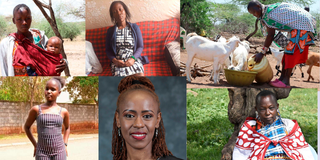
A groundbreaking study of 97,908 women exposes how wealth and location create parallel health universes—and why a woman in Turkana and one in Nairobi have nothing in common but their gender.

What you need to know:
- A national study titled In HER Lifetime captured the voices of 97,908 women and girls across Kenya on what health and wellbeing mean to them.
- It found that women’s ability to live healthy lives is shaped by income, location, access to food, rest, and peace of mind — not just medical care.
In a nation of shared struggles, a woman's age doesn't define her health needs—her wallet and address do.
The sun has not yet begun to warm the dusty streets of Ole Kasasi in Ong'ata Rongai, but Judy Njeri Mungai has already been awake for hours. The 40-year-old widow's mind races with a single, relentless thought: debt. She unlocks the metal shutter of her small shop, the screech a familiar alarm to another 18-hour day. Her form of self-care, she says, is "ensuring I have enough sleep."
Then she adds with a weary laugh: "But that rest doesn't come easy. I sleep around 2am, drowned in thoughts and occasionally praying." Her favourite Bible verse is Revelation 3:8, a passage about doors of opportunity that no man can shut. She clings to this promise as her own doors of financial stability seem to slam shut daily.


Just 30 kilometres away, in a serene, leafy suburb, Carole Kimutai, also in her 40s, sips herbal tea in her sunlit kitchen. Her morning ritual involves reviewing her family's menu for the week, ensuring it is rich in organic vegetables, some grown in her own garden. Her self-care is a disciplined regime of transcendental meditation, controlled gadget use, and playing golf.
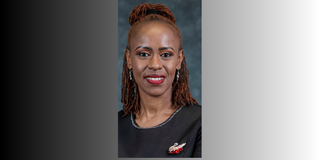
Carole Kimutai, a career woman in her mid-40s who resides in one of Nairobi's leafy suburbs.
"Ensuring I am physically and mentally functional and operating at my best is my priority," she states. For her, a key health need is "information," and she is "proactive in seeking medical advice and ensuring I plan for check-ups so I can address any issues on time."
Judy and Carole are Kenyan women standing at the same life stage, yet they inhabit parallel universes of health and wellbeing. Their starkly contrasting realities reflect the central finding of a new national study: while age shapes a woman's health aspirations, it is economic power and geographic location that ultimately determine her ability to achieve them.
97,908 voices, one urgent message
The In HER Lifetime report, a national listening exercise conducted by the White Ribbon Alliance Kenya (WRA Kenya) in partnership with the Foundation for Innovative New Diagnostics (Find), captured the voices of 97,908 women and girls across 44 counties. It reveals a nation of women united by a desire for health but divided by a chasm of inequality.
The report's data provides statistical evidence, while the lived experiences of Judy, Carole, and others paint the human picture—a clear comparison of how priorities and possibilities fracture along socio-economic lines.
The methodology of the report was intentionally radical. Dubbed the "Ask-Listen-Act" approach, it involved training local women as mobilisers to gather door-to-door testimonies in settings as diverse as homes, marketplaces, and colleges. They asked four deceptively simple questions: How do you define health and wellbeing? What do you want most for your health and wellbeing? What does self-care mean to you? What do you do to stay healthy?
The result was a generational and geographical mosaic of need. The survey found that 54.8 per cent of respondents were aged between 21 and 40 years, highlighting the concerns of young women, but also captured significant voices from adolescents (18.2 per cent) and older women (12.8 per cent aged 51 and above). This wide capture ensured a comprehensive view of the health needs across generations.
Survival first: The reality for teenage girls
According to the report, girls aged 10-20 nationwide overwhelmingly prioritise food, sanitary towels, and education.
For Jemimah Ny'otiek, a 19-year-old in Turkana County, this is a brutal daily reality. She rises before dawn to fetch water from a borehole three kilometres away.
"Money, food, and life skills to make that money" are her clear priorities. "If I have no food, even going to the clinic won't make me healthy," she explains. For her, wellbeing is a full stomach and the means to generate income—a need echoed by a young girl from Turkana in the report who wanted the "ability to access health and wellbeing, notably money and life skills to generate that money."
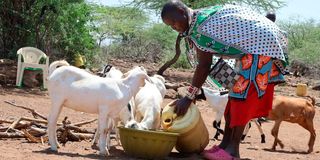
Jemimah Ng'otiek waters her goats in Kajiado.
This aligns perfectly with the data. The report's table of "What women and girls want for health and wellbeing by age" lists "food" as the top demand for 10-20-year-olds, followed by "good health" and "sanitary towels."
Joyline Kinya is also 19, originally from Meru County, but now works as a domestic helper in Nairobi. Her understanding of self-care is "spending money on myself whenever I have it."
Freed from the existential worries of water and food by her employment, she spends her free time "chatting with friends, watching movies, and going for photoshoots."
Her dream, however, mirrors Jemimah's underlying desire for autonomy: to earn enough to start her own business and quit her job. While her immediate reality is more secure, her aspiration for economic independence is a common thread.
Psychologist Isaac Maweu contextualises this divergence. "All human beings have common needs, but the understanding of the same differs with their environment and exposure," he says.
"A teenager in Turkana is conditioned to associate health with survival essentials. A teenager in an urban setting, even a low-income one, has her consciousness raised to aspirations of entrepreneurship and personal enjoyment. Their basic need for security is the same, but their coping mechanisms and expressions are totally different."
The crushing weight of caregiving
The report finds that women aged 31-40 seek "money," "peace of mind," and "to be financially stable" as they juggle work and caregiving. This life stage, the data suggests, is where the weight of expectation bears down heavily.
In a Nairobi slum, 31-year-old Selpha Andati embodies this struggle. She is the sole breadwinner for her two children and her ailing husband. Her work as a 'mama fua' is precarious.
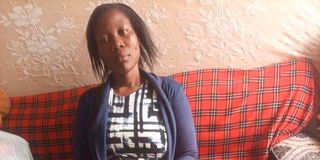
Selpha Andati, a 31-year-old mother of two.
"My work is fully dependent on my clients. If I don't get called to go and do laundry often, then my children risk going without food or being kicked from school," she shares. Her health aspiration is heartbreakingly basic: to offer her family a single balanced meal including fruits. This is a "distant dream."
Her coping mechanism is avoiding hospitals even when her body calls for it. "I buy drugs from the counter, as this is cheaper and often saves me time."
The report highlights this tragic trend, noting that "economic challenges affect women's ability to eat healthy and afford other necessities for critical wellbeing, including ability to visit health facilities."
Selpha's story is the human face of this data point: a woman so consumed by providing that her own health becomes an unaffordable luxury. The report's table for the 31-40 age group shows "good health" and "food" at the top, but "money" and "peace of mind" are immediately behind, illustrating the constant tension between need and aspiration.
Contrast this with the report's finding that women in counties like Nyeri, Kiambu, and Meru were urgently demanding diagnostics for chronic diseases. For a woman like Selpha, a diabetes or hypertension screening is an abstract concept when the threat of hunger is a constant companion. Her self-care is non-existent, subsumed by the relentless demand to care for others.
The great divide: Women in their 40s
Perhaps no age group better illustrates Kenya's great health divide than women in their 40s. The report shows that women aged 41-50 desire "money," "food," and "peace." There is a clear call for "affordable medical services," reflecting caregiving responsibilities and growing concerns about the cost of healthcare.
This is the cohort where lives, built over decades, have crystallised into vastly different realities.
Judy Njeri Mungai in Rongai is fighting a daily battle for survival. The school fees for her four children are a "constant worry," forcing her into a cycle of debt. Her shop is her entire life, open from 7:30am to 11:30pm. Self-care is a fleeting, inadequate nap.
The report's findings on mental peace are a cruel irony in her life; her mind is a storm of anxiety. She represents the millions of Kenyan women for whom the report's demand for "economic empowerment" is not a policy term but a matter of life and death. For her, the top dFemand of "money" from the report is not an aspiration—it is a desperate need for survival.
Then there is Memei Kaakai, 38, from Samburu County, who represents a middle ground. She understands self-care intellectually—"knowing my body and when to take action"—but admits it's a privilege she cannot always afford.
"I need time for myself, but my family has more pressing needs," she says, a sentiment that echoes the report's finding that "societal expectations and gender and reproductive roles hinder their ability to practice self-care throughout their lives."
The money for a doctor's check-up often pays for her children's school fees instead. She is acutely aware of her holistic needs but is constantly forced to prioritise immediate physical ones.
At the far end of the spectrum is Carole Kimutai, the corporate executive. Her needs are not about survival, but optimisation. She is "proactive in seeking medical advice" and plans regular check-ups. Her demands are for reliable organic food, safe green spaces to walk, and vetted information to counter misinformation.
"We live in a very noisy world, and it is important to stay grounded," she says—a statement that would be a profound luxury for Judy or Memei. Carole's lifestyle aligns with the more holistic definitions of health found in the report, such as "having peace of mind" and "physically and mentally fit," but her ability to act on this understanding is a function of her economic privilege.
The In HER Lifetime report states that a significant number of women highlighted "access to essential resources like money and food, reflecting a direct link between economic power and the ability to access and sustain good health." These three women are a living triptych of this finding.
Forgotten at 50: Navigating menopause in silence
For women over 50, the report indicates a sharp focus on managing chronic conditions and accessing affordable medicine. For Nalaketi Lepoo, 56, in Narok County, this stage of life is defined by neglect. She is navigating menopause in silence. Her hot flashes are unpredictable, and joint pains hinder her work.
"We are left to guess what is happening to our bodies," she says. She has never been screened for cervical or breast cancer, not due to unwillingness, but because no one has told her where to go or whether such services are affordable.
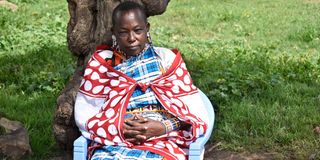
Nalaketi Lepaso from Narok County.
Nalaketi's experience is a direct consequence of a systemic failure identified in the report's introduction: "Women's health programming has long centred on the reproductive years (15–45 years), leaving critical gaps in healthcare for adolescent girls below 15 and postmenopausal women over 45."
The report further notes that the confusion around menopause is exacerbated by a lack of locally relevant research, leaving women like Nalaketi vulnerable to inadequate healthcare, misdiagnosis, and even stigma.
The report's data for women aged 61+ shows their top demands are "money," "good health," and "food," with "medicine" and "affordable medical services" also ranking highly. For them, health is about sustaining vitality and managing the decline that comes with age in a system that has forgotten them.
The silent emergency: Kenya's diagnostic gap
A unifying thread across all these stories, regardless of wealth, is the struggle with a fragmented health system.
Prof Joseph Ndung'u, Head of FIND Kenya, named this the "diagnostic gap," which he called a silent emergency that undermines health systems and deepens gender inequality.
"Without the right test at the right time, women and girls cannot get the care they need," he stated during the report's launch. "Even when diagnostic tools exist, they are often unavailable, unaffordable, or not designed with women's realities in mind. This is unacceptable."
He pointed to FIND's work, such as supporting "HPV self-sampling models that empower women to screen for cervical cancer in privacy," and called for such innovations to be integrated into everyday primary healthcare.
For Nalaketi Lepoo, this gap is her reality. Meanwhile, Carole Kimutai proactively plans her check-ups. The same system is invisible to one and accessible to the other.
When self-care is a luxury, not a right
This disparity extends to the concept of self-care. The national report found that self-care was largely viewed through a physical lens: "Taking care of myself" and "Maintaining good personal hygiene" were the universal top definitions across all age groups. However, the report crucially noted, "rest was largely absent from the responses, reflecting deep-seated societal perceptions that equate rest with laziness, particularly for women and girls."
For Joyline, the 19-year-old in Nairobi, self-care is consumerist and social—spending on herself. For Selpha, the mama fua, it is non-existent. For Judy, the shopkeeper, it is a desperate desire for sleep that eludes her. For Memei in Samburu, it is a known concept she cannot afford to practice. For Carole, it is a sophisticated, multi-faceted regimen. This perfectly mirrors the report's findings that while some women embraced a holistic view including "self-love and acceptance," many cited a lack of information and resources as significant barriers.
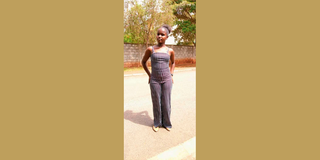
Joylyne Kinya, a 19-year old girl born in Meru but working in Nairobi.
Psychologist Isaac Maweu confirms this spectrum. "Self-care for different women is different. For example, women in rural areas may have their 'chamas' as the support system where they meet and share, while you will find an urban woman having the financial muscle and knowledge to pay for therapy as a support system."
He adds: "Naturally, women's life phases are difficult as compared to men, and so, we as a society should extend grace to women at any given point and offer them the necessary support regardless of age or location."
A call for revolution: Health as a right, not a privilege
Despite their different worlds, the aspirations of these women, when distilled, point toward a common goal of agency. The In HER Lifetime report translates this collective yearning into concrete demands. It calls for a radical expansion of women's health beyond reproduction, a refinement of programming to address diverse life stages and contexts, and the promotion of self-care as a right, not a taboo.
It insists that diagnostics must be integrated into all care settings and that survival essentials like clean water, nutritious food, and affordable transport must be recognised as fundamental health priorities—a need starkly highlighted by the county-level data from Baringo, Turkana, and other arid regions.
The stories of Judy, Carole, Selpha, Joyline, and the women from the report prove that a one-size-fits-all approach is a failure. A health system that works for the woman in Turkana must ensure her survival. A system that works for the woman in Rongai must offer her economic respite. A system that works for the woman in the leafy suburb must support her proactive wellness. A truly equitable system must do all three.
As Prof Ndung'u asserted in his closing remarks, we cannot afford to treat women's health as an afterthought. "It must be integrated, adequately resourced, and shaped by the voices and experiences of women themselves."
The 97,908 have spoken. These individual women have given their testimony. Their voices, in their stark contrast, form an unassailable argument for a health revolution—one that sees, hears, and serves every Kenyan woman, in all her diversity, at every step of her life.
What women, girls want for their wellbeing at various stages of life
Age | Top demand | Unmet need |
10-20 | Food & sanitary pads | 64 per cent miss school monthly due to period poverty |
21-30 | Money & mental peace | <5 per cent access maternal depression screening |
31-50 | Affordable screenings | 72 per cent lack cervical cancer testing access |
51+ | Medicine & nutrition | 80 per cent face chronic drug shortages |


