The tragedy of Shalon Irving and the dangerous myth that Black women feel less pain

In 2020, pregnant black women were twice as likely to experience critical health issues.

What you need to know:
- The death of Shalon Irving exposes systemic racism and implicit bias driving deadly maternal health disparities.
- Black women in America face higher maternal mortality due to bias, neglect, and structural healthcare inequality.
On January 3, 2017, Dr Shalon Irving, a black epidemiologist at the Centres for Disease Control and Prevention and a lieutenant commander in the United States Public Health Service, delivered her first child, Soleil. Shalon had spent her entire adult life studying, earning dual master’s degrees and two PhDs, while nurturing a long-held dream of becoming a mother.
A week after giving birth at Emory Saint Joseph’s Hospital, Shalon developed a wound complication. A physician she initially consulted missed signs of escalating hypertension, which was later identified by another doctor. Despite this, her health continued to deteriorate. Over the following days, white medical professionals attended to her on four occasions. On two of those, her hypertension had already worsened into a life-threatening condition. According to the American College of Obstetricians and Gynaecologists, she should have received urgent anti-hypertensive treatment.
During her final attempt to seek medical assistance, a nurse reportedly dismissed her concerns and sent her home with prescription medication for hypertension. Five hours later, Shalon lost consciousness and was placed on life support. She died on January 28, 2017, at the age of 36.


Her case reflects a troubling reality: healthcare is often unsafe for black women in the United States. Many report being ignored, dismissed, or inadequately treated in hospitals. Black women are disproportionately affected by obstetric discrimination and are three times more likely to die from pregnancy-related complications than white women. In fact, black mothers face higher maternal mortality rates than any other female demographic in the developed world.
The United States remains the only developed nation where black maternal mortality rates have continued to rise. The problem is not always overt racism but often subtle, unconscious bias—such as failing to provide black patients with equal urgency and attention in medical care.
One persistent stereotype among some medical professionals is the false belief that black women have a higher pain tolerance. This notion dates back to the 1800s and to the work of James Marion Sims, a physician who conducted experimental obstetric procedures on enslaved black women without anaesthesia. This legacy contributes to what experts now describe as obstetric racism—race-based assumptions and stereotypes among healthcare providers that result in black women receiving substandard care.
Monique Rainford, a Brooklyn-born Jamaican clinician practising in Baltimore, Maryland, has dedicated her career to addressing these disparities. A pre-med graduate of the University of Pennsylvania and trained at Georgetown University School of Medicine and Harvard Medical School, she specialises in obstetrics and gynaecology and is a member of the American College of Lifestyle Medicine.
In her book, Pregnant While Black: Advancing Justice for Maternal Health in America, Monique examines the urgent need for obstetric professionals to be better trained in recognising postpartum complications and addressing implicit bias and structural racism within healthcare systems.
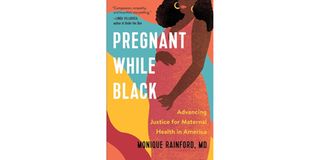
Monique Rainford's book, Pregnant While Black: Advancing Justice for Maternal Health in America.
Structural racism refers to the many ways societies reinforce racial discrimination through interconnected systems—housing, education, employment, income, credit, media, criminal justice, and healthcare. These systems reinforce discriminatory beliefs and unequal access to resources. Nowhere are these disparities more visible than in healthcare, where lives are at stake. The consequences are particularly severe for young and otherwise healthy black pregnant women.
Monique recalls witnessing healthcare disparities during her residency in Washington, DC. When black women with life-threatening complications were cared for by teams that included black physicians and nurses, she observed significantly better outcomes. The experience revealed to her the importance of cultural understanding and attentive care.
She also documented cases in which black women failed to receive routine procedures such as Pap smears that detect cervical cancer. She observed healthy black women with no apparent risk factors delivering prematurely and noted concerns about negligence in postnatal care. Delays in providing in-vitro fertilisation treatments to black women were also common.
Historically, thousands of black women were pressured into undergoing tubal ligation based on discriminatory assumptions that their children were undesirable to society. Monique concluded that the alarming medical statistics about black women were not simply the result of socioeconomic conditions but often the consequence of systemic racism and bias in healthcare delivery.
When black postpartum women are classified as high-risk patients, follow-up care is not always consistently ensured. Many also report receiving little emotional support during the postpartum and prenatal periods. Health disparities persist even when income and education levels are similar, largely due to implicit bias. Implicit bias refers to unconscious attitudes or stereotypes that influence perceptions and decisions without awareness. Even well-intentioned clinicians may unknowingly carry these biases, which can affect the quality of care Black patients receive.
Research has shown that the stronger a clinician’s pro-white bias, the less likely a black patient is to receive recommended treatment. Studies using the Implicit Association Test have revealed that Asian, Hispanic and white physicians demonstrate implicit preferences for white patients. Such unconscious biases can influence clinical decisions, even when doctors believe they are providing fair and equal care.
The writer is a novelist, Big Brother Africa 2 Kenyan representative and founder of Jeff's Fitness Centre (@jeffbigbrother).


