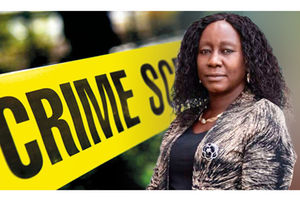
Turning grief into hope: Empowering widows to rebuild families
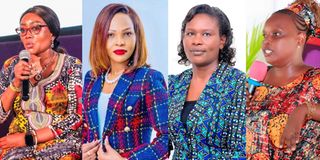
Dianah Kamande, Lilian Ngala, Clara Lagat and Prudence Kai.

What you need to know:
- After losing husbands and livelihoods, widows across Kenya are transforming grief into advocacy, empowerment and lasting change.
- From disinheritance to social stigma, resilient widows are building support networks and fighting for legal protection.
Prudence Kai’s world collapsed in 2012. Her husband died at home after a prolonged doctors’ strike, despite her desperate attempts to secure specialised care. On her way to the morgue with his body, her phone rang.
“People have broken into your house,” her neighbour cried.
The intruders were not strangers but her in-laws. By the time she returned from Ganze to Sokoni in Kilifi North, everything was gone—down to spoons and plates. “They believed that because their son had died, everything must return to them,” she recalls. “Thirteen years later, I have never gone back to that family.”


Her children were just seven and 10. Instead of sympathy, she was branded a witch. “Everyone thinks you are a witch, or worse, a murderer,” she says. “In Kilifi, when a man dies, the widow carries the blame.”
Her ordeal reflects the experiences of many widows across Africa. In Uganda, the Succession Act, 2022, criminalises attempts to evict widows or unmarried orphans from the homes of their deceased husbands or fathers. The country's penal code also outlaws offences commonly associated with property grabbing, including murder, assault, arson, theft, fraud and threats of violence.
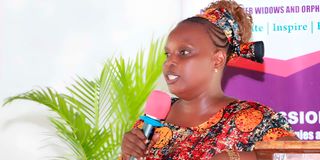
Prudence Kai, founder of Hopes and Dreams and chairperson of Kilifi County widows.
Yet, despite these legal protections, widows continue to face dispossession at the hands of in-laws, co-wives and stepchildren, who often seize inherited property and force women and their children out of their homes.
Kenya has no official figures of either widows who have overcome the abuse or been violated. But a 2020 report by the Federation of Women Lawyers - Kenya gives an indication of their status. Ten out of the 289 gender-based violence (GBV) cases reported during a three-week period (between April 15 and May 5, 2020) in western Kenya were of widows evicted from their homes and physically violated by their in-laws, the report showed.
Alone in Kilifi, grieving the sudden death of her husband and stigmatised by neighbours, Prudence refused to crumble. Instead, she chose to rebuild her life from the ground up while caring for her two children. “This was my new reality,” she says. “I had to show up for my young children while grieving and dealing with confusion. Worse is that I had no one with whom to share my tribulations.”
Suffocating darkness
Having endured the suffocating darkness of widowhood herself and knowing how that loneliness can cave in on a new widow, Prudence deliberately chose to become the hope they desperately needed.
In 2013, she founded Hopes and Dreams Organisation, a lifeline for widows enduring the same ordeal. Today, it counts more than 22,000 members in Kilifi, part of a wider network of 38,000 across the county.
“The assault and abuse I faced propelled me,” she explains. “Widows here are disinherited, mocked, and falsely accused of murder. Through our organisation, they gain psychosocial support, grow yams to earn a living, and, with the Federation of Women Lawyers - Kenya’s help, access pro bono legal representation.”
In 2027, Prudence will be vying for woman representative for Kilifi. Through the position’s political influence, she hopes to establish a formal platform dedicated to rescuing widows who face eviction, disinheritance, and social stigma.
“I want a budget for emergencies,” she says. “Sometimes I am called to rescue a widow who has been evicted, but when I get there, I am shattered because I cannot give them the support they need. It breaks my heart.”
Loneliness into solidarity
The traumas of widowhood do not discriminate by social status; they cut across class, education, and employment, striking women wherever they are and stripping away certainty. Even those with education, jobs, or relative stability can be left vulnerable to loneliness, stigma, and the relentless demands of survival.
Clara Lagat, for instance, was employed at the University of Kabianga when she lost her husband in 2018. Her children were already adults, yet finding a supporting base beyond family proved to be a nightmare.
“As a widow, sometimes it becomes difficult to have a strong support system, especially in Africa, where grief processes rarely extend beyond the burial,” she says. “Most of the time, the widow remains with the children, and they have to stay strong for them. It is a big burden.”
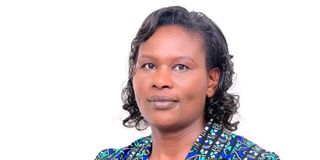
Clara Lagat, widow and official at Ruth Leleita Widows Organisation in Kericho.
For years, she carried the burden alone. Then, through her church – African Gospel Church Emmanuel in Kericho – she learnt of a new initiative. The daughter of Ruth Leleita, a late widow leader who had run a self-help group for widows, set out to formalise an organisation in her mother’s memory.
Clara did not hesitate when asked to take up an official role. She saw it as a safe space for widows. The group was registered in March this year as the RL Widows Self-Help Group, bringing together widows from at least four churches.
“Today, the group’s mission is to support, uplift, and empower widows socially, spiritually, and economically. We turn to values of solidarity, dignity, and mutual support,” she explains.
Recently, they partnered with US-based Heart of Africa for intensive training: safe spaces to debrief, cry, and unload, alongside practical skills in financial literacy, poultry, pig rearing, kitchen gardens, and crafts. Each widow received seed capital of about Sh16,000 to start a business.
“By talking about your pain, you are able to overcome it,” says Clara, yet admitting sustainability is a challenge. “NGOs no longer always do the right thing. They use communities for funding, but the money doesn’t reach us. With US aid cuts, it has become even harder.”
For now, the group meets monthly, sharing encouragement and reporting abuses via WhatsApp. “Many widows don’t even know they could form a group. Some say, ‘I have not yet accepted that I am a widow,” she says. “People think joining a widow group means accepting a bad thing. But for me, I wish I had known earlier.”
Raised by a widow
Lilian Ngala is not a widow, but she was raised by one. Her father died when she was in high school, forcing her mother to relocate the family to Homa Bay. They lived in a leaking grass‑thatched hut. Her mother, a tailor, survived by sewing uniforms for a missionary school that waived fees for her younger siblings. “The family never lacked food, but dignity was a daily struggle,” Lilian recalls.
That childhood left a mark. After rising to become a corporate human resources director, she felt compelled to give back. In 2018 she began building shelters for widows in Homa Bay, formally registering the Lilian Ngala Foundation in 2021.

Lilian Ngala, founder of the Lilian Ngala Foundation and the National Hero Award recipient for 2025.
“The first house I encountered was made of paper; polythene and old cartons, with a tree trunk as a door,” she says. “I asked the woman living there, ‘Do you really live here?’ She removed the trunk to let me in. I got down to constructing a decent structure for her immediately.”
To date, she has supported 112 widows with houses, school fees, and small business capital. “Not the Sh100,000 kind, but the Sh2,000 kind. A little capital to buy tomatoes or omena, to get a small kiosk going,” she explains.
Her proudest moments are not houses but the restoration of the widows’ dignity and self-worth. “Poverty makes widows hide,” she notes. “They don’t want to be seen. But the moment you give them a decent house, they come out. They shower, walk to the market with their heads high. That transition is everything.”
Lilian was recognised by President William Ruto on Mashujaa Day 2025 and conferred the national hero status for the work she does with widows. Balancing her corporate career with her mission, she terms widow support her life’s work. She says that once life becomes a mission, fatigue fades, and there is never enough to do.
Lilian challenges stereotypes, noting that the biggest misconception about widows is that they are all looking for men. Yet, she says, in reality, they are focused on raising their children and finding ways to contribute economically and sustain their households.
From survival to legislation
For Diana Kamande, widowhood began with violence. In April 2013, her husband tried to kill her and their daughters before turning the sword on himself. Recuperating in hospital, she learned her in‑laws had already disinherited her. “I felt like being widowed was a sin of its kind,” she recalls. “I felt like God was so wrong to introduce this thing called death.”
Instead of disappearing, she started a support group from her hospital bed. Within hours of sharing her story on radio, her phone was flooded with calls from widows nationwide. That was the birth of Come Together Widows and Orphans Organisation (CTWOO).
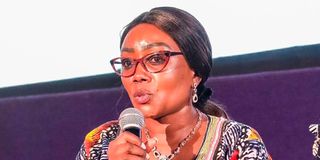
Come Together Widows and Orphans Organisation founder Dianah Kamande during the premiere of the movie Widow Champion at Prestige Cinemas in Nairobi on October 23, 2025.
Today, CTWOO trains widows as paralegals, runs table-banking groups across 27 networks and provides counselling through resident psychologists in Nairobi and Meru. Its advocacy has also delivered tangible gains: Wezesha Mjane Grant, developed with the Unclaimed Financial Assets Authority, has channelled millions of shillings to widow groups. While support from the National Government Affirmative Action Fund has equipped them with tailoring machines, concrete mixers, motorbikes, welding equipment, and edible oil dispensers.
But Diana knows empowerment must be backed by law. She is the architect of the Widowed Persons Protection Bill, 2026, now before Parliament. Together with partners, they drafted the bill sponsored by Rarieda Member of Parliament Senior Counsel Otiende Amollo. He formally submitted to the Speaker of the National Assembly on May 12, 2026.
“Financial empowerment is not the place to start,” she insists. “You start with psychosocial support. These people need to pick up their broken pieces. If you give them money while they are still traumatised, they will lose it. You have to walk the journey.”
Diana emphasises that if the bill is passed, widowed persons will finally be recognised as a distinct legal category under Kenyan law, a recognition that will not only prohibit harmful practices such as widow cleansing and disinheritance but also guarantee their rights to property, dignity, and protection. It will also ensure that the state acknowledges its unique vulnerabilities and provides structured support through policy, emergency shelters, and access to justice.
Collective mission
From Prudence’s yam-farming initiative in Kilifi, Clara’s solidarity networks in Kericho, Lilian’s housing projects in Homa Bay, to Diana Kamande’s national advocacy, these women demonstrate that widowhood is not the end of life’s journey. It is instead the beginning of new missions grounded in hope and service.
Kenya has made progress in responding to the needs of the widows. While they can benefit from the cash transfer programme for older persons, they can also get loans from the widow-tailored loan facility, Thamini provided by Women Enterprise Fund (WEF).
The interest-free loan facility is, however, accessible to widows in a group of at least 10 members, 70 per cent of whom must be widows. The group must also be operating three months before the loan application. WEF officers also train them in how to successfully manage a business.
UN Women also notes the need for having quality data on widows to inform respective policies. “We must also work to collect quality data on widows’ lives, to track progress and create accountability, and ensure that women have access to full and meaningful participation as well as leadership roles,” the women’s rights agency notes.