Winnie Wadera: The woman rewriting the script on teen pregnancy
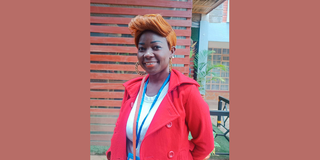
Winnie Wadera, the journalist who found purpose in equipping young mothers with life skills.

What you need to know:
- Winnie Wadera grew up in Kisumu, experienced childhood sexual abuse, and became pregnant at 18.
- She spent four years in radio before returning to her community to mentor girls.
- She argues that Kenya's conversation about teenage pregnancy focuses on the wrong things.
When Winnie Wadera speaks to girls in classrooms or community halls, she does not begin with instruction.
She begins with context.
Too often, she says, public conversations about young mothers fixate on what they did wrong, rather than the conditions and risks that shaped their exposure to pregnancy.


Winnie's work starts by shifting that lens.
Raised in Nyalenda, an informal settlement in Kisumu, she grew up in a one-parent household headed by her mother after her father left when she was four.
As a child, she experienced sexual abuse, something she now names plainly, not for shock value, but to underscore what is frequently left out of policy debates and public discourse.
“Many girls are dealing with things long before adolescence,” she says. “But we only start paying attention when something visible happens.”
By the time she moved to Nairobi for college at 17, enrolling for a diploma in mass communication, those earlier experiences had not been addressed.
Economic pressure
Like many first-year students living away from home for the first time, she was navigating independence without a stable support system. Emotional vulnerability, economic pressure, and the search for belonging converged.
At 18, she became pregnant.
“I was not a girl who didn’t care about school,” she says. “But I was making decisions from a place shaped by many things, some of them going back years.”
She terminated the pregnancy and continued her education, graduating in 2010. The decision, which she discusses openly today, forms part of her broader insistence that silence, around trauma, sexuality, and young women’s lived realities often does more harm than society assumes.
After university, Winnie worked in radio for four years in Kisumu, hosting entertainment programmes. It was steady work, but she found herself drawn elsewhere, back to the communities she knew, and to conversations she felt were not being had.
Also read: Why we can’t stop mentoring women yet
“I realised I was more interested in engaging directly with girls,” she says.
“Not just telling stories about them, but working with them.”
What began informally; visiting nearby schools, speaking to small groups, grew through word of mouth.
Teachers invited her back. Colleagues recommended her. Social media extended her reach beyond Kisumu.
Over time, the work expanded from school talks to structured mentorship, focusing on self-esteem, communication, and decision-making.
Her approach resists easy narratives.
“There’s an assumption that girls who become pregnant are simply being reckless,” she says.
“But when you look closely, you find layers; family dynamics, economic realities, past experiences, and gaps in guidance.”
Among the patterns she has observed are the effects of absent or distant parental figures, unaddressed trauma, and the pressures that come with early independence.
None of these, she stresses, determine outcomes on their own. But together, they shape the environment in which decisions are made.
In response to growing interest from organisations seeking to support her work, Winnie formalised her initiative into a community-based organisation, Winning Hub, about four years ago.
“I hadn’t planned to build an organisation,” she says.
Young mothers
“It was something I was doing because it mattered to me. But those who were interested in partnering with me wanted a formalised structure.”
Winning Hub now works with girls and young mothers across Kisumu, partnering with schools and civil society groups.
Still, Winnie is wary of approaches that place the burden of change solely on girls.
“There is a lot of investment in schools and teachers, which is important,” she says. “But less attention is given to what happens at home.”
In many families, she says, pregnancy is still seen as an endpoint, signalling the closure of educational and professional possibilities.
These assumptions, she argues, are not inevitable; they are shaped by information gaps and longstanding beliefs.
“Families need to be part of the conversation,” she says.
“Parents, guardians, community leaders, because they influence what girls believe is possible.”
Back in Nyalenda, where her work first took shape, she hopes the whole community will protect the girls and enable them to become what they aspire to be.
“The conversations we need to have are not always comfortable,” she says. “But they are necessary if we are serious about supporting girls in a meaningful way.”