Yoghurt for vaginal health in menopause: Helpful or harmful?
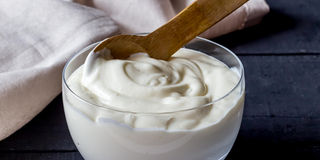
Yoghurt contains lactobacilli, the same group of bacteria that help maintain a healthy vaginal environment.

What you need to know:
- In the vagina, oestrogen maintains the thickness and elasticity of the lining and supports healthy bacteria — particularly lactobacilli — that keep the vaginal environment acidic and protective.
- After menopause, reduced oestrogen leads to thinning of the vaginal lining, dryness, and an imbalance of vaginal bacteria.
When Esther Mokogoti turned 58, frequent trips to hospital became part of her routine.
"I have been to hospital over and over again for urinary tract infection," says the Nairobi-based greengrocer.
Each visit comes at a cost. A consultation costs Sh500. With a urine test and medication, the bill rises to nearly Sh4,000.


"After finishing the drugs, I stay well for about two months, then the lower abdominal pains return — sometimes so severe that walking upright is impossible. I also feel like I'm burning when I pee," she says.
Distressed and financially strained, Esther began quietly asking other women about possible remedies. Some suggested visiting a traditional herbalist. Others advised something she had never considered: applying plain yoghurt to the vagina.
"They told me women apply yoghurt on the vagina to treat UTIs. I haven't done it yet, but I am considering it because I am tired of asking my children for money for treatment," she says.
Esther is menopausal, a stage marked by a sharp decline in oestrogen, a hormone that plays a key role in protecting the urinary and vaginal systems. This hormonal shift explains why UTIs become more frequent after menopause — but it also explains why yoghurt, when applied vaginally, is not a solution.
Why UTIs increase after menopause
According to Dr Kireki Omanwa, President of the Kenya Obstetrical and Gynaecological Society (KOGS), oestrogen supports almost every system in a woman's body, including the vagina and urinary tract.
"Oestrogen sustains the brain, bones, heart, skin and the vaginal tissues," he explains. "When the ovaries stop producing oestrogen at menopause, all these systems are affected."
In the vagina, oestrogen maintains the thickness and elasticity of the lining and supports healthy bacteria — particularly lactobacilli — that keep the vaginal environment acidic and protective. After menopause, reduced oestrogen leads to thinning of the vaginal lining, dryness, and an imbalance of vaginal bacteria.
"That balance is disturbed, and bacteria that are not supposed to cause disease begin to multiply," Dr Omanwa says. "This is why menopausal women experience very regular, recurrent UTIs."
The dryness and thinning of tissues also make intercourse painful and increase the risk of micro-injuries, which further raise infection risk.
The yoghurt connection
The advice Esther received is not entirely baseless. Yoghurt contains lactobacilli, the same group of bacteria that help maintain a healthy vaginal environment. Some clinicians recommend probiotics or eating yoghurt as part of general vaginal health.
In a 2025 article on vaginal health and UTI risk, San Diego-based urologist Dr Carrie Aisen noted that many doctors recommend vaginal probiotics and yoghurt consumption as supportive measures.
However, The KOGS president is clear: applying yoghurt directly to the vagina does not treat UTIs.
"It doesn't make sense," he says. "It's messy, much of it doesn't remain inside, and it doesn't address the underlying problem, which is lack of oestrogen."
What science says about probiotics
Scientific evidence on probiotics and UTIs is mixed. A 2018 peer-reviewed article in the Turkish Journal of
Urology found that most studies on probiotics for UTI prevention have low scientific value, with varied methods and inconsistent results. While patients prefer probiotics because they are generally safe and well-tolerated, they are not a standalone treatment.
More promising results came from a 2011 US study published in Clinical Infectious Diseases. Researchers tested an intravaginal probiotic suppository containing Lactobacillus crispatus (Lactin-V) in premenopausal women with recurrent UTIs.
Among 100 women studied, those who received Lactin-V had fewer recurrent UTIs than those given a placebo.
Importantly, the benefit was seen only when the probiotic successfully colonised the vagina at high levels. The researchers concluded that Lactin-V may reduce recurrent UTIs, but larger trials were needed.
Crucially, this study involved a standardised medical probiotic — not yoghurt — and it focused on premenopausal women, not menopausal women whose primary issue is hormonal deficiency.
Why yoghurt application falls short
Dr Omanwa explains that when antibiotics are prescribed for UTIs, they kill both harmful and beneficial bacteria.
Probiotics taken orally or prescribed medically can help restore balance. Yoghurt can serve as a dietary source of probiotics, but it works through the digestive system, not by direct vaginal application.
"You are better off swallowing a pill or eating yoghurt," he says. "That way, it enters the system properly."
For menopausal women, however, restoring bacteria alone is not enough.
"The recurrent UTIs are basically because of lack of oestrogen," says the gynaecologist.
What actually helps menopausal women
Management of recurrent UTIs in menopausal women requires medical evaluation and, in some cases, hormone replacement therapy. This may include low-dose local oestrogen creams applied vaginally under medical supervision, or other forms such as patches or tablets, depending on individual risk factors, Dr Omanwa explains.
"These treatments help restore the vaginal lining and the natural bacterial balance," he says. "But this must be guided by a specialist who takes the patient's full history."
Regular health check-ups are also important, though Dr Omanwa acknowledges the financial barriers many women face.
At minimum, he recommends annual reviews, with more frequent visits only when medically necessary.


