Premium
Glowing tributes for former editor George Githii
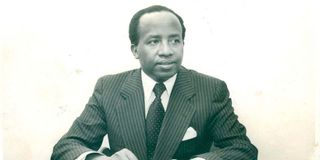
Retired journalist George Githii, who died on November 7, 2025 at the age of 89.

What you need to know:
- Following Mr Githii’s death at 89 on Friday, a chapter closes on a man who had no fears when it came to telling truth to power.
- A key element of his career as an editor-in-chief, Mr Mwagiru said, is the attacks he got from lawmakers on various occasions.
Friends, relatives and media practitioners have been united in mourning George Githii, a man who led Kenya’s top newspapers in the 1960s to the 1980s amid turmoil.
Following Mr Githii’s death at 89 on Friday, a chapter closes on a man who had no fears when it came to telling truth to power.
It, however, came at a cost as he had to leave Kenya after the botched 1982 coup. He went to work in Vienna, Austria, and later settled in Canada—where he lived till his death.


Survived by two sons and a daughter, Mr Githii had gone into preaching in his final years.
Mr Joseph Odindo, who was the Nation Media Group’s Editorial Director from 2009 to 2014, mourned Mr Githii as “one of the most consequential journalists to have led a Kenyan media stable”.
“He resisted the abuse of power by Jomo Kenyatta’s courtiers. He stood up against detention without trial by Moi and courageously defended media freedom, even from proprietor interference. His editorials were as brilliant as his news campaigns. For his work, he has a special place in the history of Kenyan media,” said Mr Odindo.
Mr Githii’s nephew Ciugu Mwagiru, a writer and editor, told the Nation that he also quit alcohol, and he would tell him how he had not tasted a drop for nearly four decades.
“He went into the Christian ministry. He became a deeply religious person,” Mr Mwagiru said. “Over the last two or three decades, he’s been committed to education and religious matters.”
“His father was a reverend of the Church of Scotland, which is nowadays known as PCEA. So, he was in the space where he grew up,” added Mr Mwagiru.
Remembering his stint as a journalist, Mr Mwagiru said Mr Githii epitomised bold journalism.
“He brought aggression to journalism. He straddled the journalism scene because he was absolutely outspoken. He didn’t hold back on any issue,” said Mr Mwagiru.
Reputation for the pistol
A key element of his career as an editor-in-chief, Mr Mwagiru said, is the attacks he got from lawmakers on various occasions.
“He was always under attack in Parliament—all the time, including from Tom Mboya himself,” he said.
Mr Githii succeeded Hilary Ng’weno, who was the first African editor of the Nation newspaper, in 1965. He left in 1968 to pursue studies at Oxford University.
In 1972, when the then Nation editor Boaz Omori died suddenly, Mr Githii returned to the helm. He would hold on through a controversial stint that involved a contentious coverage of JM Kariuki’s death. He resigned from the helm of Nation in 1977 after differences with the board.
He later joined the Standard as editor-in-chief but was fired when he wrote a stinging editorial denouncing detention without trial. From the Standard, Austria became his destination, where he worked with the International Atomic Energy Agency.
Said Mr Mwagiru: “Journalism in Kenya was not tenable after the 1982 coup. He did not feel safe. His departure was a kind of exile, but not officially an exile.”
Dr Wanjiku Mwotia, a niece of Mr Githii, remembered her uncle as a “very daring, very adventurous, and very principled” man.
“As a young woman in the 1970s, I was exchanging very long letters with him and he was very, very patient with me, and very profound in his thinking. I’d say he was my mentor. And he had style. We used to enjoy his music and his very well-kept homes,” she told the Nation.
Mr Githii also earned a reputation for the pistol he usually carried.
“He was a fighter. People remember him as a guy with a gun in his coat pocket,” said Mr Mwagiru.
In his 2010 book Birth of a Nation, former Nation editor and columnist Gerry Loughran said there was a good reason to have the weapon.
“It wasn’t without a good reason. Once Githii got a tip that founding President Jomo Kenyatta was in a coma at his residence in Mombasa. Like any editor would do, Githii had his writers do a story of the life and times of the President and keep it in a safe, just in case... Somehow, security agents got wind of it and the editor was carted away from the newsroom to spend a night in police cells,” wrote Loughran.