Civil servants have been awarded a Sh2 billion salary increment that will see the highest-paid government officials pocket an extra Sh30, 250, while the lowest-paid officers receive an additional Sh1,780.
Under the new review, officers in the highest Job Group T will now earn a minimum of Sh185,690, up from Sh182,890, and a maximum of Sh396,130 from Sh365,880, an increase of Sh30,250.
The second-highest cadre, Job Group S, will receive a salary increase of up to Sh25,740, raising the maximum pay to Sh292,490 from Sh266,750.
Mid-level cadres recorded more modest gains. Job Group R rose by Sh2,800 to a new maximum of Sh185,690, while Job Group P increased by Sh9,180 to a new maximum Sh142,590. Job Group N now tops at Sh103,440 after a Sh7,310 adjustment.
Lower job groups experienced uniform but smaller increments. Job Group L increased by Sh1,890 to Sh67,750, while Job Groups K, J, H, G, F, E, D and C each registered an increase of Sh1,780. Their new maximum salaries range from Sh59, 010 in Job Group K to Sh21,700 in Job Group C.
Under the review, civil servants in Job Groups C to J will also receive a uniform leave allowance of Sh6,500 per year.
The pay rise is intended to keep public service remuneration competitive and responsive to economic conditions, amid concerns that the private sector could poach experienced staff due to pay disparities.
The new pay structure, approved by the Salaries and Remuneration Commission (SRC), marks the start of Phase One of the 2025–2029 pay review cycle. In a circular dated December 19, 2025, the SRC said the decision was reached during a meeting held the same day, which reviewed and endorsed adjustments to basic pay and leave allowances across all job grades.
“The approved basic salary structure and leave allowance should be implemented with effect from July 1, 2025, at a cost of Sh2,065,701,510 for the 2025/26 financial year,” reads the circular.
The circular, addressed to Public Service Principal Secretary Jane Imbunya, states that the adjustments represent the opening phase of the fourth remuneration and benefits review cycle running from 2025 to 2029.
The SRC noted that for unionisable employees, salary increments will be processed through Collective Bargaining Agreement (CBA) negotiations, allowing worker representatives to participate in finalising adjustments.
The new pay structure also streamlines previously fragmented allowances. Entertainment, extraneous and domestic servant allowances have been consolidated into a Salary Market Adjustment, which takes into account market positioning as well as constitutional and statutory principles governing the review of remuneration and benefits.
PS Imbunya took to social media to thank President William Ruto for supporting the growth of the civil service.
“I reaffirm the Government’s unwavering commitment to the welfare and well-being of all civil servants. We extend our sincere gratitude to H.E. the President for his visionary leadership in prioritising public service reforms. Together, we continue to build a stronger, more empowered workforce for Kenya,” she said.
In August last year, Cabinet Secretary for Public Service, Human Capital Development and Performance Management Geoffrey Ruku promised civil servants that the government would harmonise pay across all cadres as part of efforts to motivate public servants and improve service delivery.
Meanwhile, mandatory deductions continue to erode take-home pay. Monthly contributions to the Social Health Insurance Fund and the National Social Security Fund, at 2.75 per cent and six per cent of gross salary, respectively, have thinned payslips, while the Housing Levy, which takes 1.5 per cent of gross pay, has added further strain on household incomes.
Public servants have over the years intensified demands for higher pay through CBAs, reviews of allowances and benefits, job evaluations and productivity-linked rewards.
Even as the pay increase seeks to keep public service salaries competitive, the government in 2024 embarked on a drive to reduce the wage bill from 46 per cent to 35 per cent of total revenue.
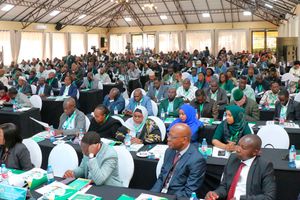
Speaking during the Third National Wage Bill Conference in April 2024 at the Bomas of Kenya, President Ruto said the government would roll out measures aimed at cutting the wage bill to 35 per cent within three years. The government indicated it would target thousands of support staff, casual workers and individuals with fake academic certificates in a bid to lower payroll costs.
Kenya’s public service workforce stood at 1.05 million in June last year, consuming about Sh1.25 trillion in salaries and allowances in the 2024/25 financial year.