It will soon not be possible to alter details in birth certificates once reforms being pushed by the State department of Immigration and citizen service are rolled out.
The government is moving to address the inconsistency of details in birth certificates through the development of an e-notification system which will require all hospitals to electronically relay birth notifications to the Civil Registration Services of all children born at their facilities.
In the new system, when a child is born in any hospital, the facility will be required to instantly relay-notification to the Civil Registration Services, which will then generate a Unique Personal Identifier (UPI), commonly referred to as the Maisha Number.
Appearing before the National Assembly Departmental Committee on Administration and Internal Security to defend the department’s 2026/2027 budget estimates, Principal Secretary Dr Belio Kipsang said the government has already completed development of the e-notification system and will be rolled out soon.
“When a child is born in a hospital, notification will now be done electronically at the hospital level. That notification will be relayed directly to Civil Registration Services and linked to the Unique Personal Identifier generator, after which the child will immediately be issued with a Maisha Number,” Dr Kipsang said.
The move, according to the PS, is aimed at eliminating fraud cases where individuals alter their ages by tampering with details in their birth certificates, while others also have multiple birth certificates showing different details.
“Going forward, this problem will be eliminated because it will no longer be about a paper printed document, but a system number existing in the national population register,” Dr Kipsang said.
A welcome signage at the Department of Civil Registration.
Photo credit: File | Nation Media Group
Dr Kipsang said the new reforms are also meant to help the government in accounting for its citizens in case they are arrested in foreign countries, as it will be able to trace their background with ease through the UPI.
According to the PS, all children will be issued with a Unique Personal Identifier (UPI) at birth that they will retain throughout their life until the age of 18, when it will transition into a national identity card number.
The new reforms, according to Dr Kipsang, are also meant to address the inconsistencies many Kenyans face when seeking critical documents such as birth certificates, passports and IDs.
He noted that there are many cases where people have been denied passports or birth certificates due to the inconsistencies in the records.
Dr Kipsang also told the committee chaired by Gabriel Tongoyo that the ministry was consolidating civil registration, immigration and National Registration Bureau offices into integrated population registration centres to improve efficiency.
The lawmakers, while supporting the reforms, urged the ministry to fast track the changes in order to address what they termed as weaknesses in the country’s civil registration system.
Elgeyo Marakwet Woman Representative Caroline Ngelechei raised concerns over conflicts between birth certificates used in schools and those later presented during ID and passport applications.
She said many Kenyans face difficulties while applying for passports after discovering discrepancies between birth certificates used during the Kenya Certificate of Primary Education (KCPE) and Kenya Certificate of Secondary Education (KCSE) examinations and those later used to process national identity cards.
“We need a clear system because many Kenyans are suffering when they want to travel and are told their documents do not match,” Ms Ngelechei said.
The committee noted that most immigration offices citing Kisumu are in a dilapidated state, noting that some offices handling sensitive identification documents lacked lockable doors and adequate office space.
When the government rolled out the Maisha number, a unique personal number assigned to the Maisha Card, a third-generation digital identity card, it was meant to consolidate existing and independent databases into one.
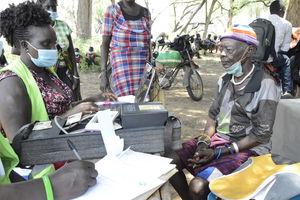
A parent displays a newly issued birth certificate. FILE PHOTO | NATION MEDIA GROUP
Though it was challenged in Court, the government in 2024 was later given a green light to proceed with the registration.
During the launch, the government explained that the Maisha Digital ID would be a lifelong identity number and that holders easily access education, health insurance and other government services with it.
It was also to serve as a Personal Identification Number for Kenya Revenue Authority and the National Social Security Fund and when the holder dies, it automatically becomes the death certificate.