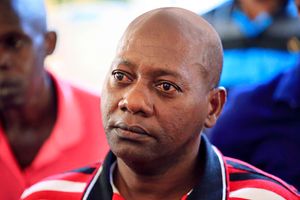
A Kenyan man who was wrongly convicted and sentenced to death for robbery with violence in connection to the 2011 attack on two British tourists in Lamu is suing the United Kingdom’s Metropolitan Police over its involvement in the case.
Mr Ali Kololo from Lamu spent over a decade in prison for the crime but was eventually set free in 2023 when his conviction was quashed.
Sentenced to death in 2013, Mr Kololo was the sole suspect in the murder of David Tebbutt, a British publishing executive, as well as the kidnapping of his wife Judith Tebbutt. Tebbutt was shot dead and his wife taken to Somalia by the pirates before being released six months later after the payment of a ransom.
A video grab shows David Tebbutt who was attacked and killed at Kiwayu Safari village resort on September 11, 2011.
Photo credit: File | Nation Media Group
Now in his mid-40s, Mr Kololo wants the Metropolitan Police to compensate him for providing “misleading” evidence to the Kenyan court, which he says played a big role in his conviction.
Mr Kololo’s lawyers, Reprieve, a legal charity, said that the UK government deployed Metropolitan Police officers to Kenya despite knowing the case could result in the death penalty.
For Reprieve, this decision violated the government’s rules against providing assistance that “might directly or significantly contribute to ... use of the death penalty; both the imposition of the death sentence and executions”.
Before his incarceration, Kololo worked as a woodcutter and honey-gatherer in a remote island in Lamu where Tebbutt and his wife were on vacation.
He was accused of being the one who directed the gang behind the attack to a hut where the Tebbutts were sleeping.
However, shortly after her release by her captors, Ms Tebbutt told The Sunday Times that she believed Mr Kololo was innocent and had been used as a scapegoat by Scotland Yard.
Key on their list of those who should be charged for Kololo’s wrongful conviction is former detective chief inspector Neil Hibberd, who has since retired.
Mr Ali Babitu Kololo is escorted by police officers to Lamu Island. He was on September 19, 2011 charged with kidnapping of Judith Tebbutt and robbery with violence.
Photo credit: File | Nation Media Group
Reprieve believes that Mr Hibberd should be charged for omitting key information that cast doubt on the prosecution’s allegations that a footprint linked Mr Kololo to the crime scene.
The law firm accuses the Metropolitan Police officers of failing to inform the Kenyan court that its analysis of a partially washed-away imprint on a sandy beach had been inconclusive. Also, a pair of shoes presented as a match for the footprint during his trial did not fit Mr Kololo. He had said that he did not wear any shoes on the particular day.
Ms Preetha Gopalan, Reprieve’s Head of UK litigation, said that the support offered for the prosecution of Mr Kololo, as well as Mr Hibberd’s evidence in the court, was the ultimate reason for conviction.
“His conviction rested heavily on the footprint, but the whole time, Met had an analysis that undermined the evidence,” she said.
Judith Tebbutt.
Photo credit: File | Nation Media Group
Whereas Reprieve wants Mr Hibberd to answer for his role in the case, an investigation by the Independent Office for Police Conduct found that the former chief inspector would only have answered to the charges of misconduct if he was still serving.
Ms Gopalan said that several emails released by the Home Office to Reprieve show that officials were warned in 2012 that the death penalty remains in Kenya’s constitution and may be available for the offences that Mr Kololo was charged with. Nevertheless, the Metropolitan Police deployed its officers for the case.
Now seeking to reinstate himself to his initial stature in the society, Mr Kololo said: “I used to work hard to look after my family but my time in prison has left a big gap which is very difficult to fill. My health has deteriorated and I cannot go back to the work I used to do. I have to struggle to provide for my children and look after my family.”
Ms Gopalan expressed confidence in winning the case and has asked the Metropolitan Police Department to surrender, apologise and pay appropriate compensation.