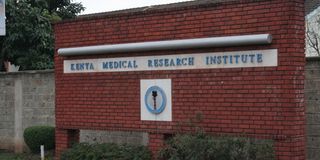
Kenya’s foremost medical research institute is facing severe cutbacks as donors hold back funding following allegations of corruption.
Donors are said to have lost confidence in the Kenya Medical Research Institute (Kemri), with some withholding funds or demanding control of cash management.
A senior officer at head office said a major donor wants to have more say in vetting personnel and handling procurement.
One of the premier medical research centres in Africa, Kemri has been embroiled in corruption claims for more than a decade.
Founding director Davy Koech was suspended two years ago to allow investigations into alleged loss of millions of shillings.
Investigations into the alleged loss of funds amounting to more than Sh476 million, some of it belonging to a major international partner, the US Center for Disease Control, are about to be completed by Kenya Anti-Corruption Commission, according to Public Health minister Beth Mugo.
When contacted, the CDC office in Kisumu said they had no issues with Kemri and their programmes were on course.
Withholding of funds could affect research on malaria vaccines, child diarrhoea, drug-resistant TB, HIV and Aids and a host of other studies being carried out in its 10 centres of “excellence”. Several studies at Kemri have been served with withdrawal notices by supporting organisations.
At Kisian station in Kisumu, several studies, whose funding runs into millions of shillings, risk stalling. In and around Kisumu, the institute runs several studies in HIV, malaria, bilharzia and tuberculosis all funded by various organisations.
Other partners include the US Walter Reed Military University and UK’s Welcome Trust which partners in several major programmes at the Coast Province.
The recent expose on Kemri’s staff pension fund has caused donors discomfort. A source at one of the outreach centres says of immediate concern are grants worth $200,000 (Sh16 million) covering HIV, bilharzia and malaria work.
“Our fears are that if one donor gives out wrong signals others could tag along with a possible snowballing effect,” the source said.
Loss of over half a billion shillings from the personnel pension fund and some more from an account belonging to the CDC has caused a ‘go-slow among some donors.’
“Donors argue, if the workers’ pension fund could be misappropriated, how about the research grants?” the source posed.
Apart from the major institutional donors, there are small partners who come in for short-term studies in collaboration with Kemri. A source at Kemri, who spoke on condition of anonymity for fear of reprisals, said scientists have had to write ‘comfort notes’ assuring the donors that the issue is being addressed.
“The donors have written to us expressing their discomfort in releasing research grants, which are normally channelled through Kemri accounts,” he explained.
Efforts to get a comment from the management was futile as the director was said to be out of the country. Her deputy for financial and administrative issues, Dr Patrick Orege, was also out of the country.
Possible freeze on grants is giving scientists affiliated to Kemri sleepless nights. A week ago, Mrs Mugo formed a new board to look into the issues affecting Kemri.