The Ministry of Health said the facility will enhance disease surveillance, monitoring, isolation and emergency response capabilities as the country remains on high alert over the ongoing Ebola outbreak in the Democratic Republic of Congo (DRC).
The announcement comes after days of public debate and speculation over reports of plans to set up a quarantine or treatment centre linked to foreign partners in Kenya.
The government dismissed concerns surrounding the project, arguing that the facility is intended to bolster national health security and outbreak preparedness rather than respond to any immediate health threat within the country.
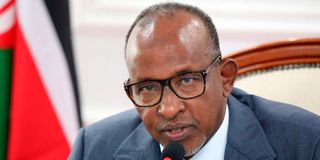
“Protecting Kenyans requires more than hoping diseases do not cross our borders or relying solely on screening at points of entry. It requires a comprehensive approach that combines effective surveillance and border screening with strong preparedness and response systems before a crisis emerges, not after it has already taken hold,” said Health Cabinet Secretary Aden Duale.
According to the government, the facility is being established in partnership with the United States government and will support enhanced surveillance, diagnostic capacity, emergency preparedness exercises, critical medical supplies and rapid response capabilities.
Officials said the project complements existing investments in outbreak preparedness, including specialised isolation and treatment units at Kenyatta National Hospital, the Kenya National Police Hospital and Moi Teaching and Referral Hospital. Additional sites have also been identified in more than 10 high-risk border counties to facilitate a rapid response in the event of an outbreak.
The government said the investments would strengthen laboratory capacity, healthcare infrastructure, disease surveillance systems, emergency response mechanisms, supply chains and workforce readiness beyond the current Ebola threat.
“These investments will strengthen Kenya’s health security by improving laboratory capacity, healthcare infrastructure, disease surveillance, emergency response systems, supply chains, and workforce readiness beyond the current Ebola threat,” he said.
The government said the COVID-19 pandemic underscored the need for such facilities, noting that a regional health centre established at the UN complex in Nairobi played a crucial role in emergency response and continues to serve local communities.
“Kenya has seen the value of such investments before. During the COVID-19 pandemic, a regional health facility established by the United Nations Office at Nairobi (UNON) at Nairobi Hospital played an important role in supporting emergency response efforts across the region. Today, that infrastructure continues to serve local health needs and remains a valuable asset within Kenya’s healthcare system,” said Mr Duale.
He added: “By strengthening critical health systems today, these investments will leave Kenya better prepared for future outbreaks and other public health challenges.”